















































































Support
Do wireless security cameras need a power source?
Even though “wireless” describes how the cameras transmit data, yes — wireless security cameras still require a power source to operate. Without power, the camera cannot record, process video, or send alerts.
Common Power Options for Wireless Cameras
1. Batteries
Many wireless cameras rely on rechargeable or replaceable batteries. This design removes the need for permanent wiring, giving flexibility in installation. However, batteries must be recharged or replaced periodically — frequency depends on camera usage, resolution, and power-saving settings.
2. Solar Power
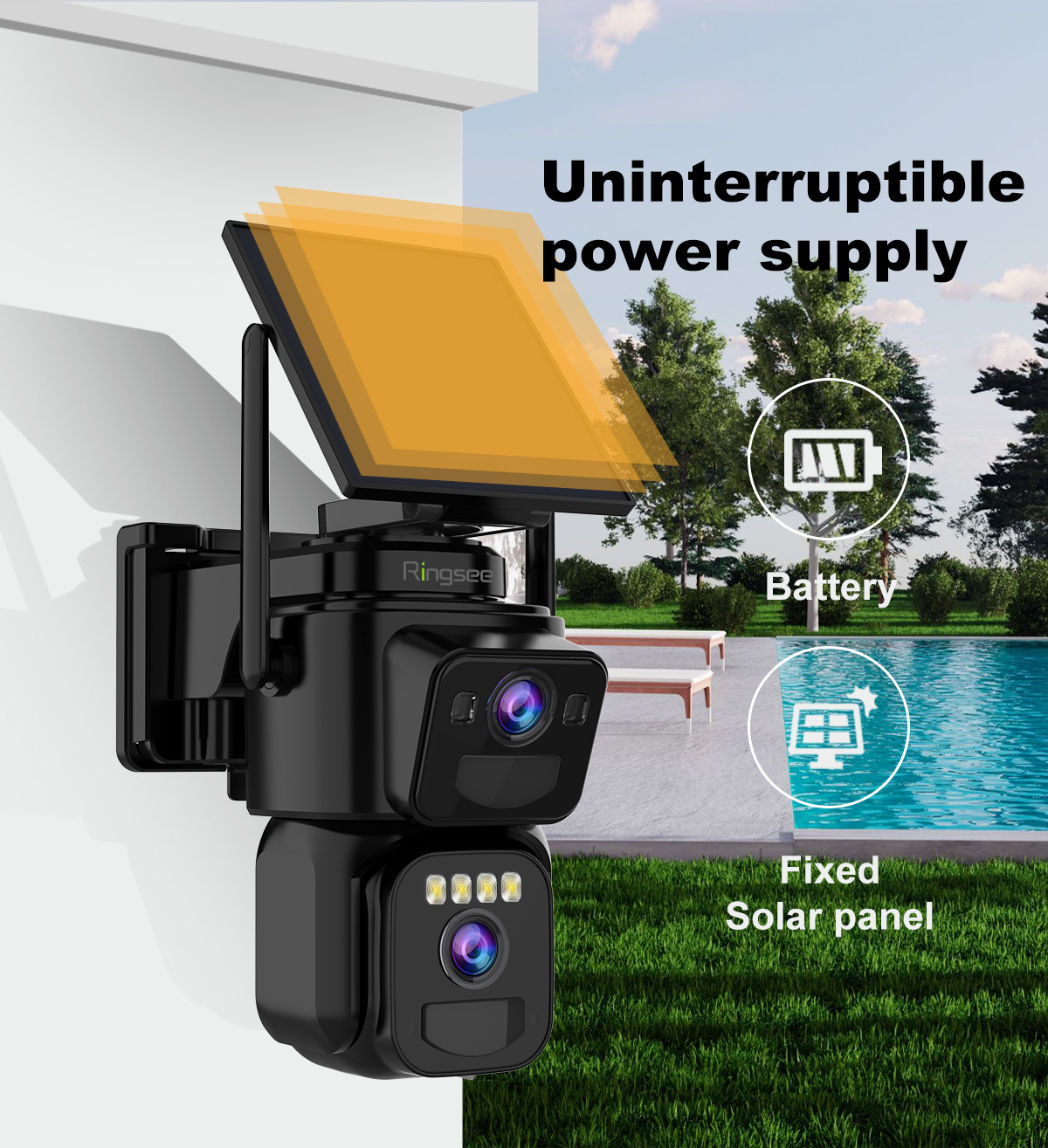
To reduce maintenance and ensure long-term operation, many outdoor wireless security cameras leverage solar panels to recharge their internal batteries. This solar-battery combination is especially useful where running electrical wiring is difficult or costly — for example, in remote areas, gardens, or detached structures. This solution offers a low-maintenance, “install-and-forget” option.
3. Plug-In AC / Mains Power
Some wireless cameras are designed to plug into a standard power outlet. They transmit data wirelessly but draw continuous power through a plug, ensuring uninterrupted operation without battery swaps or solar charging.
Why “Wireless” Usually Refers Only to Data Transmission
It is important to distinguish between data transmission and power supply:
Wireless (data): The camera sends video signals via Wi-Fi, 4G, or other wireless networks, so no coaxial/video cable or network cable is needed.
Power supply: This is independent — whether battery, solar, or mains — and remains necessary for the camera’s electronics to function.
Therefore, even the best wireless cameras must have a reliable energy source to record, monitor, or send alerts.
When to Choose Different Power Options
| Scenario | Recommended Power Option |
|---|---|
| Easy access to a wall outlet (indoor or near external wall) | Plug-in AC (mains) — for consistent power without maintenance |
| Outdoor areas without wiring, or remote/temporary locations | Battery-powered or solar — for flexible placement and easy installation |
| Long-term outdoor surveillance with minimal upkeep | Solar panel + rechargeable battery — for “set-and-forget” performance with low maintenance |
How This Applies to Ringsee Cameras
At Ringsee, many of our wireless camera models offer solar-powered or battery-powered variants, making them ideal for outdoor environments where wiring is impractical. Even though they transmit video wirelessly, their power comes from either internal batteries or solar panels — ensuring both flexibility and reliability.
If you're installing a Ringsee camera:
Choose battery or solar versions if you want minimal maintenance and easy installation outdoors.
Use plug-in (AC) versions for indoor use or when continuous power is needed.
Final Thoughts
“Wireless” refers to data — but power remains indispensable. Properly choosing a power option (battery, solar, or mains) based on your installation environment will ensure your wireless security camera performs reliably. For many outdoor applications, a solar or battery-powered wireless camera from Ringsee offers a perfect combination of convenience, flexibility, and low maintenance.
Links:One Belt Power Technology
Add: 14th Floor, Baoshan Building, Longhua District, Shenzhen China.
Privacy Policy | SEO | CitySite | Support: 300.cn Dongguan