














































































Best 4G Solar Security Camera for Remote Areas | Ringsee™ Camera Series
Publish:
2025-05-07 09:48
Source:
https://www.ring-see.com
Security shouldn’t stop where the internet ends. For those living or working in remote locations—whether it’s a farm, construction site, or off-grid cabin—the best 4G solar security camera offers a reliable, self-powered solution for 24/7 surveillance without relying on traditional WiFi networks.
Security shouldn’t stop where the internet ends. For those living or working in remote locations—whether it’s a farm, construction site, or off-grid cabin—the best 4G solar security camera offers a reliable, self-powered solution for 24/7 surveillance without relying on traditional WiFi networks. This complete buyer’s guide will walk you through how these cameras work, what features to prioritize, and why they’re the go-to choice for challenging environments.
What Is a 4G Solar Camera and How Does It Work?
A 4G solar security camera is a wireless surveillance device that operates using a 4G LTE cellular network and solar energy. Unlike traditional WiFi cameras, it doesn’t require a wired power source or internet connection. These cameras are powered by rechargeable batteries, which are kept charged by built-in or detachable solar panels.
With a data-enabled SIM card installed, the camera connects to the 4G network and transmits footage to your smartphone via a mobile app, making remote monitoring easy and effective even in areas with no electricity or broadband access.
Key Features to Look For
When shopping for the best 4G solar security camera for remote areas, pay attention to these essential features:
Long Battery Life: Look for models with large-capacity batteries (typically 10,000mAh or more) and energy-efficient operation to ensure continuous performance even during cloudy days.
Crystal-Clear Night Vision: Infrared or full-color night vision is crucial for nighttime surveillance. A good camera should detect motion and capture clear images even in total darkness.
SIM Card Support: Ensure compatibility with major carriers in your country and check if the camera supports 4G LTE bands relevant to your area.
AI Motion Detection: Advanced models can distinguish between humans, vehicles, and animals, reducing false alerts.
Weatherproof Design: For outdoor use, the camera should have a weather-resistant rating (IP65 or higher).
Top Use Cases: Farms, Cabins, Construction Sites
The versatility of a 4G solar-powered camera makes it ideal for:
Farms and Agricultural Land: Monitor livestock, machinery, and perimeters without running miles of cable or dealing with weak WiFi signals.
Remote Cabins and Vacation Homes: Keep an eye on your off-grid property with motion alerts and live feeds from anywhere.
Construction Sites: Protect valuable equipment and track daily activities on job sites with no power or internet infrastructure.
Why Choose a 4G Camera Over WiFi Models
While WiFi cameras are great for urban or suburban homes, they’re not suitable for remote areas lacking stable internet. Here’s why 4G solar cameras are a better choice:
Total Independence: They don’t rely on electrical grids or internet lines—perfect for rural, off-grid, or mobile installations.
Flexible Placement: Mount them wherever there’s sunlight and cell signal, from tree lines to building exteriors.
Real-Time Alerts Anywhere: Get instant push notifications, view live feeds, and even speak through two-way audio from your smartphone, no matter where you are.
Recommended Models: Ringsee RS-SOC-9108 Dual-Lens Solar Camera
One standout option is the Ringsee RS-SOC-9108, a powerful dual-lens 4G solar camera ideal for wide-angle and zoom surveillance. Key specs include:
Resolution: 4MP with wide + zoom lens
Connectivity: 4G LTE, supports major global carriers
Power: Solar panel + 9600mAh battery
AI Detection: Human and vehicle recognition
Night Vision: Full-color IR LEDs for 24/7 clarity
Storage: Cloud + MicroSD card support
It’s a high-performance solution for anyone needing constant monitoring in remote or hard-to-reach areas.
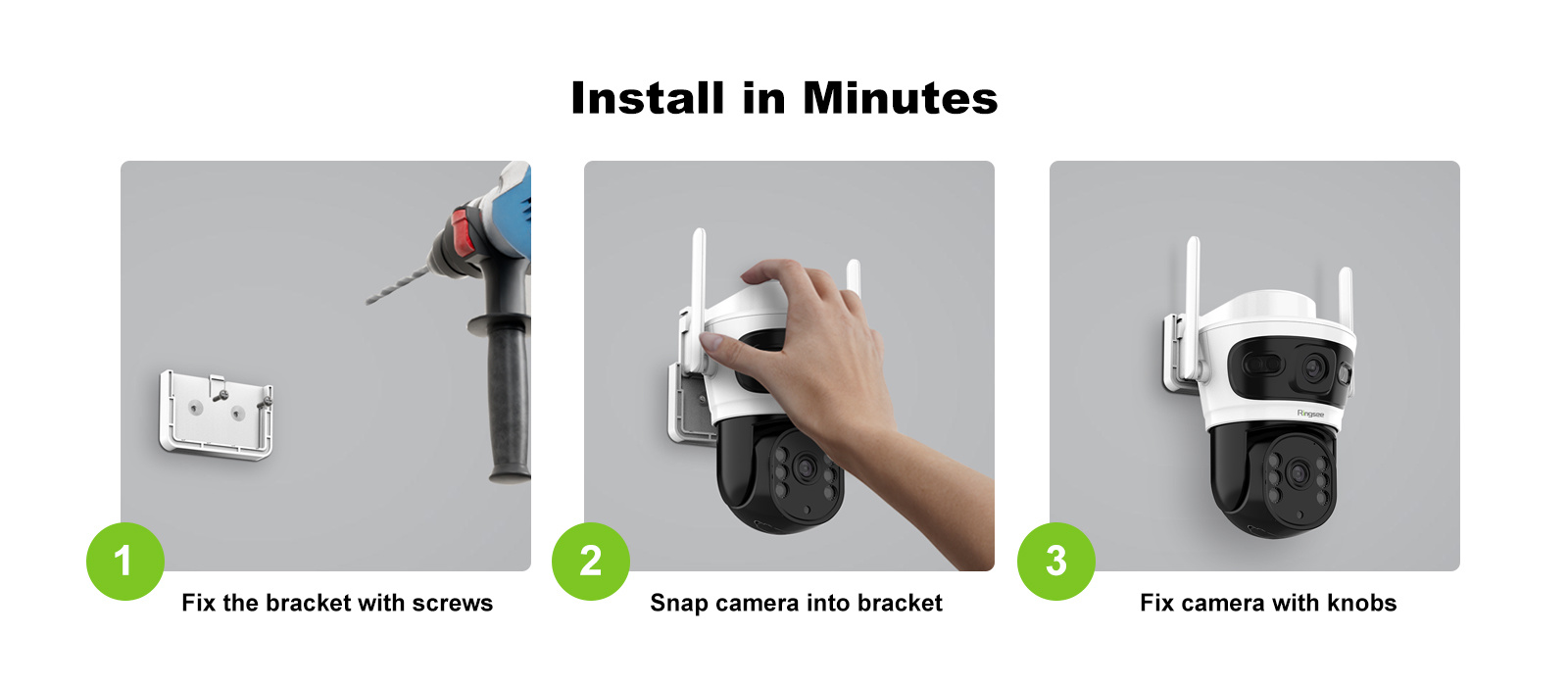
How to Install and Set Up a 4G Solar Camera
Installing your 4G solar camera is straightforward:
Choose a Location: Select a spot with good sunlight exposure and strong cellular signal.选
Mount the Camera: Use the included brackets to attach it to a pole, wall, or structure.
Insert SIM and SD Card: Make sure the camera supports your SIM card’s network band.
Power On and Connect: Charge the battery initially if needed, then pair the camera with its mobile app.开
Test the Feed: Adjust the angle and motion sensitivity as necessary for optimal coverage.
Final Thoughts: Is It Worth the Investment?
If you need real-time monitoring in areas without power or WiFi, investing in the best 4G solar security camera is a smart and efficient choice. With no monthly power bills, easy DIY setup, and reliable coverage, it's the ideal tool for modern, mobile, and off-grid security needs. Whether you’re safeguarding farmland, managing a remote job site, or protecting your cabin retreat, a 4G solar camera ensures peace of mind—anytime, anywhere.
Prev:
Related News
Target readers: security owners, system integrators, and EHS engineers for petrochemical, oil and gas, pharmaceutical, powder processing, and coal mining sites where explosive gas or combustible dust exists. Core takeaway: a normal camera is itself an ignition source in flammable environments. You must use explosion proof cameras certified to ATEX, IECEx, or China Ex, selected by hazard zone, installed with proper grounding, and documented for compliance. This guide gives a reusable selection, install, and acceptance workflow.
Nov 08,2026
4G 5G Cellular Surveillance Camera Guide: Remote Video without Broadband
Target readers: security owners and integrators for farms, orchards, fisheries, construction, oil and mining sites, vehicle fleets, and remote African villages where broadband is scarce. Core takeaway: when there is no fiber, no broadband, and frequent power loss, a SIM card cellular camera is the easiest and most scalable remote video option. This guide gives a reusable architecture covering power, data, backhaul, AI, and compliant deployment.
Nov 08,2026
Analog CCTV Upgrade Guide: Coax HD Reuse vs Full IP Rebuild, Cost and Timeline Compared
Factory, campus and retail chains running analog surveillance for five or six years face the same wall: blurry images, unretrievable footage, and no path to AI analytics on legacy hardware. This guide breaks down pre-upgrade system inventory, compares the coax-HD reuse route against a full IP rebuild, gives bandwidth and storage recalculation formulas, and lays out a zoned, non-disruptive cutover plan with a selection checklist.
Oct 31,2026
CCTV Maintenance Outsourcing: SLA Tiers, Market Rates, KPI and Contract Playbook
Conclusion first: the real cost of a surveillance system is in its operation. Three years of maintenance typically equals 30% to 50% of the build cost, yet most buyers spend the budget at install and leave operation to whoever happens to notice. Lock the maintenance boundary while signing the build contract. This guide breaks down the in-house versus outsourced decision model, a three-tier SLA (P1 / P2 / P3), per-point market rates and how to read a quote, the two KPIs that decide payment (camera online rate and footage integrity), the five clauses every contract must hold, the 90-day handover that most often loses control, plus a selection checklist and acceptance tests.
Oct 25,2026
Links:One Belt Power Technology
Add: 14th Floor, Baoshan Building, Longhua District, Shenzhen China.
Privacy Policy | SEO | CitySite | Support: 300.cn Dongguan