














































































4G Solar Cameras for Remote Construction Sites — practical, evidence-based guide
Publish:
2025-10-22 15:17
Source:
https://www.ring-see.com
Secure your construction site without power or Wi-Fi. Discover how 4G solar security cameras offer reliable surveillance, real-time alerts, and theft protection for remote jobsites.
Why this matters
Construction sites are a frequent target for theft and vandalism, and many job sites lack reliable power or Wi-Fi. Off-grid, cellular (4G/LTE) cameras powered by solar and batteries close that gap — but the decision to deploy them should be based on realistic costs, measurable KPIs and a deployment methodology that matches the site risk.
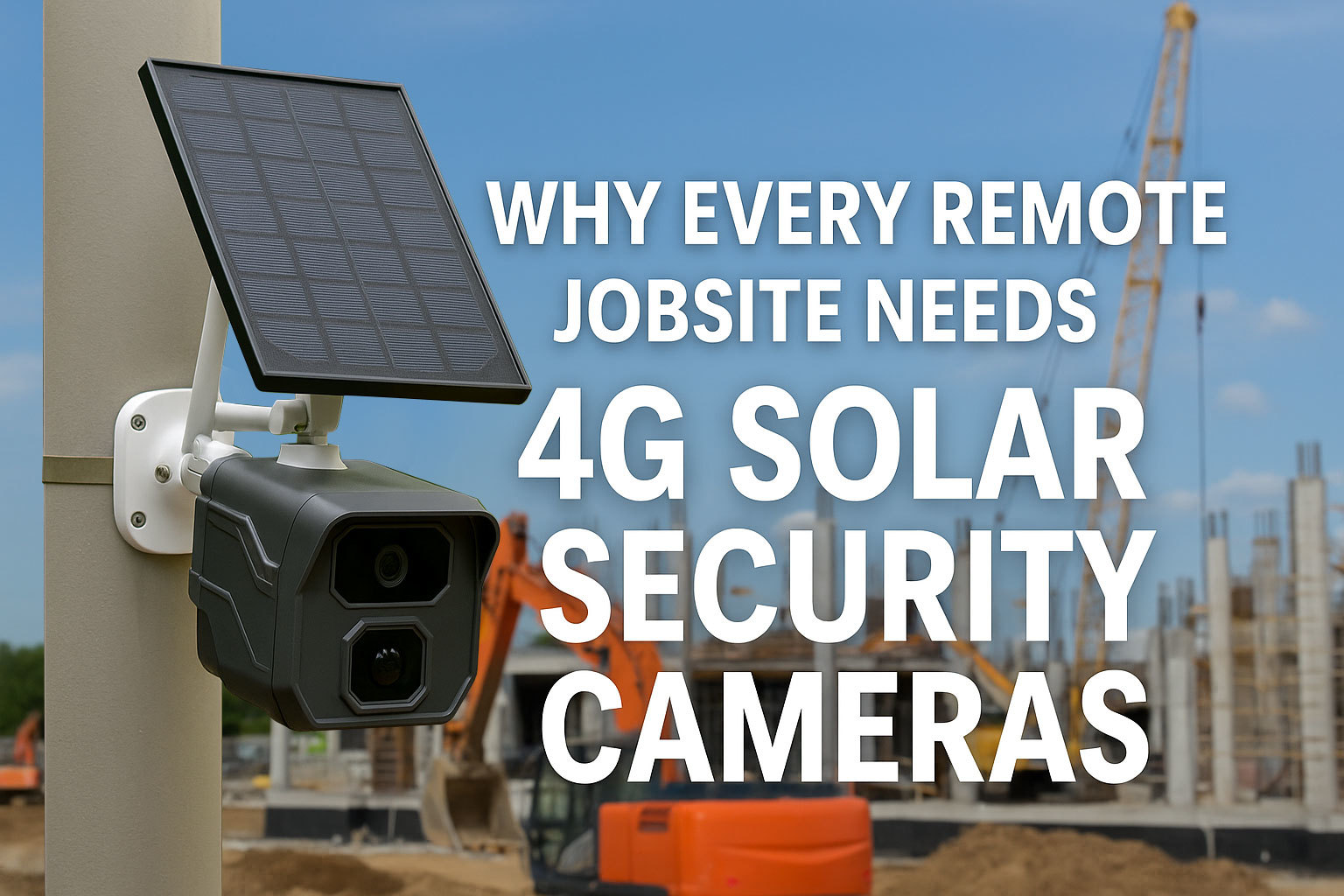
The scale of the problem
Recent industry surveys and reports show construction-site theft is both common and costly. For example, UK industry sources estimate theft-related losses in the hundreds of millions of pounds annually, with many sites hit repeatedly; trade surveys routinely show a majority of managers affected by theft or vandalism. These trends make prevention and monitoring a real line-item for budgets and risk assessments.
What 4G solar cameras actually solve
Four practical advantages make them attractive for remote sites:
Power independence: Solar panels + battery provide continuous operation without mains power.
Network independence: 4G/LTE lets cameras stream and push alerts where no wired internet exists.
Deployability: No trenching or long cable runs — faster install and easier relocation as the project moves.
Reduced operating friction: Lower ongoing infrastructure work (fewer electricians/cabling jobs) and fewer site visits for basic connectivity issues.
These are qualitative benefits; later sections show how to quantify value for your site.
Quick comparative view — wired CCTV vs battery-only wireless vs 4G + solar
| Dimension | Wired CCTV | Battery-only wireless | 4G Solar (cellular + PV) |
|---|---|---|---|
| Power dependency | Mains — high | Battery swaps required | Solar + battery — low |
| Network dependency | Ethernet/Wi-Fi | Wi-Fi / local storage | Cellular (SIM) — independent |
| Deployment speed | Slow (cabling) | Fast | Fast (mount + panel) |
| Best for | Permanent, integrated sites | Short-term low-budget | Remote, moving projects |
| Typical ongoing ops | Electricity + cabling maintenance护 | Frequent battery/visits | SIM data + periodic cleaning |
| Resilience to outages | Poor unless backup | Poor unless many spare batteries | High (solar + battery) |
(Comparison synthesized from vendor and industry guides on off-grid cameras).
A practical methodology for choosing and measuring success
Below is an actionable, repeatable process you can apply on any jobsite.
1) Site risk audit (what to measure)

Inventory high-value items and their typical locations and hours of vulnerability.
Map site geography (entry/exit points, fencing, lighting).
Establish theft/vandalism baseline: how often do incidents occur, typical loss per incident? (use internal incident logs or insurer reports).
2) Technical selection checklist
Power: panel wattage, battery capacity (days of autonomy in low sun).
Network: confirm cellular coverage and carrier options onsite.
Sensors & analytics: AI human/vehicle detection to reduce false alarms.传
Durability: IP rating (IP66+ for exposed sites).
Recording/retention: local SD + cloud sync options for evidence.
3) Pilot deployment (measure these KPIs over 90 days)
- Uptime (%) — percent of time cameras are online.
- Detection accuracy — percent of alerts that were verified (true positive).
- False alarms/day.
- Average time to evidence retrieval (from alert to usable footage).
- Incidents prevented or documented — note whether footage aided recovery or prosecution.
Track these with a simple spreadsheet and weekly check-ins.
4) ROI framework (how to justify cost)
Use a clear formula:
Net benefit = (Estimated loss prevented over period) − (Total system cost + data/maintenance)
ROI (%) = Net benefit ÷ Total system cost × 100
Example (conservative, hypothetical): assume one camera system (hardware + solar + installation + 6 months SIM/cloud) costs $2,500 and that preventing a single equipment theft saves $15,000 in replacement and lost productivity.
Net benefit = 15,000 − 2,500 = 12,500
ROI = 12,500 ÷ 2,500 = 5.0 = 500%
If the upfront system cost were $1,500 with the same prevented loss, ROI = (15,000−1,500)/1,500 = 13,500/1,500 = 9.0 = 900%.
These are illustrative numbers to show how even a single prevented major theft can justify off-grid camera installations — you should replace the assumptions with your site’s actual incident cost and system quotes. (Sample calculations shown above.)
Deployment best practices
Mount high and central: elevated positions reduce tampering and improve coverage.
Cover choke points: prioritize entrances, material storage, and vehicle routes.
Protect panels: ensure solar panels have unobstructed sun and are theft-resistant or locked.
Triage alerts: use AI filtering to send only high-confidence alerts to on-call staff to avoid alert fatigue.
Maintenance schedule: monthly clean of panels and lenses; quarterly firmware checks; SIM/data plan review semi-annually.
Policy + evidence chain: define how footage is stored, who can access it, and how it is handed to authorities.
Reworked case study

Situation: a bridge project 15 km from town experienced repeated nighttime equipment theft. No mains power or site Wi-Fi.
Solution: deploy cellular 4G solar camera with AI human detection, integrated spotlight and two-way audio; cloud storage enabled via SIM.
Measured outcome (reframed):
Time to detection: intrusion detected within minutes of activation.
Response mechanism: two-way audio + spotlight triggered, which deterred the intruder; footage was pushed to cloud and shared with police.
Result: no further successful thefts reported during the remaining 6 months of the project.
Why it worked (analysis):
Rapid deterrence: immediate audio + visual response increases the chance a would-be thief flees.
Evidence capture: cloud storage created a low-friction evidence trail for authorities.
Placement & autonomy: solar + cellular allowed continuous coverage without site wiring delays.
This reframing highlights measurable elements (detection time, deterrent effect, evidence chain) that show how to evaluate success beyond simple anecdotes.
Limits and what to watch for
Data costs: cellular data plans can be significant for continuous streaming; plan for event-driven uploads where appropriate.
Solar dependency in extreme climates: winter/overcast seasons require larger battery storage or panel sizing to maintain autonomy.
False alarms: poor AI tuning or bad placement increases false positives — leading to ignored alerts. Track “true positives per 100 alerts” as a health metric.
Quick checklist before you sign a purchase order
Get site-specific quotes (panel/battery tailored to sunlight hours).
Ask suppliers for real KPI data from comparable deployments (uptime, detection accuracy).
Run a 60–90 day pilot and measure the KPIs listed above.
Include SIM/data plan costs and maintenance in TCO (total cost of ownership) — don’t only compare hardware price.
Final takeaway
4G solar cameras are not a silver bullet — but when selected and deployed using a clear, data-driven methodology they become one of the most cost-effective ways to safeguard remote or temporary construction assets. The decision should be driven by measured site risk, a pilot that tracks concrete KPIs, and a clear ROI calculation tailored to your typical loss values.
Related News
Target readers: security owners, system integrators, and EHS engineers for petrochemical, oil and gas, pharmaceutical, powder processing, and coal mining sites where explosive gas or combustible dust exists. Core takeaway: a normal camera is itself an ignition source in flammable environments. You must use explosion proof cameras certified to ATEX, IECEx, or China Ex, selected by hazard zone, installed with proper grounding, and documented for compliance. This guide gives a reusable selection, install, and acceptance workflow.
Nov 08,2026
4G 5G Cellular Surveillance Camera Guide: Remote Video without Broadband
Target readers: security owners and integrators for farms, orchards, fisheries, construction, oil and mining sites, vehicle fleets, and remote African villages where broadband is scarce. Core takeaway: when there is no fiber, no broadband, and frequent power loss, a SIM card cellular camera is the easiest and most scalable remote video option. This guide gives a reusable architecture covering power, data, backhaul, AI, and compliant deployment.
Nov 08,2026
Analog CCTV Upgrade Guide: Coax HD Reuse vs Full IP Rebuild, Cost and Timeline Compared
Factory, campus and retail chains running analog surveillance for five or six years face the same wall: blurry images, unretrievable footage, and no path to AI analytics on legacy hardware. This guide breaks down pre-upgrade system inventory, compares the coax-HD reuse route against a full IP rebuild, gives bandwidth and storage recalculation formulas, and lays out a zoned, non-disruptive cutover plan with a selection checklist.
Oct 31,2026
CCTV Maintenance Outsourcing: SLA Tiers, Market Rates, KPI and Contract Playbook
Conclusion first: the real cost of a surveillance system is in its operation. Three years of maintenance typically equals 30% to 50% of the build cost, yet most buyers spend the budget at install and leave operation to whoever happens to notice. Lock the maintenance boundary while signing the build contract. This guide breaks down the in-house versus outsourced decision model, a three-tier SLA (P1 / P2 / P3), per-point market rates and how to read a quote, the two KPIs that decide payment (camera online rate and footage integrity), the five clauses every contract must hold, the 90-day handover that most often loses control, plus a selection checklist and acceptance tests.
Oct 25,2026
Links:One Belt Power Technology
Add: 14th Floor, Baoshan Building, Longhua District, Shenzhen China.
Privacy Policy | SEO | CitySite | Support: 300.cn Dongguan