














































































How 4G Solar-Powered Cameras Help Protect Wildlife and Forest Areas
Publish:
2025-05-17 09:36
Source:
https://www.ring-see.com
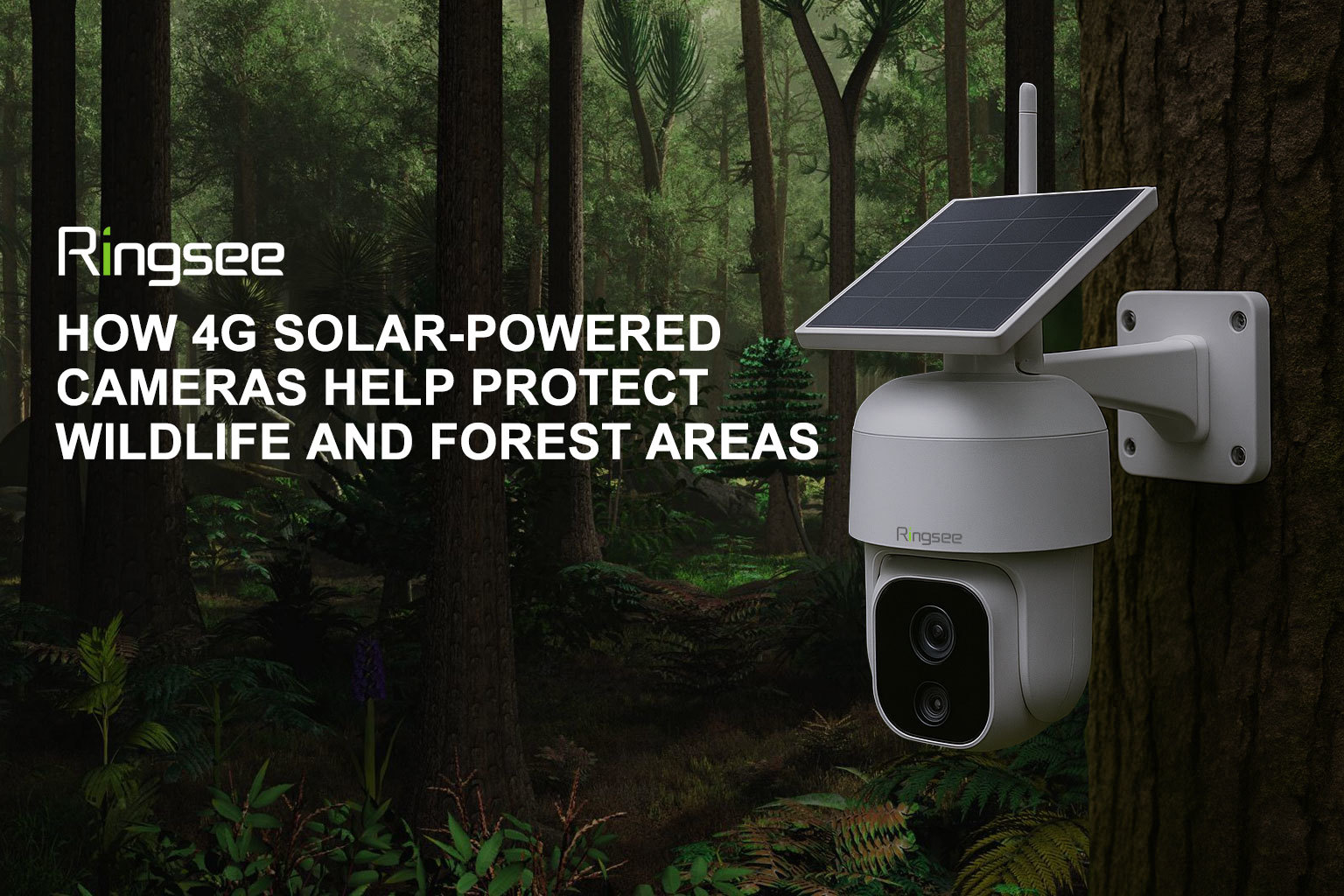
Ringsee - 4G solar-powered security cameras—designed by experienced ODM OEM manufacturers and suppliers—have emerged as a cutting-edge solution for monitoring remote forest and wildlife zones.
As environmental threats such as illegal logging, poaching, and wildfires continue to increase, the need for autonomous, eco-friendly surveillance is more urgent than ever. 4G solar-powered security cameras—designed by experienced ODM OEM manufacturers and suppliers—have emerged as a cutting-edge solution for monitoring remote forest and wildlife zones. These systems operate independently of grid power and Wi-Fi networks, providing long-lasting, intelligent surveillance for some of the world’s most sensitive ecosystems.
Use Cases in Forest Preserves and Trails
4G solar cameras are increasingly being deployed in national parks, wildlife conservation areas, and rural trails due to their self-sufficiency and reliable performance. Key applications include:
Endangered species observation: Silent monitoring helps study rare species without human interference.
Anti-poaching surveillance: Motion-triggered alerts sent over 4G notify rangers in real time of suspicious activity.
Visitor safety: Parks use these cameras along trails to ensure hikers’ safety and track movement.
Environmental monitoring: Integration with sensors allows for real-time detection of wildfires, flooding, or illegal deforestation.
These use cases drive growing demand for ruggedized cameras from custom OEM ODM manufacturers that specialize in field-ready surveillance solutions.
Benefits: Silent Monitoring, Remote Alerts, Long Battery Life
Key benefits of using solar-powered 4G cameras in forestry applications include:
100% Wire-Free Operation: Integrated solar panels and lithium or LiFePO₄ battery packs support continuous operation for months—even in overcast regions.
Silent, Non-Invasive Monitoring: Ideal for wildlife tracking, these cameras emit no noise or light pollution unless infrared LEDs are triggered at night.
4G Connectivity: Unlike traditional systems, they do not require Wi-Fi, making them perfect for off-grid deployment.
Remote Control and Alerts: Operators can adjust camera settings, playback footage, and receive AI-generated alerts from anywhere via mobile or desktop apps.
With adaptive energy management chips and ultra-low-power standby modes, these cameras provide maximum uptime with minimal maintenance.
How AI Motion Detection Reduces False Alarms
In forest environments where wind, rain, and moving foliage can trigger false alerts, AI-based motion detection provides essential accuracy:
Human and Animal Differentiation: AI algorithms embedded on the edge processor use pattern recognition to distinguish between animals, humans, and vehicles.
False Alert Suppression: AI filters reduce notifications caused by insects, light flickers, or tree movement.
Smart Zone Configuration: Users can assign detection zones to minimize unwanted alerts from specific areas, such as swaying branches or water reflections.
These AI capabilities significantly improve the efficiency of patrol and research operations, particularly when paired with advanced ODM-designed camera platforms that support edge AI chipsets.
Ideal Models for Harsh Outdoor Environments
Cameras deployed in extreme outdoor conditions require both mechanical resilience and electrical stability. Top solar camera suppliers like Ringsee manufacture models that meet these challenges with:
IP66-rated waterproof and dustproof enclosures
Wide operating temperature support (-30°C to 60°C)
Anti-theft mounting brackets and steel enclosures
Infrared and color night vision support for 24/7 coverage
Models such as Ringsee’s RS-OSC-9108 and RS-SOC-9110 feature dual-lens and triple-lens arrays, enabling wider panoramic capture with zoom-in detail—ideal for large forest sectors or multi-angle surveillance.
Data Storage and Access in Remote Areas
Data management in off-grid forest areas is made efficient with advanced storage and transmission options:
Local Storage: High-endurance microSD cards or eMMC modules allow for days or weeks of recording with loop-overwrite capability.
Cloud Access: H.265 compression enables real-time upload of events via 4G networks to secure cloud platforms.
Remote Playback: Field personnel can retrieve footage remotely for analysis, sharing, or legal reporting using encrypted mobile apps.
Redundant storage configurations and optional FTP/RTMP streaming make these systems suitable for law enforcement and wildlife research.
Product Development Trends: Innovation in Off-Grid Surveillance
The forest and environmental surveillance sector is undergoing rapid innovation. Here are the key trends driving product development among professional ODM OEM security camera manufacturers:
Edge AI Integration: Cameras are increasingly designed with embedded NPUs to process AI models locally, reducing data transmission needs and latency.
Smart Power Management: New designs integrate MPPT (Maximum Power Point Tracking) to improve solar panel efficiency and intelligent battery monitoring.
Compact Multi-Lens Systems: Compact housing now accommodates dual or triple lenses, enabling wide-angle plus zoom or multi-directional coverage.
4G/5G Hybrid Connectivity: Next-generation models offer dual SIM capability and support for future-proof 5G network deployments in developing regions.
Modular Design: Modular PCBs and flexible firmware platforms allow faster customization for specific ecological or governmental needs, empowering ODM clients with greater control.
Ringsee actively leads in these development trends, offering private-label, bulk-order solutions and long-term R&D collaboration for clients in environmental protection, forestry, and smart agriculture sectors.
Conclusion
The use of 4G solar-powered surveillance cameras in forestry and wildlife protection demonstrates how advanced technology can align with sustainability goals. Silent operation, intelligent AI analytics, and rugged outdoor design make these systems a top choice for conservationists, NGOs, and park authorities worldwide.
As a trusted ODM OEM manufacturer and supplier, Ringsee delivers field-proven solutions that are customizable, scalable, and backed by over 15 years of security camera expertise. Whether you're launching a national wildlife monitoring program or need customized cameras for regional forest protection, Ringsee is your reliable technology partner.
Contact us today to explore partnership opportunities, custom product development, or distribution plans for your conservation surveillance needs.
Related News
Target readers: security owners, system integrators, and EHS engineers for petrochemical, oil and gas, pharmaceutical, powder processing, and coal mining sites where explosive gas or combustible dust exists. Core takeaway: a normal camera is itself an ignition source in flammable environments. You must use explosion proof cameras certified to ATEX, IECEx, or China Ex, selected by hazard zone, installed with proper grounding, and documented for compliance. This guide gives a reusable selection, install, and acceptance workflow.
Nov 08,2026
4G 5G Cellular Surveillance Camera Guide: Remote Video without Broadband
Target readers: security owners and integrators for farms, orchards, fisheries, construction, oil and mining sites, vehicle fleets, and remote African villages where broadband is scarce. Core takeaway: when there is no fiber, no broadband, and frequent power loss, a SIM card cellular camera is the easiest and most scalable remote video option. This guide gives a reusable architecture covering power, data, backhaul, AI, and compliant deployment.
Nov 08,2026
Analog CCTV Upgrade Guide: Coax HD Reuse vs Full IP Rebuild, Cost and Timeline Compared
Factory, campus and retail chains running analog surveillance for five or six years face the same wall: blurry images, unretrievable footage, and no path to AI analytics on legacy hardware. This guide breaks down pre-upgrade system inventory, compares the coax-HD reuse route against a full IP rebuild, gives bandwidth and storage recalculation formulas, and lays out a zoned, non-disruptive cutover plan with a selection checklist.
Oct 31,2026
CCTV Maintenance Outsourcing: SLA Tiers, Market Rates, KPI and Contract Playbook
Conclusion first: the real cost of a surveillance system is in its operation. Three years of maintenance typically equals 30% to 50% of the build cost, yet most buyers spend the budget at install and leave operation to whoever happens to notice. Lock the maintenance boundary while signing the build contract. This guide breaks down the in-house versus outsourced decision model, a three-tier SLA (P1 / P2 / P3), per-point market rates and how to read a quote, the two KPIs that decide payment (camera online rate and footage integrity), the five clauses every contract must hold, the 90-day handover that most often loses control, plus a selection checklist and acceptance tests.
Oct 25,2026
Links:One Belt Power Technology
Add: 14th Floor, Baoshan Building, Longhua District, Shenzhen China.
Privacy Policy | SEO | CitySite | Support: 300.cn Dongguan