














































































Wired Doorbell vs. Wireless Doorbell Camera: Market Trends and Functional Evolution
Publish:
2025-05-19 14:37
Source:
https://www.ring-see.com
As smart home technology evolves, the traditional wired doorbell is rapidly being supplemented—or even replaced—by the wireless doorbell camera.
As smart home technology evolves, the traditional wired doorbell is rapidly being supplemented—or even replaced—by the wireless doorbell camera. While both serve the same core purpose—alerting you when someone is at the door—their functionality, installation methods, and consumer appeal differ greatly. This article explores the relationship between the two, analyzing how market demand is shifting and why wireless solutions are gaining popularity.
The Evolution: From Wired to Wireless
Traditional wired doorbells have been household staples for decades. Powered through home electrical wiring, they offer consistent reliability. However, with the rise of smart homes and increasing consumer demand for convenience, wireless doorbell cameras have emerged as a more flexible and feature-rich alternative.
The wireless doorbell camera doesn't just ring—it integrates video surveillance, motion detection, and two-way communication, making it both a security device and a visitor management tool.
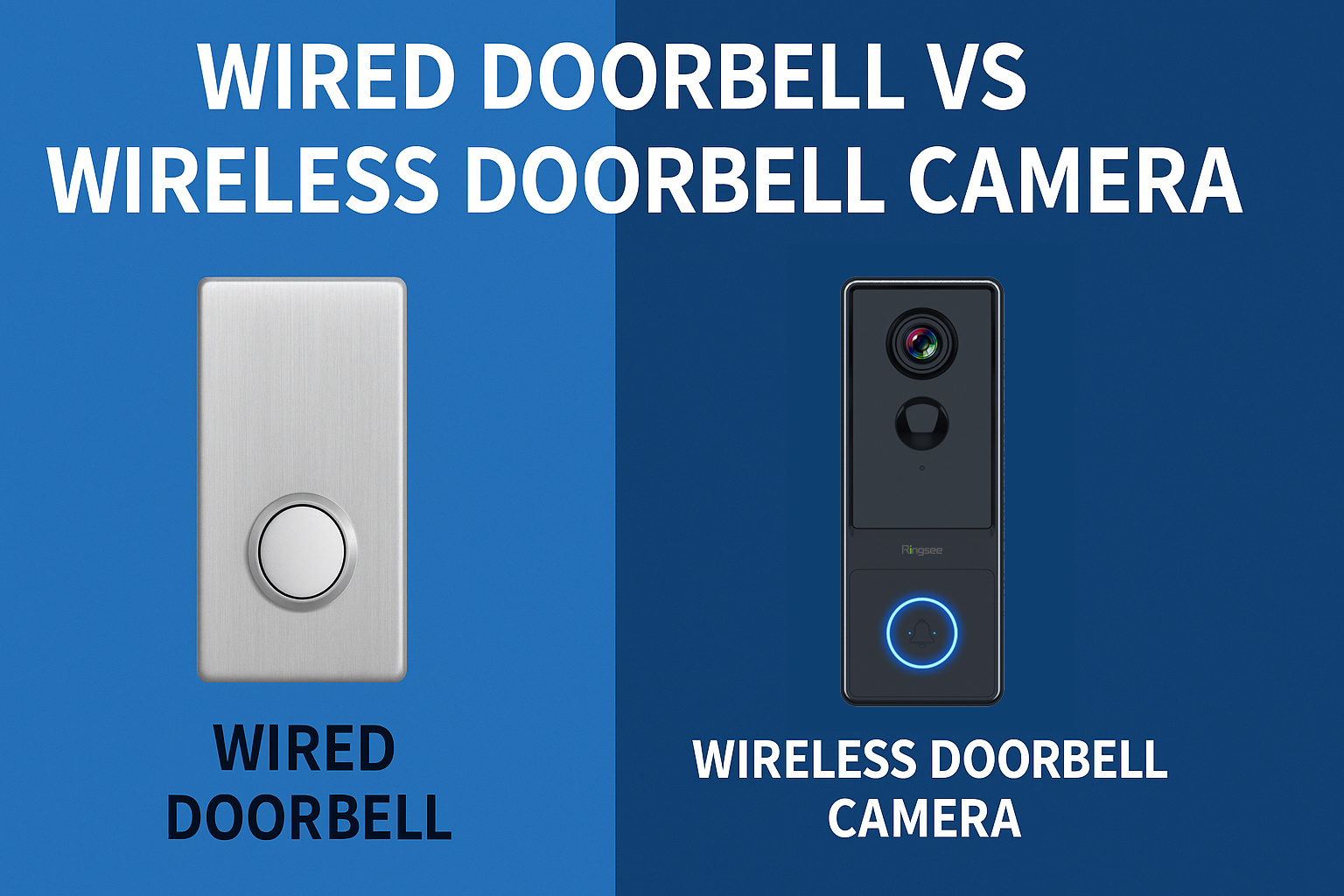
Functional Comparison
Wired Doorbells: Reliability Over Simplicity
Wired doorbells operate through a home’s existing electrical infrastructure. Many homeowners prefer them for their constant power supply and stable performance. Modern wired models may include smart features, such as video and app connectivity, but installation can be complex and often requires professional help.
Pros:
Continuous power (no battery charging)
Stable connection
Good option for homes with existing wiring
Cons:
Inflexible installation
Higher upfront labor cost
Limited portability
Wireless Doorbell Cameras: Flexibility Meets Intelligence
Wireless doorbell cameras are battery-powered (sometimes with solar panel support) and connect to WiFi or 4G networks. They are quick to install, easy to relocate, and packed with smart features like:
Live video streaming
AI-based motion alerts
Two-way audio communication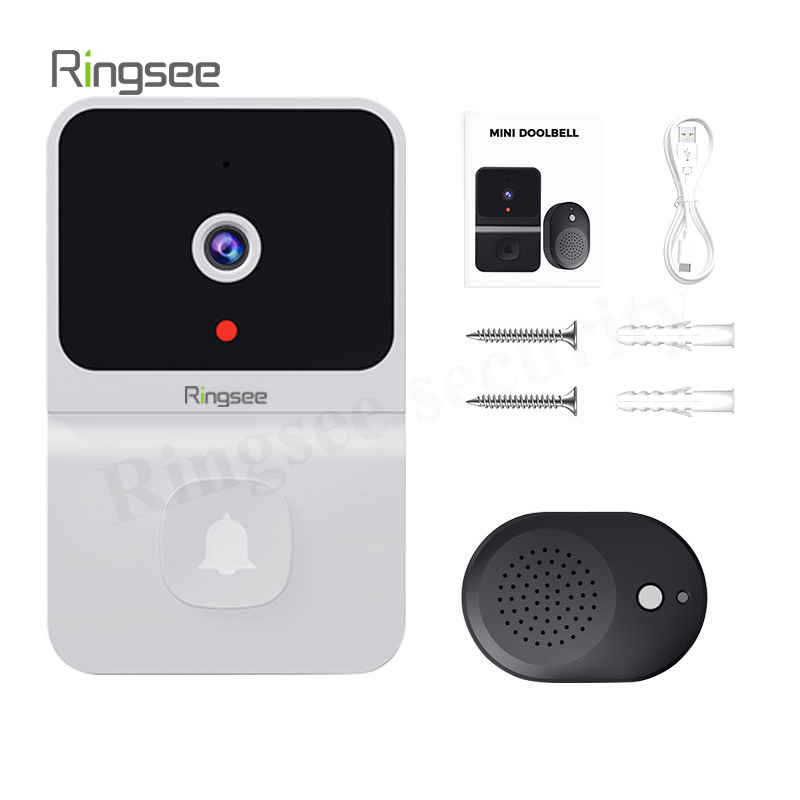
Remote access via mobile apps
Pros:
DIY-friendly installation
Smart features for remote monitoring
Ideal for renters and mobile homes
Cons:
Battery needs periodic charging (unless solar-powered)
Dependent on network stability
Market Demand Analysis
Rising Demand for Wireless Solutions
According to recent smart home industry reports, the global market for video doorbells—especially wireless models—is growing rapidly. The shift is driven by:
Urbanization and apartment living, where wired systems are impractical
Increased demand for home security amid rising delivery theft and trespassing
Convenience-focused consumers, particularly younger demographics and renters
DIY home improvement trends
The wireless doorbell camera aligns perfectly with modern consumer expectations: plug-and-play usability, smart functionality, and scalable security.
Wired Models Still Hold Value
Despite the surge in wireless adoption, wired doorbells remain relevant in certain contexts:
Heritage homes with built-in wiring
Users looking for long-term, maintenance-free solutions
Homeowners wary of battery management or wireless interference
However, these models are increasingly upgraded with smart add-ons, blending the line between traditional and modern tech.
Strategic Insight: Coexistence, Not Competition
It’s not a matter of which is better—wired and wireless doorbell technologies serve different needs. For manufacturers and suppliers like Ringsee, the key lies in offering both types to cater to diverse markets. By understanding user profiles (e.g., homeowners vs. renters, tech-savvy vs. traditional users), companies can position the right product to the right audience.
Conclusion
The transformation from wired doorbells to wireless doorbell cameras reflects a broader shift toward smart living. As consumers prioritize convenience, real-time monitoring, and easy installation, the wireless doorbell camera has become the preferred choice in many segments. Still, the reliability of wired systems ensures they retain their niche.
For both consumers and brands, understanding the strengths and market demands of each type is critical in making the right choice—or offering the right product.
Related News
Target readers: security owners, system integrators, and EHS engineers for petrochemical, oil and gas, pharmaceutical, powder processing, and coal mining sites where explosive gas or combustible dust exists. Core takeaway: a normal camera is itself an ignition source in flammable environments. You must use explosion proof cameras certified to ATEX, IECEx, or China Ex, selected by hazard zone, installed with proper grounding, and documented for compliance. This guide gives a reusable selection, install, and acceptance workflow.
Nov 08,2026
4G 5G Cellular Surveillance Camera Guide: Remote Video without Broadband
Target readers: security owners and integrators for farms, orchards, fisheries, construction, oil and mining sites, vehicle fleets, and remote African villages where broadband is scarce. Core takeaway: when there is no fiber, no broadband, and frequent power loss, a SIM card cellular camera is the easiest and most scalable remote video option. This guide gives a reusable architecture covering power, data, backhaul, AI, and compliant deployment.
Nov 08,2026
Analog CCTV Upgrade Guide: Coax HD Reuse vs Full IP Rebuild, Cost and Timeline Compared
Factory, campus and retail chains running analog surveillance for five or six years face the same wall: blurry images, unretrievable footage, and no path to AI analytics on legacy hardware. This guide breaks down pre-upgrade system inventory, compares the coax-HD reuse route against a full IP rebuild, gives bandwidth and storage recalculation formulas, and lays out a zoned, non-disruptive cutover plan with a selection checklist.
Oct 31,2026
CCTV Maintenance Outsourcing: SLA Tiers, Market Rates, KPI and Contract Playbook
Conclusion first: the real cost of a surveillance system is in its operation. Three years of maintenance typically equals 30% to 50% of the build cost, yet most buyers spend the budget at install and leave operation to whoever happens to notice. Lock the maintenance boundary while signing the build contract. This guide breaks down the in-house versus outsourced decision model, a three-tier SLA (P1 / P2 / P3), per-point market rates and how to read a quote, the two KPIs that decide payment (camera online rate and footage integrity), the five clauses every contract must hold, the 90-day handover that most often loses control, plus a selection checklist and acceptance tests.
Oct 25,2026
Links:One Belt Power Technology
Add: 14th Floor, Baoshan Building, Longhua District, Shenzhen China.
Privacy Policy | SEO | CitySite | Support: 300.cn Dongguan