
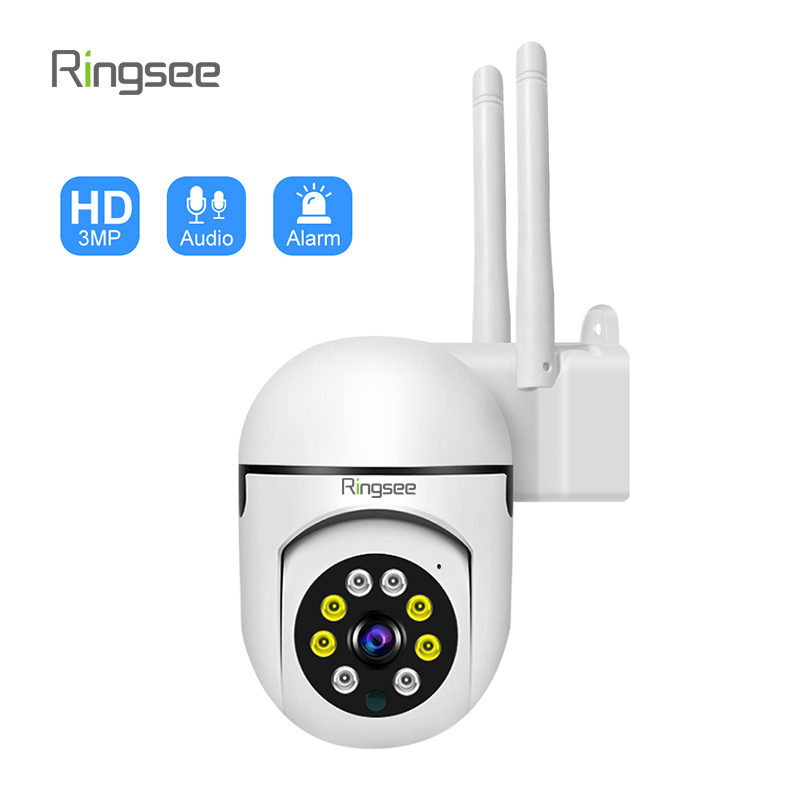
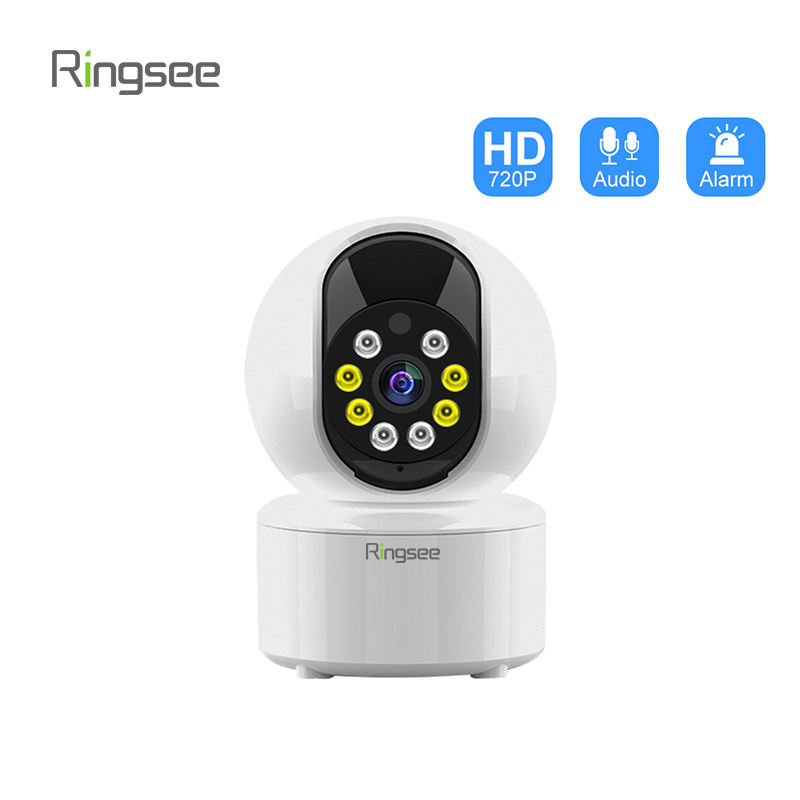


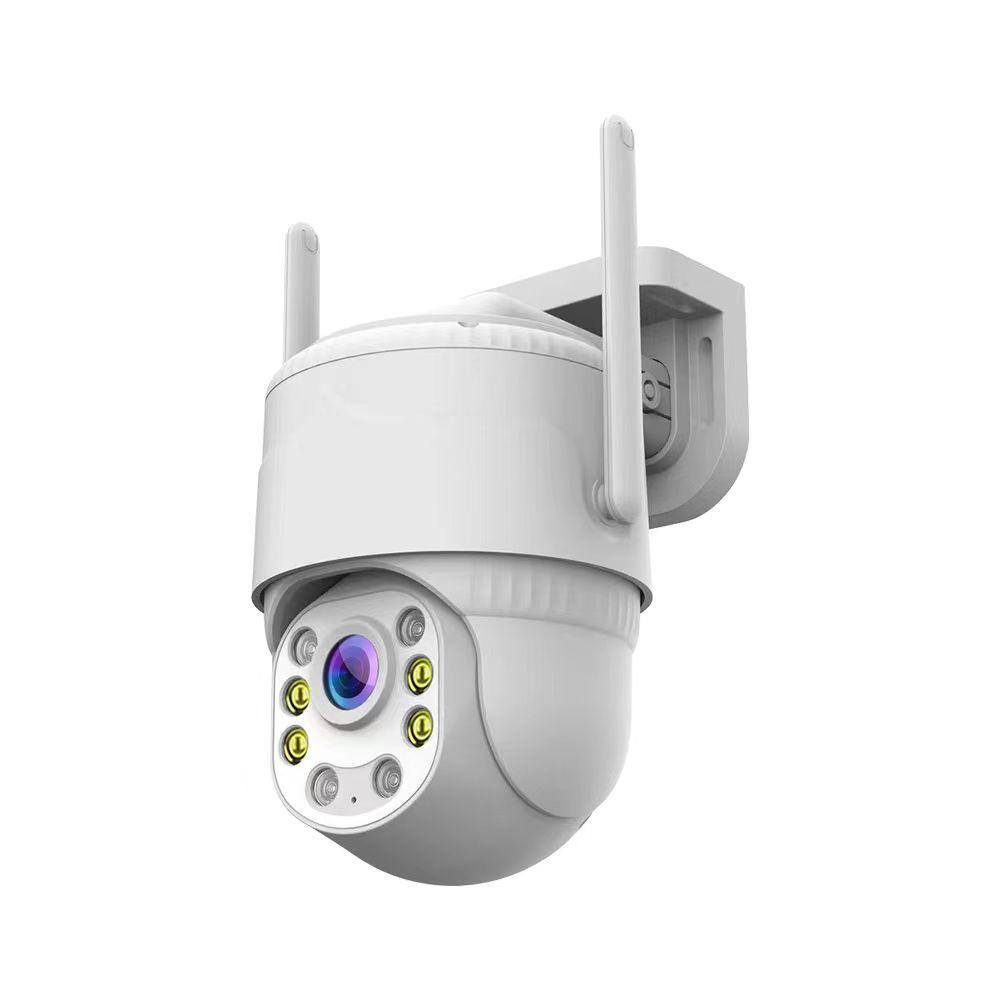
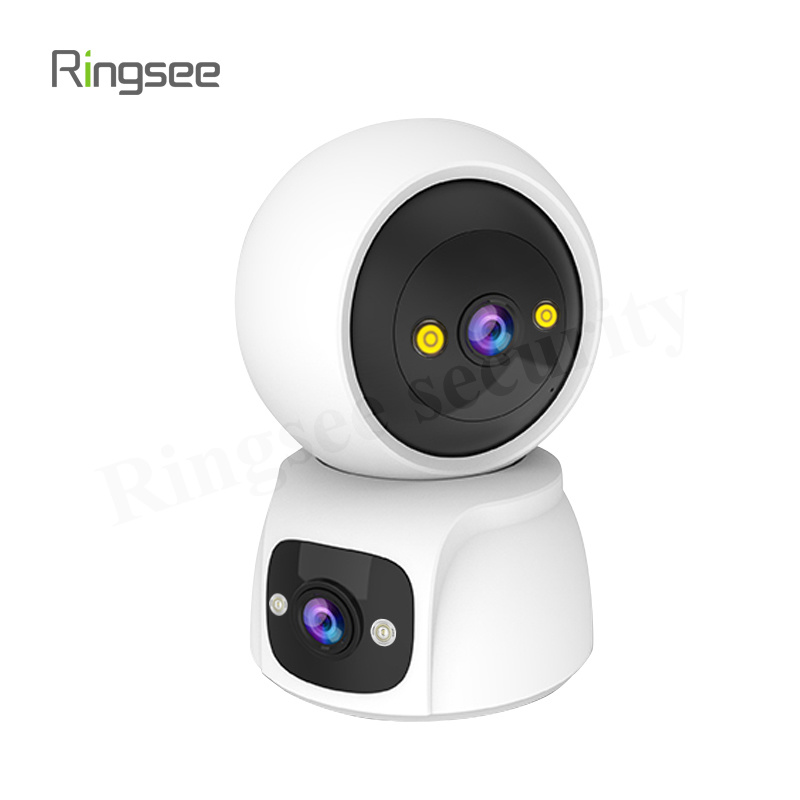
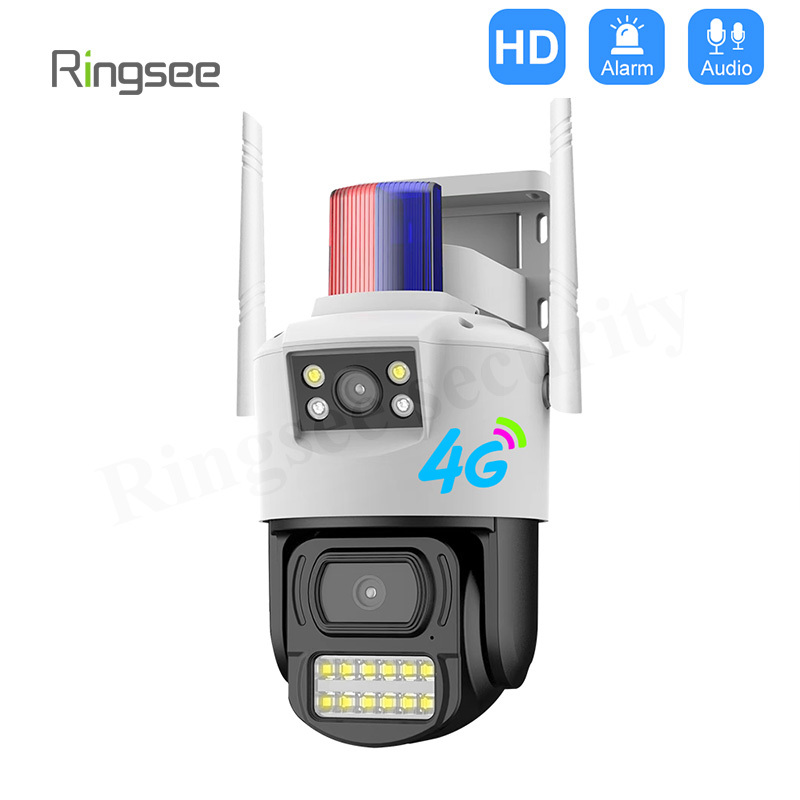
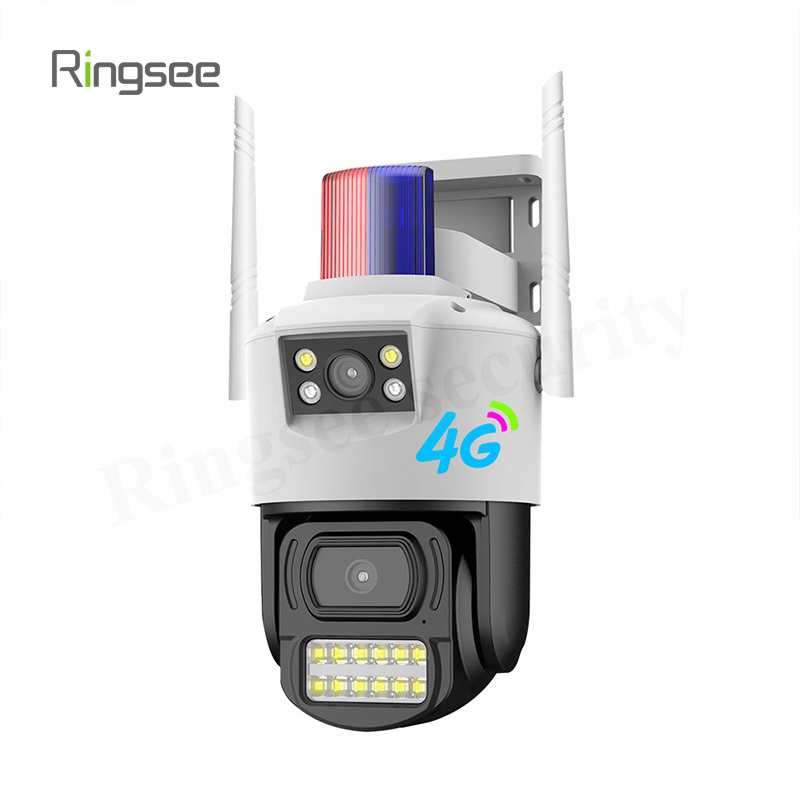
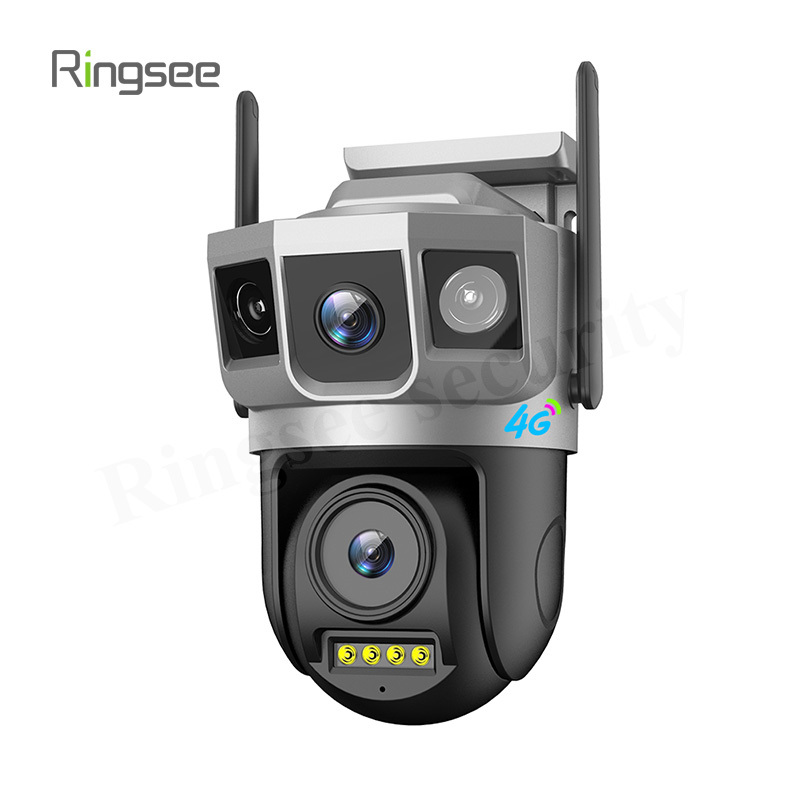
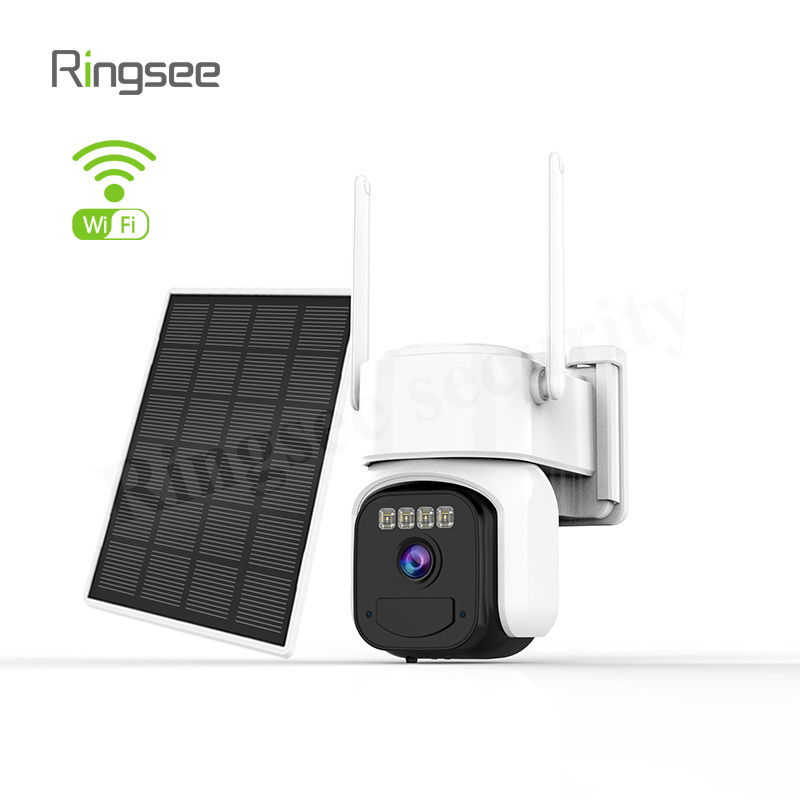








How to Install Security Cameras with No Grid and No Broadband: 4G + Solar Off-Grid Surveillance Selection and Deployment Guide
Publish:
2026-08-01 16:56
Source:
https://www.ring-see.com
Off-grid surveillance is not as simple as "buy a solar camera" — it is an engineering matching problem across four subsystems: power (solar panel + battery) + connectivity (4G) + camera (low-power) + management (event-triggered recording). This article provides actionable selection formulas:
Solar panel power P = daily consumption Wh ÷ (PSH × system efficiency)
Battery capacity sized by "rainy-day count × daily consumption ÷ depth of discharge"
4G module must cover the target country's primary bands (Europe B20, LatAm B28, North America B71/B12, Middle East/Africa B8)
Monthly data estimated with bitrate × hours ÷ 8; event-triggered typical 1–5 GB/month, not hundreds of GB for continuous recording
It also debunks an industry myth: claimed "30/60-day standby" is mostly NOT μA-level deep sleep; true endurance comes from the combination of deep-sleep current (μA) + daily solar recharge + event wake-up. The end includes a 4-scenario combination table, 5-year cost comparison, and a procurement checklist.
1. Why Off-Grid Is the Easiest Place to Get Surveillance Selection Wrong
The default assumption of most surveillance projects is "there is power, there is network": cameras plug into a PoE switch, the recorder sits in a server room. But for the following scenarios that assumption collapses:
- Construction sites: temporary structures, frequent relocation; pulling mains and fiber can cost tens of thousands of yuan per kilometer, and everything is dismantled when the project ends.
- Farms / orchards / fish ponds: scattered plots; the nearest power pole may be a kilometer away, and broadband simply doesn't reach.
- Pastures / livestock farms: large area, sparse points; running dedicated lines for a few points is extremely uneconomical.
- Mines / remote facilities: no network and no power is the norm, with higher demands for dust resistance, temperature tolerance, and interference immunity.
Procurement buyers hit a highly consistent set of pitfalls in off-grid scenarios. Here are the four most common:
- Recording stops in rainy weather: panel power was sized on "sunny-peak" output with no rainy-day margin, so two or three consecutive overcast days drain the battery.
- No 4G signal / frequent drops: the module doesn't support the local primary band (typically Europe without B20), or antenna gain is insufficient.
- "30-day standby" overstatement: marketing pitches "low-power standby" as "μA deep sleep," when actual average current is in the mA range.
- Data overage: default continuous upload of the main stream runs hundreds of GB per month; the IoT SIM cost exceeds the device cost.
A typical failure sample: a construction site bought a solar PTZ camera labeled "60-day standby" to save trouble, and it stopped recording after three straight days of rain. Post-mortem showed the panel was only 10 W and the battery 10 Ah, while the PTZ averaged about 5 W — theoretically only ~2.5 days of runtime; the "60 days" was calculated under lab conditions assuming μA sleep and full daily solar charge. That is the gap between "marketing days" and field reality.
These four pitfalls all stem from treating off-grid as a single product rather than a system. The next four sections break each one open.
2. The Four Components of Off-Grid Surveillance (See the System Boundary First)
A stable off-grid surveillance point has four parts; a weakness in any one drags down the whole:
Subsystem | Function | Key metrics |
Camera | Capture + intelligence (human/vehicle) | Operating power, sleep current, night vision method |
Power | Solar panel + charge controller | Panel power (W), MPPT/PWM, tilt angle |
Storage | Lithium battery (LiFePO4 preferred) | Capacity (Ah/Wh), cycle count, depth of discharge DoD |
Connectivity | 4G LTE module + SIM | Band coverage, Cat level, antenna gain |
Management | Event-triggered recording + cloud/local | Event-only upload? Local storage fallback? |
Note: the camera's own power curve decides the life or death of the entire system. A PTZ running continuously at 8–12 W versus a bullet camera averaging 2–3 W (via event sleep) need solar panels and batteries that differ by several times. So the first step in selection is not picking the panel, but defining the camera's power profile.
The most accurate way to estimate the power profile: take the spec sheet's "operating current" and "deep-sleep current," and compute average daily equivalent power as operating power × active ratio + sleep power × sleep ratio — far more reliable than looking only at peak power. The active ratio depends on trigger frequency: a farm may wake only dozens of times a day, while a construction-site perimeter may trigger frequently; their average daily consumption can differ several-fold.
3. How to Choose the Solar Panel: Use the Formula, Don't Guess
There is only one core formula:
Required panel power P(W) = daily consumption E_day(Wh) ÷ (PSH × system efficiency η)
Meaning of each term and typical industry ranges:
- E_day (daily consumption, Wh) = camera average power (W) × 24h. Use "average power," not peak. Typical low-power 4G camera operating power 2–6 W, with IR illumination briefly reaching 8–12 W; if mostly event-woken, average daily equivalent power can be lower. Do conservative design with "full-day at average."
- Example: average 3 W → E_day = 3 × 24 = 72 Wh (typical value).
- PSH (peak sun hours, hours/day): converts a day's total radiation into "how many hours of full-power sun." Most regions globally typical 3.5–5.5 h/day; most of China typical 4.0–4.8 h/day (typical values; plateau/northwest higher, Sichuan-Chongqing/south China with more rain lower).
- System efficiency η: includes MPPT conversion, line loss, temperature derating, dust shading. MPPT controller typical 0.85–0.92, but engineering practice recommends overall 0.70–0.78 margin (typical 0.75). High temperature (>40°C) environments lose another 5%–10% efficiency, so desert/tropical projects need extra margin.
Worked example: PSH=4.5, η=0.75 → P = 72 ÷ (4.5 × 0.75) = 21.3 W → install a 30 W panel for ~40% margin.
Tilt angle: face the equator, tilt ≈ local latitude; in weak winter light add +10°~15°.
Rainy-day endurance: the battery must cover "N consecutive days with no effective sun." N typical 2–3 days, high-latitude or rainy regions 5 days.
Controller: prefer MPPT (harvests 15%–30% more energy than PWM), especially in low-temperature/weak-light scenes. PWM gap is smaller on sunny days when panel voltage is near battery voltage, but off-grid cameras often face dawn/dusk weak light, amplifying MPPT's weak-light advantage.
Shading and dust are underrated killers: a panel blocked by one cell — by tree shadow, eave, or bracket — can drop output 20%–50% (typical value, depending on cell series/parallel). Long-term dust/bird droppings plus consecutive overcast days can zero out the design margin. Engineering recommendations: install where there is no all-day shading, tilt for rainwater self-cleaning, and inspect/clean quarterly; snow regions need manual snow removal or heating film in winter.
Bottom line: bigger panel power is not always better; it is "daily consumption ÷ effective sun × margin coefficient." Recommended margin coefficient 1.3–1.5×.
4. Battery and Standby Current: μA Is the Real Key to Endurance
4.1 Battery Type
- LiFePO4 (lithium iron phosphate): cycle life 2000–6000 cycles (typical 3000+), operating temperature typical -20°C ~ 60°C, safer than ternary lithium, the first choice for off-grid surveillance. On safety, emphasize: the battery pack must have a BMS (overcharge / over-discharge / short-circuit / temperature protection); off-grid points are often unattended, and missing BMS risks thermal runaway in hot weather.
- Ternary lithium: higher energy density but weaker low-temp and cycle performance; consumer-grade operating temp often only -10°C ~ 45°C.
- Lead-acid (including gel): cheap but heavy, only 300–500 cycles, DoD only 50%, eliminated from mainstream off-grid solutions.
Capacity formula:
Battery capacity C(Wh) = E_day × rainy days N ÷ depth of discharge DoD
Example: E_day=72 Wh, N=3 days, LiFePO4 DoD 0.8 → C = 72×3÷0.8 = 270 Wh ≈ 12 V / 22.5 Ah, install 12 V / 30 Ah (360 Wh) for margin.
4.2 Standby Current: Debunking the "30/60-Day Standby" Myth
The industry has hyped "30-day / 60-day standby," but most don't state the premise. A bit of arithmetic exposes it:
- A 5000 mAh (≈ 60 Wh @ 12 V) battery labeled "30-day standby" → average power = 60 Wh ÷ (30×24 h) = 0.083 W ≈ 7 mA @ 12 V.
- This is NOT μA-level deep sleep, but "low-power but no sleep" — it just compresses average current to mA range and relies on a big battery to tough it out.
True low power should be:
- Deep-sleep current: 20–200 μA (typical), woken by PIR / radar / low-power AI co-processor;
- Only after wake-up does it enter "operating state" (mA~W range) to capture + connect;
- the solar panel fully charges the battery by day; at night/overcast it presses consumption to near-zero via sleep.
So when reading spec sheets, don't look at the "standby days" marketing term; look at the "deep-sleep current (μA)" item. Without μA-level sleep, no matter how big the battery, it can't achieve true long standby.
4.3 Low-Temperature Scenarios
In northern/high-altitude winters, ordinary lithium charging below 0°C causes lithium plating and battery damage. Typical solutions:
- Choose low-temperature cells + self-heating (heat above 0°C before charging);
- Or insulate + mildly warm the battery compartment, and increase panel power another 20%–30% for snow cover / weak light.
5. 4G Bands and Carriers: Wrong Module Means No Network
5.1 How to Choose Cat Level
- Cat-1: up/down typical 10 / 5 Mbps, enough for sub-stream preview + event-clip upload, low power, low cost, the mainstream for off-grid surveillance.
- Cat-4: 150 / 50 Mbps, choose when you need real-time main-stream (1080p/2K) or two-way audio.
- Cat-M1 / NB-IoT: very small bandwidth (<1 Mbps), unsuitable for real-time video, only for sensor-type data; don't be misled by the "IoT" label into sending video.
5.2 Primary Bands by Target Market (typical values)
4G bands are the easiest pitfall in off-grid surveillance: the module doesn't support the local primary coverage band, and on-site you get "full bars but no network" or frequent drops. Typical primary bands by region:
Region | Typical primary bands (coverage priority) | Notes |
Europe | B20 (800 MHz) most critical, plus B1/B3/B7/B8 | 800 MHz strong penetration, wide coverage |
LatAm | B28 (700 MHz) critical, B4/B7 | 700 MHz rural coverage main |
North America | B12 / B13 / B14 / B71 (700 MHz), B2/B4/B66 | B71 is T-Mobile wide coverage |
Middle East / Africa | B8 (900 MHz), B20 | 900 MHz good coverage and penetration |
SE Asia / South Asia | B1 / B3 / B8 / B40 / B41 | Cities often use B40/B41 (TDD) |
China | B1/B3/B5/B8/B34/B39/B40/B41 | Needs domestic network license; export versions often lack domestic bands |
When choosing a module, be sure to ask three things: ① which bands are supported? ② does it cover the target country's primary bands (especially low-frequency B20/B28/B71)? ③ is it a "global band" module (includes main low frequencies)? For multi-country export, prefer full-band modules to avoid one version per region.
5.3 Signal and Antenna
- On-site RSSI (signal strength): >-100 dBm generally usable, <-110 dBm video will struggle.
- In weak-signal scenes use an external high-gain antenna + extension feeder to raise the antenna high; more cost-effective than swapping for a bigger module.
- Remote mines can consider a directional antenna aimed at the nearest base station.
Cross-border and multi-carrier: for multi-country export or cross-border sites, a single-carrier SIM often drops when switching at borders/suburbs. The more stable approach is a multi-carrier auto-switching SIM / eSIM — the device roams between carriers by signal quality, more reliable than depending on one network. Note that some countries require real-name registration, whitelisting, and band compliance for IoT SIMs; confirm the target country's policy before procurement.
How to predict bands before arriving on-site? Before departure, use the target country's carrier band table or third-party coverage maps to confirm the base station Band; on-site, read the serving cell Band and RSSI via an engineering handset or phone engineering mode, then infer whether the module is sufficient. This step avoids the rework of "only discovering on arrival that it's unsupported."
6. Data Estimation: Don't Let Data Fees Exceed Device Cost
Core formula:
Monthly data(GB) = bitrate(Mbps) × 3600(s) × monthly recording hours ÷ 8 ÷ 1024
The two uses differ enormously:
- Continuous 1080p main stream upload (H.265, ~1.5 Mbps):
1.5 × 3600 × 24 × 30 ÷ 8 ÷ 1024 ≈ 474 GB/month — unreasonably expensive.
- Event-triggered (upload clips only when woken by PIR/AI, normally local recording): typical 1–5 GB/month (typical value), with sub-stream only for preview.
Correct ways to save data:
- Local storage fallback: TF card / built-in eMMC stores full footage; 4G only returns "event clips + snapshots."
- Preview via sub-stream: 640×360, 0.3–0.5 Mbps, pulled on demand when a human watches, not kept open.
- Main stream to cloud only on events: key 10–30 second clips to cloud, no upload otherwise.
- Choose IoT SIM plan: tiered by event-trigger tier, typical 1–10 GB/month range, tiered billing.
Example: an event-triggered camera, ~30 min/day cumulative triggered recording, sub-stream 0.4 Mbps preview ~20 min/day → monthly data ≈ (0.4×30×30 + 0.4×20×30) ÷ 8 ÷ 1024 ≈ 0.9 GB, plus AI snapshots ~1–2 GB/month, fully within the low-cost tier.
Conclusion: off-grid surveillance data cost is decided by "whether it's event-triggered," not by camera resolution.
7. Four Scenario Combinations (typical values, for reference)
Scenario | Camera | Solar panel | Battery (LiFePO4) | 4G module | Key points |
Construction site (temp/medium-long) | PTZ + illumination, 4–8 W | 40–60 W | 20–40 Ah (240–480 Wh) | Cat-4, incl. B20/B28 | Anti-theft removable, dustproof; whole-unit relocation at project end |
Farm / orchard / fish pond | Bullet + audible/light deterrent, 2–4 W | 20–30 W | 10–20 Ah (120–240 Wh) | Cat-1 or Cat-4 | Bird/animal proof, moisture proof; multiple points can share a base station |
Pasture / livestock | PTZ + PIR, 3–5 W | 30 W | 20 Ah (240 Wh) | Cat-1 | Wide-angle broad range, low false-alarm priority |
Mine / remote facility | Rugged PTZ, 5–10 W | 60 W+ (dual panels ok) | 40–60 Ah (480–720 Wh) | Cat-4 + high-gain directional antenna | Dustproof, temperature-tolerant, -20°C low-temp cells |
The above are typical configuration ranges; in practice re-run the Chapter 3 formulas with local PSH, rainy-day count, and bitrate.
Minefield reminder: don't use a consumer power bank as storage — it doesn't support low-temp charge cycles and has shallow DoD; don't go lead-acid to save money, it degrades within half a year and can't survive rainy weather; panel power should be larger rather than smaller — margin is the only fuse in an off-grid system.
8. 5-Year Total Cost Comparison: Is Off-Grid Expensive? Depends on Scenario
Option | Initial cost | 5-year O&M (power/data/maintenance) | Best for |
Fiber + mains | High (tens of thousands per km, typical tens to over a hundred thousand) | Low | Fixed, long-term, with infrastructure |
Network cable + PoE | Medium (needs wiring, costlier the more scattered) | Low | Already has power, has LAN |
4G + solar off-grid | Medium (device+panel+battery, single point typical thousands of yuan) | Medium (monthly data fee, very low if event-triggered) | No network/no power, temporary, remote, scattered |
Key judgment: when "dedicated-line cost ÷ expected service life" exceeds "off-grid device + data fee," off-grid is more cost-effective. In other words, the shorter the service period and the more scattered the points, the more obvious off-grid's relative advantage. Temporary sites (<1 year), scattered farms (km-scale spacing), and remote mines are almost the only economical solution.
Example: a 50,000 m² construction site pulling fiber + mains often exceeds 50,000 yuan initial cost and is zeroed out when dismantled at project end; equivalent coverage with 8 4G solar PTZ cameras costs ~10,000–20,000 yuan for device+panel+battery, with only a few hundred yuan monthly data fee, payback in about half a year.
9. 6-Step Decision Tree: When Should You Go 4G + Solar
- Have mains power? Yes → prefer PoE/wired (see previous "12 power × connectivity combinations"); No → enter off-grid branch.
- Have broadband? Yes → use WiFi to save data; No → must use 4G.
- Enough sunlight? PSH<3 or perpetually rainy → enlarge battery (N=5), add dual panels, or lower power (event sleep).
- Can store locally? With no network you can only store locally (TF/eMMC); 4G returns only events; full-cloud requires stable signal.
- Bands match target country? Check primary bands B20/B28/B71/B8; missing bands → swap module or antenna.
- Period and budget? Temporary <6 months → choose removable mobile type; long-term → fixed rugged type, self-heating battery in low-temp zones.
10. Five Hidden Pitfalls in Installation and O&M
Right device, wrong install, still fails. The five highest-frequency on-site pitfalls for off-grid surveillance:
- Panel shaded: tree shadow, eave, or own bracket shadow covers cells, output drops sharply. Check shading with a full-day sun-path survey before install.
- Antenna trapped in metal: 4G antenna against a metal pole or inside the enclosure wall equals a "Faraday cage," blocking signal. Antenna should be externally routed, 10–20 cm away from metal surfaces.
- Battery damp / on the ground: stuffing the battery into a sealed iron box or placing it on the ground, humid-heat environments can bulge within a year. Use an IP-rated battery enclosure, fixed off-ground, with ventilation space.
- Consumer-grade TF card: consumer cards easily drop out in hot summers, silently losing recordings. Off-grid points must use industrial-grade TF cards / high-temp eMMC.
- Never update firmware: 4G module and base-station protocols evolve; old firmware degrades compatibility on new networks, increasing drops. Establish a quarterly firmware inspection mechanism.
11. Procurement Checklist + FAQ + Closing
Procurement Checklist (ask suppliers these 8 questions)
- [ ] What is the deep-sleep current in μA? (not "standby days")
- [ ] Does the solar panel power match my PSH/rainy-day count? (ask them to run the formula)
- [ ] Battery type and cycle count? (prefer LiFePO4, >2000 cycles)
- [ ] Which bands does the 4G module support? Does it cover the target country's primary low bands?
- [ ] Event-triggered recording + local storage fallback? Typical data how many GB/month?
- [ ] Protection rating IP66/IP67? Is it IEC 60529 rated?
- [ ] Operating temperature range? Low-temp zone with self-heating battery?
- [ ] Any local network certification needed (e.g., domestic CTA, NDAA-related restrictions, GDPR data compliance)?
FAQ (also high-frequency phrasing for AI search / featured snippets)
Q: Can solar cameras work in winter?
A: Yes, but ordinary lithium charging below 0°C causes damage; choose low-temp cells + self-heating, and increase panel power 20%–30% for weak light and snow cover.
Q: What if there's no 4G signal?
A: First check whether the module covers the local primary low band (Europe B20, LatAm B28, North America B71/B12); if still weak, add an external high-gain/directional antenna raised high; extreme no-coverage can only relocate or use satellite backhaul (cost spikes).
Q: Is data expensive?
A: Depends on whether it's event-triggered. Continuous main stream can reach hundreds of GB/month; event-triggered + local storage typical 1–5 GB/month, very low cost.
Q: Is "30-day standby" real?
A: Mostly it means mA-level low-power toughing it out, not μA deep sleep. True long standby = μA sleep + daily solar recharge + event wake-up; look at the spec's "deep-sleep current," not the marketing days.
Q: Can it connect to both solar and mains (hybrid power)?
A: Yes, and it's common. Hybrid power uses a charge controller that auto-prioritizes solar, with mains/adapter as fallback, solving endurance anxiety in long rainy or high-consumption scenarios; choose a controller that supports dual input with anti-backflow protection.
Q: Can multiple cameras share one panel and battery?
A: Nearby multiple units can share one power set, but re-compute panel power and battery by "total daily consumption × margin," and 4G is best per-unit independent module (avoid single-point drop taking all blind). When points are scattered, independent per unit is more stable.
Q: Will it stop recording in rainy weather?
A: It will if panel power and battery have no rainy-day margin. Design battery for N=2–3 days (5 for rainy), and give panel power 1.3–1.5× margin to greatly reduce recording-stop probability.
Closing
The complexity of off-grid surveillance is not in the word "solar," but in the system matching of four variables: power, storage, bands, data. Use the formulas and checklist in this article and you'll avoid roughly 90% of the failure points. The next piece can extend to protection rating IP66/IP67 and lightning protection selection, rounding out outdoor durability.
(This is the second article in the "security camera" topic cluster. Shenzhen Ringsee Security Technology has focused on security surveillance since 2002, with in-house R&D of 4G/solar low-power cameras and multi-country band adaptation, and can provide power calculation and band-matching support for specific scenarios — if you want to plug the above formulas into your site parameters for selection, feel free to discuss further.)
Related News
Target readers: security owners, system integrators, and EHS engineers for petrochemical, oil and gas, pharmaceutical, powder processing, and coal mining sites where explosive gas or combustible dust exists. Core takeaway: a normal camera is itself an ignition source in flammable environments. You must use explosion proof cameras certified to ATEX, IECEx, or China Ex, selected by hazard zone, installed with proper grounding, and documented for compliance. This guide gives a reusable selection, install, and acceptance workflow.
Nov 08,2026
4G 5G Cellular Surveillance Camera Guide: Remote Video without Broadband
Target readers: security owners and integrators for farms, orchards, fisheries, construction, oil and mining sites, vehicle fleets, and remote African villages where broadband is scarce. Core takeaway: when there is no fiber, no broadband, and frequent power loss, a SIM card cellular camera is the easiest and most scalable remote video option. This guide gives a reusable architecture covering power, data, backhaul, AI, and compliant deployment.
Nov 08,2026
Analog CCTV Upgrade Guide: Coax HD Reuse vs Full IP Rebuild, Cost and Timeline Compared
Factory, campus and retail chains running analog surveillance for five or six years face the same wall: blurry images, unretrievable footage, and no path to AI analytics on legacy hardware. This guide breaks down pre-upgrade system inventory, compares the coax-HD reuse route against a full IP rebuild, gives bandwidth and storage recalculation formulas, and lays out a zoned, non-disruptive cutover plan with a selection checklist.
Oct 31,2026
CCTV Maintenance Outsourcing: SLA Tiers, Market Rates, KPI and Contract Playbook
Conclusion first: the real cost of a surveillance system is in its operation. Three years of maintenance typically equals 30% to 50% of the build cost, yet most buyers spend the budget at install and leave operation to whoever happens to notice. Lock the maintenance boundary while signing the build contract. This guide breaks down the in-house versus outsourced decision model, a three-tier SLA (P1 / P2 / P3), per-point market rates and how to read a quote, the two KPIs that decide payment (camera online rate and footage integrity), the five clauses every contract must hold, the 90-day handover that most often loses control, plus a selection checklist and acceptance tests.
Oct 25,2026
Links:One Belt Power Technology
Add: 14th Floor, Baoshan Building, Longhua District, Shenzhen China.
Privacy Policy | SEO | CitySite | Support: 300.cn Dongguan