














































































1080p vs 2k vs1080p vs 2K vs 4K Security Cameras: Which is Best for Your Surveillance Needs?
Publish:
2025-02-05 17:24
Source:
https://www.ring-see.com
Ringsee: Choosing the Right Resolution for Your Security Cameras: 1080p, 2K, or 4K?
When selecting the best security camera resolution for your property, it's important to consider factors like budget, the area you need to monitor, and how much detail you require. With so many options available—1080p, 2K, and 4K—it can be overwhelming to decide which one is right for you. Here’s a breakdown of the pros and cons of each resolution to help you make an informed decision.
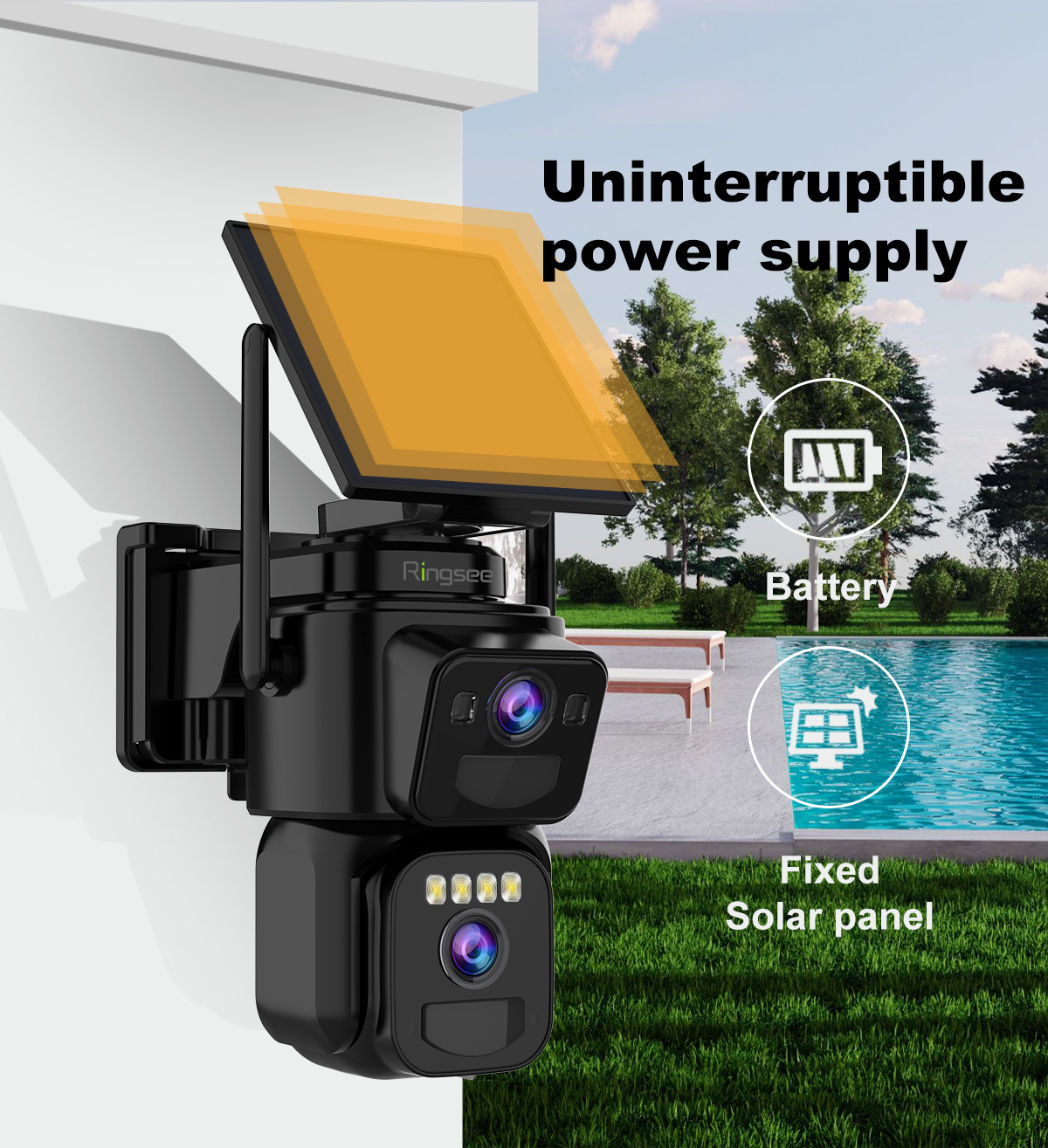
Choosing the Right Resolution for Your Security Cameras: 1080p, 2K, or 4K?
1. 1080p (Full HD) Security Cameras
Pros:
- Affordable: 1080p cameras offer a good balance of quality and price, making them a great choice for residential and small commercial properties.
- Efficient: They don’t require as much storage or bandwidth, making them easier to manage.
- Clear Images: Provides sharp enough images for basic security needs.\
Cons:
- Limited Detail: While 1080p is sufficient for most situations, it might fall short when you need to zoom in on distant objects or identify faces from a distance.
Best For: Homeowners or small businesses with limited budgets who need decent surveillance without a lot of zooming or fine detail.
2. 2K Security Cameras
Pros:
- Better Detail: With a resolution higher than 1080p, 2K cameras provide clearer, sharper images—ideal for monitoring larger areas like parking lots or outdoor perimeters.
- Great Zoom Capability: Offers more detailed footage when zooming in on subjects, making it easier to identify faces or objects.
Cons:
- More Storage: 2K footage requires more storage and bandwidth than 1080p but still isn’t as demanding as 4K.
- Cost: Slightly more expensive than 1080p cameras but more affordable than 4K.

Best For: Medium-sized properties or businesses that need a balance of detail and affordability, especially for monitoring large areas where clarity matters.
3. 4K (Ultra HD) Security Cameras
Pros:
- Exceptional Detail: 4K cameras deliver extremely high-quality footage with crisp detail, perfect for zooming into specific areas without losing clarity. This makes it easier to identify faces, license plates, and other fine details.
- Ideal for Large Areas: Great for large properties or areas that require precise surveillance, such as public spaces or high-security zones.
Cons:
- Expensive: 4K cameras are the most expensive option.
- High Storage and Bandwidth Demands: They require significantly more storage and bandwidth, which could mean higher long-term costs.
- Overkill for Small Spaces: For smaller homes or businesses, 4K cameras may provide more detail than necessary.

Best For: Large properties or areas where high-level detail is crucial, such as parking lots, business entrances, or high-security environments.
Conclusion: Which Resolution is Right for You?
Ultimately, the best security camera resolution for your property depends on your unique needs:
- 1080p cameras are perfect for smaller spaces or if you're looking for a budget-friendly option.
- 2K cameras offer an excellent balance of quality and cost, ideal for medium-sized areas where you need more detail.
- 4K cameras are the top choice for large areas or high-security zones where every bit of detail matters.
Remember that while higher resolution offers more detail, it also demands more storage and bandwidth. So, it’s essential to match the resolution to both your security needs and your ability to manage the footage.
Need more information on selecting the perfect camera for your security setup? Feel free to explore Ringsee's range of solar-powered, low-power security cameras—designed for high-performance surveillance with the latest technology!
Related News
Target readers: security owners, system integrators, and EHS engineers for petrochemical, oil and gas, pharmaceutical, powder processing, and coal mining sites where explosive gas or combustible dust exists. Core takeaway: a normal camera is itself an ignition source in flammable environments. You must use explosion proof cameras certified to ATEX, IECEx, or China Ex, selected by hazard zone, installed with proper grounding, and documented for compliance. This guide gives a reusable selection, install, and acceptance workflow.
Nov 08,2026
4G 5G Cellular Surveillance Camera Guide: Remote Video without Broadband
Target readers: security owners and integrators for farms, orchards, fisheries, construction, oil and mining sites, vehicle fleets, and remote African villages where broadband is scarce. Core takeaway: when there is no fiber, no broadband, and frequent power loss, a SIM card cellular camera is the easiest and most scalable remote video option. This guide gives a reusable architecture covering power, data, backhaul, AI, and compliant deployment.
Nov 08,2026
Analog CCTV Upgrade Guide: Coax HD Reuse vs Full IP Rebuild, Cost and Timeline Compared
Factory, campus and retail chains running analog surveillance for five or six years face the same wall: blurry images, unretrievable footage, and no path to AI analytics on legacy hardware. This guide breaks down pre-upgrade system inventory, compares the coax-HD reuse route against a full IP rebuild, gives bandwidth and storage recalculation formulas, and lays out a zoned, non-disruptive cutover plan with a selection checklist.
Oct 31,2026
CCTV Maintenance Outsourcing: SLA Tiers, Market Rates, KPI and Contract Playbook
Conclusion first: the real cost of a surveillance system is in its operation. Three years of maintenance typically equals 30% to 50% of the build cost, yet most buyers spend the budget at install and leave operation to whoever happens to notice. Lock the maintenance boundary while signing the build contract. This guide breaks down the in-house versus outsourced decision model, a three-tier SLA (P1 / P2 / P3), per-point market rates and how to read a quote, the two KPIs that decide payment (camera online rate and footage integrity), the five clauses every contract must hold, the 90-day handover that most often loses control, plus a selection checklist and acceptance tests.
Oct 25,2026
Links:One Belt Power Technology
Add: 14th Floor, Baoshan Building, Longhua District, Shenzhen China.
Privacy Policy | SEO | CitySite | Support: 300.cn Dongguan