














































































Comparing Ringsee’s Low-Power Surveillance Cameras to Traditional Security Systems
Publish:
2025-02-10 16:03
Source:
https://www.ring-see.com
Ringsee’s low-power solar-powered surveillance cameras offer an innovative alternative to traditional security systems.
When it comes to securing your property, choosing the right surveillance camera system is crucial. With the rise of energy efficiency and sustainability, Ringsee’s low-power solar-powered surveillance cameras offer an innovative alternative to traditional security systems. In this article, we’ll compare Ringsee’s solar-powered security cameras with traditional systems in terms of power efficiency, installation, flexibility, and cost savings.

1. Power Efficiency: A Smarter, Sustainable Choice
Traditional Security Systems vs. Solar-Powered Surveillance Cameras
Traditional surveillance cameras typically rely on continuous power from the grid or external power sources. This setup can lead to high electricity costs, especially when cameras are running 24/7.
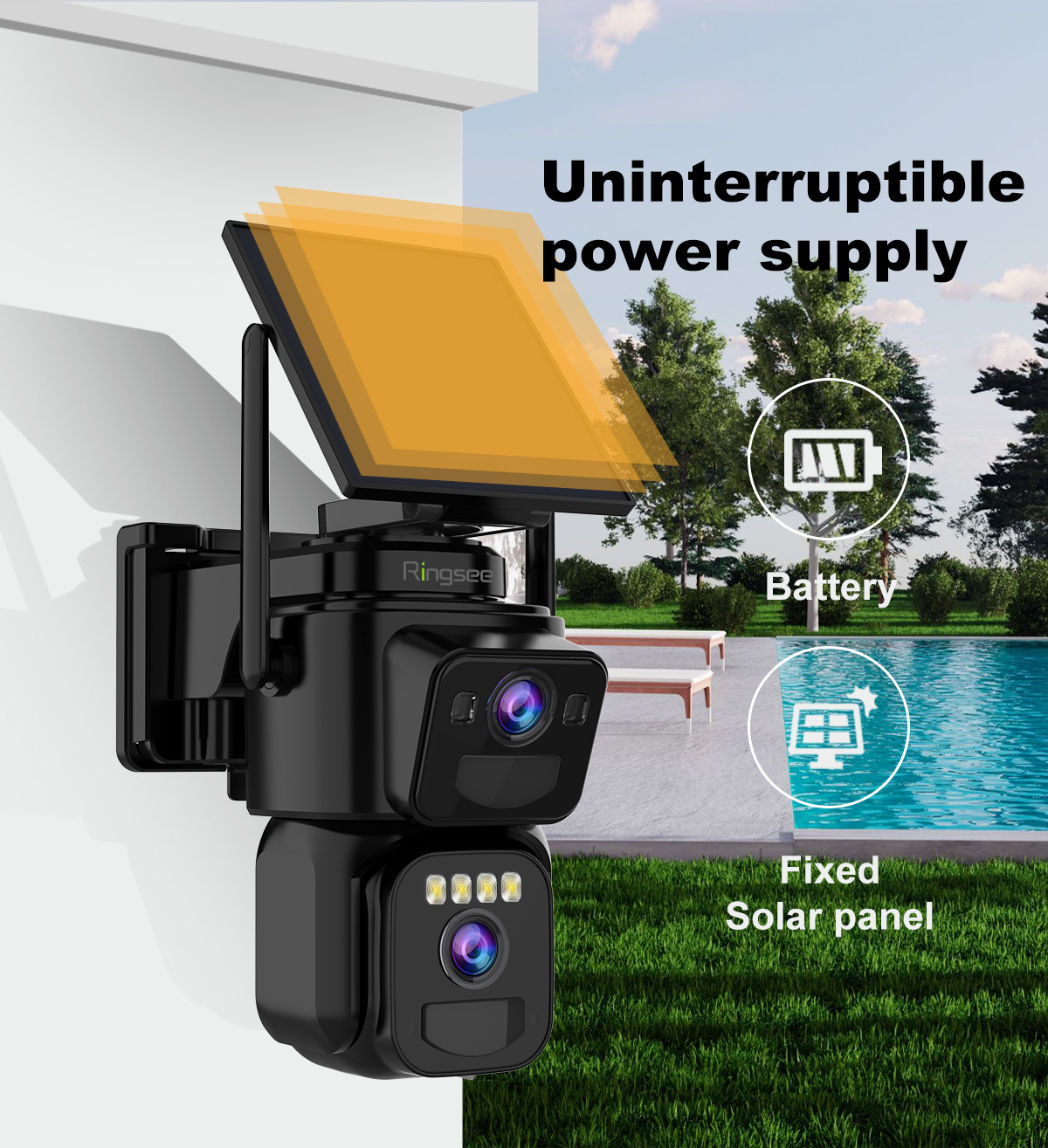
Ringsee’s low-power solar-powered cameras, however, utilize renewable solar energy, significantly reducing power consumption. This makes them an ideal choice for off-grid areas, remote locations, or regions with unreliable electricity. With solar energy, these cameras operate efficiently, lowering both your carbon footprint and electricity bills.
2. Installation and Maintenance: Simplified and Cost-Effective
Traditional Systems: Complex Installation
Installing a traditional security system often involves running wires, connecting to power outlets, and setting up external devices like DVRs. This can be time-consuming and costly, requiring professional installation in some cases.
Ringsee’s Low-Power Solar Cameras: Easy Setup
Ringsee’s low-power solar cameras are designed for easy installation. Thanks to their wireless design and integrated solar panels, setting them up requires little more than placing them in areas with sufficient sunlight. This easy installation process eliminates the need for complicated wiring, reducing both time and installation costs.R
Furthermore, these solar-powered cameras require less maintenance than traditional systems. With fewer electrical components, there’s less risk of issues like wiring failures, meaning fewer repairs and maintenance checks are needed.
3. Flexibility in Placement: No Wires, No Worries
Traditional Systems: Limited by Power Sources
A major limitation of traditional security cameras is their dependency on a nearby power source. This can restrict where you can place cameras, particularly in large outdoor spaces or remote areas.
Ringsee’s Solar-Powered Cameras: Greater Placement Flexibility
Ringsee’s low-power solar cameras solve this problem by eliminating the need for external power connections. These cameras can be installed anywhere that receives adequate sunlight, making them perfect for monitoring large properties, rural locations, or areas where running power lines is impractical.
This flexibility allows for more comprehensive coverage, ensuring that even remote areas are protected by reliable surveillance.
4. Long-Term Cost Savings: Lower Upfront and Ongoing Expenses
Traditional Systems: High Operating Costs
While traditional surveillance systems might come with a lower initial price tag, they often result in higher ongoing costs. The electricity required to run these systems can add up quickly, especially if you have multiple cameras running continuously.
Ringsee’s Low-Power Solar Cameras: Cost-Effective Over Time
Ringsee’s solar-powered security cameras, on the other hand, have much lower ongoing costs. Once installed, they run on solar energy, which is free and renewable. This reduces or eliminates electricity bills associated with keeping the system active. Additionally, the need for costly repairs and replacements is minimized, saving you money over the long term.
5. Advanced Security Features: Reliable and Efficient
Key Features of Traditional Systems
Both traditional and solar-powered systems come with essential features such as motion detection, HD video recording, and remote monitoring. However, traditional systems often rely on wired connections for data storage, which can be vulnerable to theft or failure.
Ringsee’s Solar Cameras: Smart, Energy-Efficient Features
Ringsee’s low-power solar cameras come with advanced motion detection features that activate the camera only when movement is detected. This helps conserve energy and prolong battery life, ensuring that the system runs efficiently without unnecessary power usage. Additionally, Ringsee’s cameras typically include cloud storage options, allowing you to access footage from anywhere, providing greater flexibility and security than traditional systems that rely on local storage.
6. Environmental Impact: A Greener, More Sustainable Option
Traditional Systems and Their Environmental Impact
Traditional surveillance systems often contribute to higher energy consumption, leading to a larger carbon footprint. They rely on non-renewable energy sources, increasing their environmental impact.
Ringsee’s Solar-Powered Cameras: An Eco-Friendly Alternative
By utilizing solar energy, Ringsee’s low-power surveillance cameras offer a more sustainable solution. Solar power is a clean, renewable resource that helps reduce reliance on grid electricity, which in turn lowers your overall environmental impact. If you're looking for a greener way to monitor your property, solar-powered cameras are the way to go.
Conclusion: Why Choose Ringsee’s Low-Power Solar Cameras?
Ringsee’s low-power solar-powered surveillance cameras provide a modern, sustainable, and efficient solution for those looking to secure their homes or businesses. Compared to traditional systems, they offer superior power efficiency, easy installation, long-term cost savings, and flexibility in placement. With over 15 years of expertise in the security monitoring industry, Ringsee is a trusted name in high-quality surveillance solutions.
For anyone looking to reduce energy consumption, minimize maintenance, and embrace innovative technology, Ringsee’s solar-powered cameras are a smart, reliable choice. Whether you're securing a home, business, or outdoor property, Ringsee’s low-power cameras deliver the performance and peace of mind you need.
Related News
Target readers: security owners, system integrators, and EHS engineers for petrochemical, oil and gas, pharmaceutical, powder processing, and coal mining sites where explosive gas or combustible dust exists. Core takeaway: a normal camera is itself an ignition source in flammable environments. You must use explosion proof cameras certified to ATEX, IECEx, or China Ex, selected by hazard zone, installed with proper grounding, and documented for compliance. This guide gives a reusable selection, install, and acceptance workflow.
Nov 08,2026
4G 5G Cellular Surveillance Camera Guide: Remote Video without Broadband
Target readers: security owners and integrators for farms, orchards, fisheries, construction, oil and mining sites, vehicle fleets, and remote African villages where broadband is scarce. Core takeaway: when there is no fiber, no broadband, and frequent power loss, a SIM card cellular camera is the easiest and most scalable remote video option. This guide gives a reusable architecture covering power, data, backhaul, AI, and compliant deployment.
Nov 08,2026
Analog CCTV Upgrade Guide: Coax HD Reuse vs Full IP Rebuild, Cost and Timeline Compared
Factory, campus and retail chains running analog surveillance for five or six years face the same wall: blurry images, unretrievable footage, and no path to AI analytics on legacy hardware. This guide breaks down pre-upgrade system inventory, compares the coax-HD reuse route against a full IP rebuild, gives bandwidth and storage recalculation formulas, and lays out a zoned, non-disruptive cutover plan with a selection checklist.
Oct 31,2026
CCTV Maintenance Outsourcing: SLA Tiers, Market Rates, KPI and Contract Playbook
Conclusion first: the real cost of a surveillance system is in its operation. Three years of maintenance typically equals 30% to 50% of the build cost, yet most buyers spend the budget at install and leave operation to whoever happens to notice. Lock the maintenance boundary while signing the build contract. This guide breaks down the in-house versus outsourced decision model, a three-tier SLA (P1 / P2 / P3), per-point market rates and how to read a quote, the two KPIs that decide payment (camera online rate and footage integrity), the five clauses every contract must hold, the 90-day handover that most often loses control, plus a selection checklist and acceptance tests.
Oct 25,2026
Links:One Belt Power Technology
Add: 14th Floor, Baoshan Building, Longhua District, Shenzhen China.
Privacy Policy | SEO | CitySite | Support: 300.cn Dongguan