













































































AOV Security Camera: A Comprehensive Explanation of "Always On Video" Technology Abstract
Publish:
2025-03-17 10:18
Source:
https://www.ring-see.com
AOV Security Camera, an abbreviation for Always On Video Security Camera, represents a critical advancement in surveillance technology designed for uninterrupted, real-time video monitoring.
AOV Security Camera, an abbreviation for Always On Video Security Camera, represents a critical advancement in surveillance technology designed for uninterrupted, real-time video monitoring. This article provides a detailed technical and operational analysis of AOV systems, their architecture, applications, and the rationale behind the "Always On Video" designation. By exploring their core features, advantages, and industry relevance, this paper underscores why AOV cameras have become indispensable in modern security infrastructure.
1. Definition and Core Concept
An AOV Security Camera is a surveillance device engineered to operate in a continuous recording mode, ensuring 24/7 video capture without interruption. Unlike motion-activated or event-triggered cameras, AOV systems prioritize persistent monitoring, eliminating gaps in footage that could compromise security. The term "Always On Video" (AOV) directly reflects this uninterrupted operational paradigm, emphasizing reliability and completeness in data collection.
2. Technical Architecture
AOV cameras integrate hardware and software components optimized for durability, data throughput, and storage efficiency. Key elements include:
High-Resolution Sensors: Utilize CMOS or CCD sensors with resolutions ranging from 1080p to 4K, enabling crisp imaging even in low-light conditions (via technologies like starlight sensors or IR illumination).
Edge Storage and Cloud Integration: Combine onboard storage (microSD cards, SSDs) with cloud-based solutions to handle massive video datasets.
Power and Connectivity: Support Power-over-Ethernet (PoE) or solar/battery backups for non-stop operation, paired with Wi-Fi 6 or 5G for real-time transmission.
AI-Driven Analytics: Embedded processors run algorithms for object detection, facial recognition, and anomaly alerts while maintaining continuous recording.
3. Why "Always On Video"?
The designation "Always On Video" is not merely a marketing term but a functional descriptor rooted in three pillars:
3.1 Uninterrupted Surveillance
Traditional cameras often rely on motion detection or scheduled recording, risking missed events during activation delays or software glitches. AOV systems eliminate this risk by capturing every moment, critical for forensic analysis and legal compliance.
3.2 Data Integrity
Continuous recording ensures context preservation. For example, incidents preceding a triggered event (e.g., a break-in) can be reviewed to identify precursors or perpetrators’ approaches.
3.3 Compliance and Accountability
Industries such as healthcare, transportation, and finance mandate 24/7 surveillance for regulatory adherence. AOV cameras provide auditable, tamper-proof records, fulfilling legal requirements like GDPR or HIPAA.
4. Applications and Use Cases
- AOV cameras are deployed in scenarios demanding zero downtime:
- Critical Infrastructure: Airports, power plants, and railways.
- Retail and Hospitality: Theft prevention, customer behavior analysis.
- Smart Cities: Traffic monitoring, public safety enforcement.
- Residential Security: High-net-worth property protection.
5. Advantages Over Traditional Systems
No Blind Spots: Motion-activated cameras may fail to detect slow-moving or stationary subjects.
Post-Incident Reconstruction: Full timelines aid investigators in piecing together events.
Proactive Threat Mitigation: Real-time analytics paired with always-on feeds enable instant response to anomalies.
6. Challenges and Mitigations
Storage Costs: Solved via H.265/HEVC compression, tiered storage, and AI-driven data pruning.
Bandwidth Constraints: Edge computing reduces reliance on continuous uplink by preprocessing footage locally.
Privacy Concerns: Addressable through encryption, role-based access controls, and pixelation tools for anonymization.
7. Industry Relevance and Future Trends
The global shift toward IoT and smart ecosystems has amplified demand for AOV systems. Innovations like AI-enhanced compression, LiDAR integration for 3D mapping, and 5G-enabled ultra-low-latency streaming will further solidify AOV cameras as a cornerstone of next-gen security frameworks.
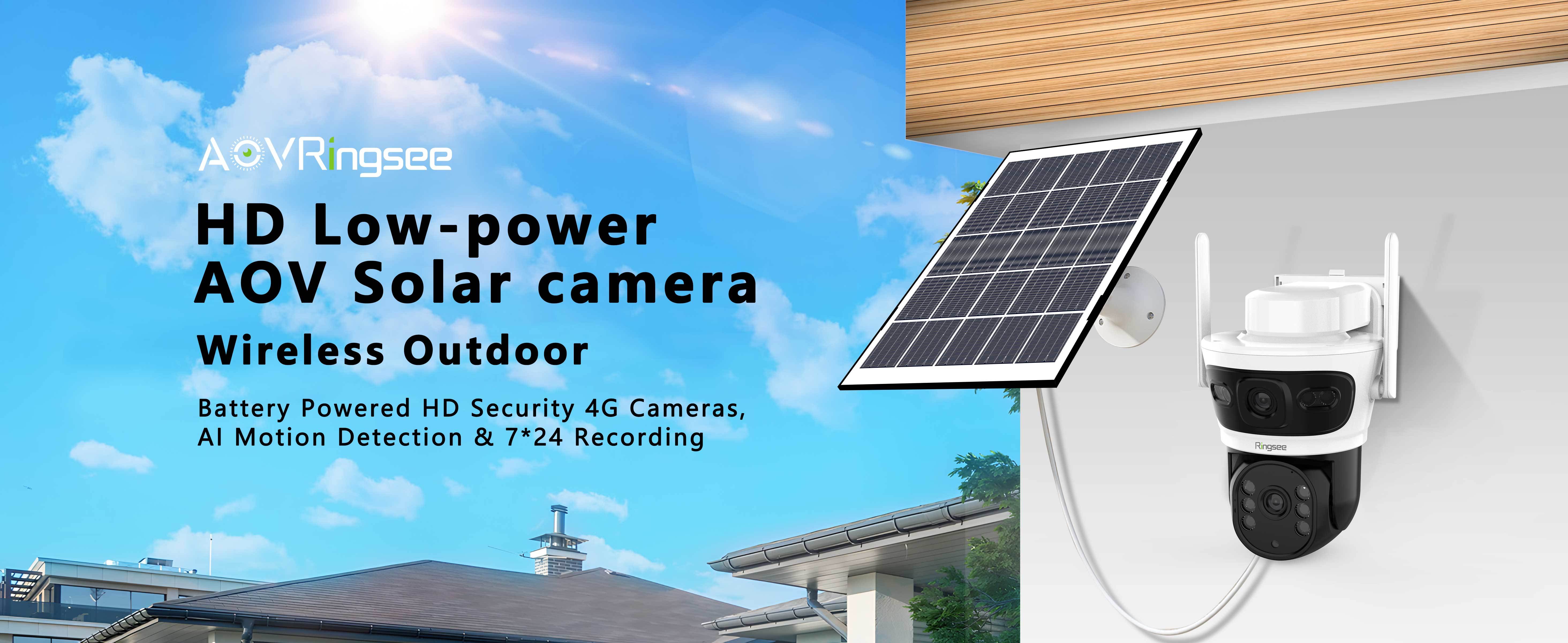
The AOV Security Camera, or Always On Video system, redefines surveillance by prioritizing ceaseless vigilance. Its technical robustness, compliance readiness, and forensic utility make it a non-negotiable asset in securing high-stakes environments. As threats evolve in complexity, AOV technology stands as a testament to the adage, "What is always watched, remains protected."
Related News
Target readers: security owners, system integrators, and EHS engineers for petrochemical, oil and gas, pharmaceutical, powder processing, and coal mining sites where explosive gas or combustible dust exists. Core takeaway: a normal camera is itself an ignition source in flammable environments. You must use explosion proof cameras certified to ATEX, IECEx, or China Ex, selected by hazard zone, installed with proper grounding, and documented for compliance. This guide gives a reusable selection, install, and acceptance workflow.
Nov 08,2026
4G 5G Cellular Surveillance Camera Guide: Remote Video without Broadband
Target readers: security owners and integrators for farms, orchards, fisheries, construction, oil and mining sites, vehicle fleets, and remote African villages where broadband is scarce. Core takeaway: when there is no fiber, no broadband, and frequent power loss, a SIM card cellular camera is the easiest and most scalable remote video option. This guide gives a reusable architecture covering power, data, backhaul, AI, and compliant deployment.
Nov 08,2026
Analog CCTV Upgrade Guide: Coax HD Reuse vs Full IP Rebuild, Cost and Timeline Compared
Factory, campus and retail chains running analog surveillance for five or six years face the same wall: blurry images, unretrievable footage, and no path to AI analytics on legacy hardware. This guide breaks down pre-upgrade system inventory, compares the coax-HD reuse route against a full IP rebuild, gives bandwidth and storage recalculation formulas, and lays out a zoned, non-disruptive cutover plan with a selection checklist.
Oct 31,2026
CCTV Maintenance Outsourcing: SLA Tiers, Market Rates, KPI and Contract Playbook
Conclusion first: the real cost of a surveillance system is in its operation. Three years of maintenance typically equals 30% to 50% of the build cost, yet most buyers spend the budget at install and leave operation to whoever happens to notice. Lock the maintenance boundary while signing the build contract. This guide breaks down the in-house versus outsourced decision model, a three-tier SLA (P1 / P2 / P3), per-point market rates and how to read a quote, the two KPIs that decide payment (camera online rate and footage integrity), the five clauses every contract must hold, the 90-day handover that most often loses control, plus a selection checklist and acceptance tests.
Oct 25,2026
Links:One Belt Power Technology
Add: 14th Floor, Baoshan Building, Longhua District, Shenzhen China.
Privacy Policy | SEO | CitySite | Support: 300.cn Dongguan