














































































How to Choose the Right Home Security Camera in 2026: A Complete Buyer’s Guide
Publish:
2026-03-31 13:14
Source:
https://www.ring-see.com
Learn how to choose the right home security camera for your needs. This complete buying guide covers resolution, night vision, solar power, storage, and professional security camera solutions from Ringsee.
Home security cameras have become an essential part of modern home protection. Whether you want to monitor your front door, backyard, farm, warehouse, or remote property, choosing the right camera can significantly improve your security and peace of mind.
However, with so many options available—wireless cameras, solar-powered cameras, AI detection cameras, and advanced AOV security cameras—it can be difficult to determine which one is the best fit for your needs.
In this comprehensive guide, we’ll walk you through the most important factors to consider when choosing a home security camera, helping homeowners, installers, and distributors make informed decisions.
Understanding the Different Types of Security Cameras
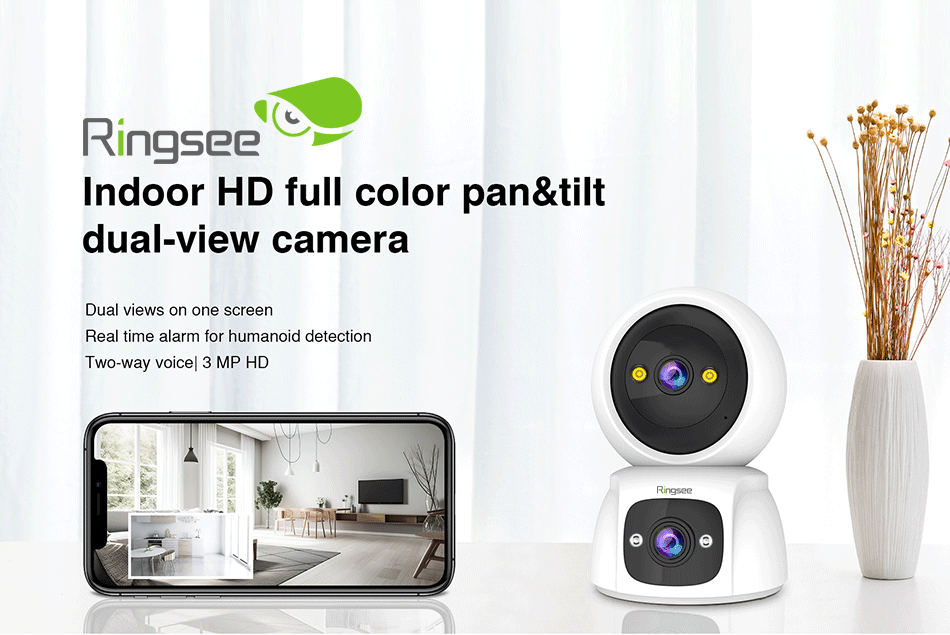
Before choosing a security camera, it's important to understand the different categories available on the market.
Indoor Security Cameras
Indoor cameras are typically designed to monitor areas inside your home, such as living rooms, entrances, or hallways.
Common features include:
- Motion detection
- Two-way audio
- Compact design
- WiFi connectivity
These cameras are ideal for monitoring pets, children, or indoor activity.
Outdoor Security Cameras
Outdoor security cameras are designed to withstand harsh environmental conditions such as rain, heat, and dust. They usually include:
- Weatherproof housing
- Infrared night vision
- Motion detection alerts
- Wider viewing angles
Outdoor cameras are commonly used for monitoring driveways, entrances, yards, and parking areas.
Solar Security Cameras
Solar-powered security cameras are becoming increasingly popular because they eliminate the need for wired power connections.
Advantages include:
- Energy independence
- Easy installation
- Suitable for remote areas
- Continuous operation with solar charging
Solar cameras are widely used in farms, construction sites, and rural properties where traditional power sources may not be available.
Why Resolution and Image Quality Matter
One of the most important factors when choosing a security camera is image resolution.
Higher resolution cameras capture clearer images, making it easier to identify people, vehicles, or important details.
Common camera resolutions include:
| Resolution | Typical Use |
|---|---|
| 1080P | Basic home monitoring |
| 2K / 3MP | Clear identification |
| 4MP | High detail outdoor monitoring |
| 4K | Professional surveillance |
However, resolution alone is not everything. Sensor quality and lens performance also affect image clarity, especially at night.
Many modern security cameras now use AI-enhanced image processing to improve visibility in low-light environments.
Night Vision and Low-Light Performance

Security cameras must operate effectively both during the day and at night.
There are generally three types of night vision technology:
Infrared Night Vision
Infrared LEDs allow cameras to capture black-and-white images in complete darkness. This is the most common night vision technology used in security cameras.
Color Night Vision
Some advanced cameras use spotlight illumination or low-light sensors to capture full-color images at night.
AI Enhanced Night Vision
Modern cameras use AI algorithms to improve brightness, contrast, and noise reduction, producing clearer images in low-light environments.
For outdoor security monitoring, cameras with enhanced night vision provide significantly better protection.

Power Options: Wired vs Battery vs Solar
Another critical factor is how the camera receives power.
Wired Cameras
Wired cameras connect directly to a power supply. They offer stable operation but require professional installation.
Battery Cameras
Battery-powered cameras are easy to install and flexible but require periodic battery replacement or charging.
Solar Cameras
Solar-powered security cameras combine rechargeable batteries with solar panels, allowing continuous operation without manual charging.
Solar cameras are ideal for:
- Farms
- Construction sites
- Forest monitoring
- Remote properties
Many professional security camera manufacturers now offer solar-powered solutions designed specifically for outdoor environments.
Connectivity Options: WiFi vs 4G Cellular Cameras

Connectivity determines how your security camera sends video and alerts.
WiFi Cameras
WiFi cameras connect to your home network and are commonly used in residential environments where internet access is available.
4G Cellular Cameras
4G cameras use a SIM card and cellular networks instead of WiFi. These cameras are ideal for remote locations where internet access is limited.
Typical use cases include:
- Farms
- Remote cabins
- Construction sites
- Wildlife monitoring
4G solar cameras are particularly useful for outdoor security because they can operate independently without power or internet infrastructure.
Smart Features and AI Detection
Modern security cameras are equipped with smart technologies that improve monitoring accuracy.
Popular AI features include:
- Human detection
- Vehicle detection
- Motion alerts
- Activity zones
- Smart notifications
AI-powered cameras reduce false alarms caused by animals, wind, or moving objects.
Some advanced security cameras also offer Always-On Video (AOV) technology, allowing continuous monitoring with extremely low power consumption.
Storage Options: Cloud vs Local Storage
Security camera footage must be stored for later viewing.
There are two main storage options:
Cloud Storage
Cloud storage allows users to access recorded footage from anywhere using a mobile app.
Benefits include:
- Remote access
- Secure backup
- Automatic updates
Local Storage
Local storage typically uses microSD cards or local recorders.
Advantages include:
- No subscription fees
- Offline recording
- Faster playback
Many cameras today offer both cloud and local storage options for flexibility.
Choosing the Right Security Camera Manufacturer
For distributors and professional buyers, selecting the right security camera manufacturer is just as important as choosing the camera itself.
A reliable manufacturer should provide:
- Stable product quality
- Continuous technology updates
- Professional technical support
- Long-term supply capability
Experienced manufacturers also provide customized solutions for different industries such as home security, agriculture monitoring, and outdoor surveillance.
For example, companies like Ringsee, with more than 15 years of experience in security monitoring solutions, focus on developing advanced products such as solar security cameras, AOV cameras, and AI-powered surveillance systems.
Working with an experienced manufacturer ensures reliable products and long-term business cooperation.
Real-World Applications of Modern Security Cameras
Security cameras are now used in a wide range of environments beyond residential homes.
Common applications include:
- Home security monitoring
- Farm and livestock monitoring
- Construction site surveillance
- Warehouse security
- Wildlife observation
Solar-powered and cellular-connected cameras are particularly valuable in remote environments where traditional surveillance systems cannot be installed easily.
Frequently Asked Questions
What resolution is best for a home security camera?
For most homes, a 2K or 4MP camera provides an excellent balance between image quality and storage efficiency.
Are solar security cameras reliable?
Yes. Modern solar cameras use high-capacity batteries and efficient solar panels, allowing them to operate continuously in outdoor environments.
Do security cameras require WiFi?
Not always. Some cameras use 4G cellular networks, making them suitable for remote areas without internet access.
How long do battery-powered cameras last?
Battery life varies depending on usage, motion detection frequency, and camera features. Solar-powered cameras can operate for months without manual charging.
Choosing the right home security camera requires careful consideration of several factors, including image quality, night vision performance, connectivity, power options, and smart features. As security technology continues to evolve, modern solutions such as solar-powered cameras, AI detection, and AOV video technology are making surveillance more efficient and accessible than ever before.
Whether you're protecting your home, monitoring a remote property, or building a professional surveillance system, selecting the right camera—and the right manufacturer—will ensure long-term security and reliability.
Related News
Target readers: security owners, system integrators, and EHS engineers for petrochemical, oil and gas, pharmaceutical, powder processing, and coal mining sites where explosive gas or combustible dust exists. Core takeaway: a normal camera is itself an ignition source in flammable environments. You must use explosion proof cameras certified to ATEX, IECEx, or China Ex, selected by hazard zone, installed with proper grounding, and documented for compliance. This guide gives a reusable selection, install, and acceptance workflow.
Nov 08,2026
4G 5G Cellular Surveillance Camera Guide: Remote Video without Broadband
Target readers: security owners and integrators for farms, orchards, fisheries, construction, oil and mining sites, vehicle fleets, and remote African villages where broadband is scarce. Core takeaway: when there is no fiber, no broadband, and frequent power loss, a SIM card cellular camera is the easiest and most scalable remote video option. This guide gives a reusable architecture covering power, data, backhaul, AI, and compliant deployment.
Nov 08,2026
Analog CCTV Upgrade Guide: Coax HD Reuse vs Full IP Rebuild, Cost and Timeline Compared
Factory, campus and retail chains running analog surveillance for five or six years face the same wall: blurry images, unretrievable footage, and no path to AI analytics on legacy hardware. This guide breaks down pre-upgrade system inventory, compares the coax-HD reuse route against a full IP rebuild, gives bandwidth and storage recalculation formulas, and lays out a zoned, non-disruptive cutover plan with a selection checklist.
Oct 31,2026
CCTV Maintenance Outsourcing: SLA Tiers, Market Rates, KPI and Contract Playbook
Conclusion first: the real cost of a surveillance system is in its operation. Three years of maintenance typically equals 30% to 50% of the build cost, yet most buyers spend the budget at install and leave operation to whoever happens to notice. Lock the maintenance boundary while signing the build contract. This guide breaks down the in-house versus outsourced decision model, a three-tier SLA (P1 / P2 / P3), per-point market rates and how to read a quote, the two KPIs that decide payment (camera online rate and footage integrity), the five clauses every contract must hold, the 90-day handover that most often loses control, plus a selection checklist and acceptance tests.
Oct 25,2026
Links:One Belt Power Technology
Add: 14th Floor, Baoshan Building, Longhua District, Shenzhen China.
Privacy Policy | SEO | CitySite | Support: 300.cn Dongguan