














































































The Ultimate Guide: How to Choose a Smart Bird Feeder Camera in 2025
Publish:
2025-12-08 09:45
Source:
https://www.ring-see.com
The joy of bird watching just moved from your binoculars to your smartphone. Bird feeder cameras have revolutionized backyard nature observation, allowing you to capture stunning, close-up footage of visiting birds, even identifying species you never knew were there.
The joy of bird watching just moved from your binoculars to your smartphone. Bird feeder cameras have revolutionized backyard nature observation, allowing you to capture stunning, close-up footage of visiting birds, even identifying species you never knew were there.
But with so many models available, how do you choose the right one? This comprehensive guide breaks down the essential features to look for, ensuring you find a camera that delivers crystal-clear video, reliable performance, and effortless viewing.
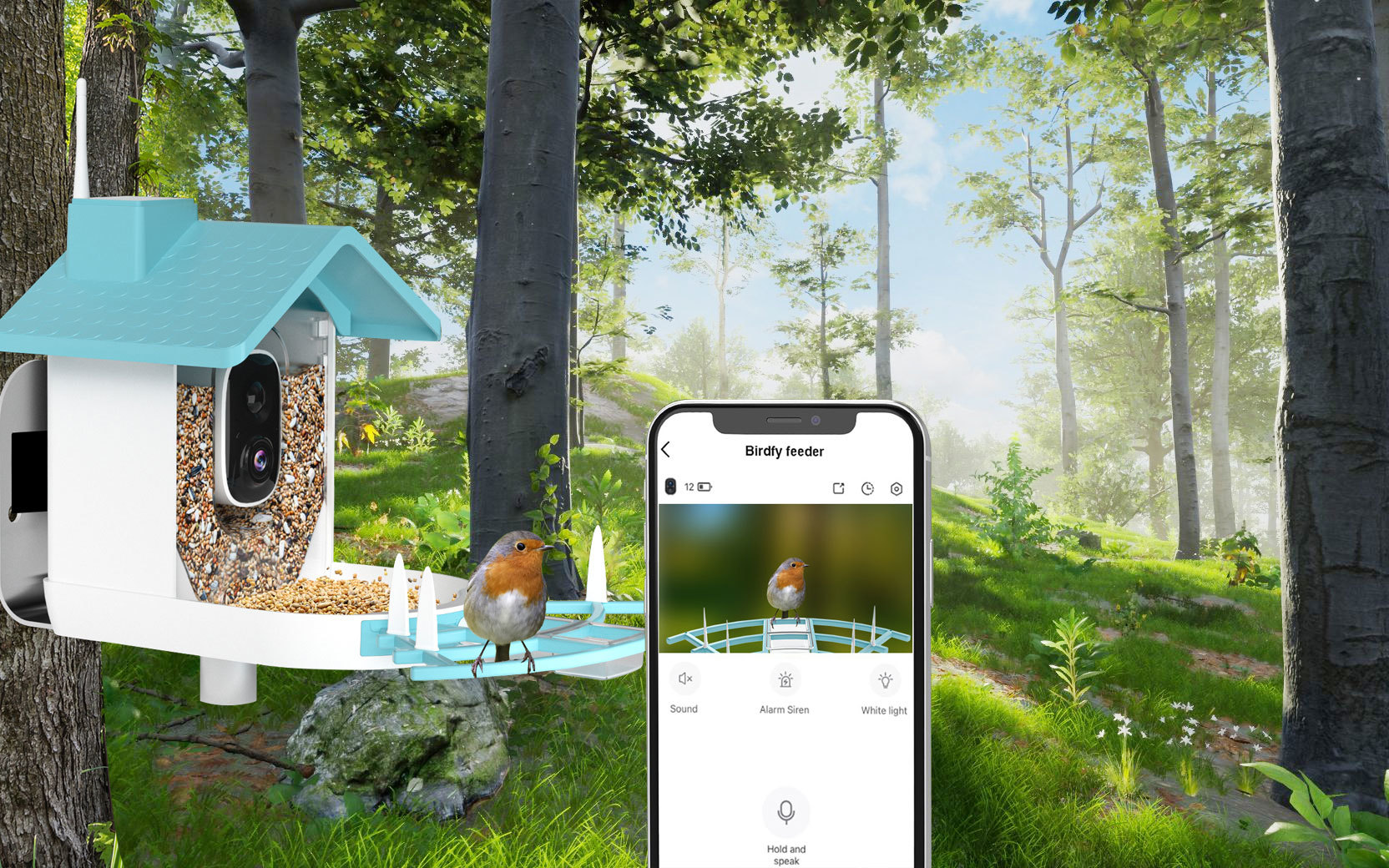
Essential Camera & Image Quality Features
The primary function of your bird feeder camera is to capture high-quality, identifiable images. Don't compromise on the specs that make this possible.
1. Video Resolution: Clarity Matters
While 1080P (Full HD) is the basic minimum, the close-up nature of bird watching demands more detail.
2K Resolution (Recommended): Offers a significant step up from 1080P. It provides excellent detail, especially when zooming in on a specific bird species or intricate feather patterns. This is the sweet spot for balancing quality and data storage.
4K Resolution (Best): For the highest level of detail, 4K is unmatched. You'll be able to crop and zoom into a still frame with minimal loss of clarity, making species identification definitive.
2. Field of View (FOV) and Angle
Unlike a standard security camera, a bird feeder camera needs to focus on a small area. Look for a moderate FOV (around 120°–140°) that captures the feeder tray without excessive distortion. A wider FOV can make birds appear small and far away.
3. Night Vision Technology
The ability to record after sunset is key for capturing nocturnal visitors like owls, possums, or raccoons.
Infrared (IR) Night Vision: This is the standard. It produces clear, black-and-white video. Crucially, ensure the IR lamps are invisible or low-glow to avoid scaring sensitive wildlife.
Color Night Vision: Some modern cameras use starlight sensors and advanced software to capture full-color video in very low light. This is a premium feature but significantly enhances detail and experience.
4. Two-Way Audio
Built-in microphones allow you to record bird songs and calls, while a speaker can be used to send out deterrent sounds for pests like squirrels (though this may also scare birds).
Performance, Power, and Connectivity
Since bird feeders are typically placed outdoors and away from power sources, energy efficiency and robust connectivity are vital.
1. Power Source: Solar + Battery Hybrid
A truly hands-off bird camera should be self-sustaining.
- Solar Panel: A dedicated, detachable solar panel is essential. A good panel can recharge the internal battery even on cloudy days, eliminating the need to frequently climb up and manually recharge.
- High-Capacity Battery: A large internal rechargeable battery (e.g., 5000mAh or higher) provides the necessary backup power to keep the camera running through long stretches of low sunlight or a series of busy bird visits.
2. Connectivity: Wi-Fi or 4G?
Your home network setup determines which connectivity option is best:
- Wi-Fi (Standard): Ideal if your feeder is within range of a strong 2.4GHz Wi-Fi signal. This is the most cost-effective option.
- 4G/Cellular (Rural/Remote): If your feeder is far from your router, such as on a large property, a 4G-enabled camera uses a SIM card and cellular data to upload footage. This ensures coverage in areas with poor Wi-Fi, but requires a monthly data plan.
3. Storage and Data Management
All cameras require a place to save your footage.
Local Storage (SD Card): Offers a free, secure way to store recordings. Look for support for large SD cards (e.g., up to 128GB).
Cloud Storage: Many brands offer subscription-based cloud services. This provides peace of mind, as footage is saved off-site and cannot be lost if the camera is stolen or damaged.
Smart Features and Durability
The latest advancements use intelligent software to make the viewing experience smoother and more educational.
1. AI Bird Identification
This is the most significant new feature for serious birders. Advanced cameras use AI deep learning to:
Identify Species: Instantly recognize the species of bird that lands on your feeder (e.g., "Northern Cardinal spotted").
Filter Alerts: Distinguish between a bird and a non-target animal like a squirrel or a car, drastically reducing useless notifications.
2. Durability and Weatherproofing (IP Rating)
Your camera must withstand the elements year-round. Always look for an IP (Ingress Protection) rating of::
IP65: Dust-tight and protected against water jets. Suitable for general outdoor use.
IP66 or IP67 (Recommended): Offers even stronger protection against heavy rain, snow, and extreme weather.
3. Feeder Design and Ease of Setup
Pest Protection: Look for models with anti-squirrel features or designs that deter larger animals from monopolizing the feeder.
Feeder Capacity: A larger hopper means less frequent refilling.
Quick Setup: A true plug-and-play experience involves a simple mobile app setup and a quick QR code scan to connect the camera.
Frequently Asked Questions (FAQ)
Q: Is it difficult to set up a bird feeder camera?
A: Not at all. Modern bird cameras are designed for simplicity. Look for plug-and-play cameras that connect to your phone via a companion app. The initial setup often takes just minutes by following simple in-app instructions and scanning a QR code.
Q: Can I use a bird cam to record other wildlife?
A: Absolutely. While optimized for birds, these cameras are excellent wildlife monitors. By positioning the camera near a path or an area of high activity, you can capture clear footage of squirrels, rabbits, foxes, or deer. AI identification features may even extend to common backyard mammals.
Q: Will a solar camera still work during winter or cloudy weather?
A: Yes. A high-quality solar camera is designed to be highly energy-efficient. The solar panel is only required to supplement the charge; the primary power comes from a long-lasting internal battery backup. The camera conserves energy by entering standby mode and only activating upon motion detection. This allows it to function reliably through long stretches of low light or poor weather.
Conclusion: Capture Nature Smarter
Choosing the right bird feeder camera means prioritizing image resolution, reliable power, and smart features like AI identification. By focusing on these core elements—and not just the lowest price—you invest in a camera that will provide years of engaging, high-quality bird watching.
Ready to find the perfect camera? Check out the features of our [Solar-Powered Smart Bird Feeder Camera here].
Related News
Target readers: security owners, system integrators, and EHS engineers for petrochemical, oil and gas, pharmaceutical, powder processing, and coal mining sites where explosive gas or combustible dust exists. Core takeaway: a normal camera is itself an ignition source in flammable environments. You must use explosion proof cameras certified to ATEX, IECEx, or China Ex, selected by hazard zone, installed with proper grounding, and documented for compliance. This guide gives a reusable selection, install, and acceptance workflow.
Nov 08,2026
4G 5G Cellular Surveillance Camera Guide: Remote Video without Broadband
Target readers: security owners and integrators for farms, orchards, fisheries, construction, oil and mining sites, vehicle fleets, and remote African villages where broadband is scarce. Core takeaway: when there is no fiber, no broadband, and frequent power loss, a SIM card cellular camera is the easiest and most scalable remote video option. This guide gives a reusable architecture covering power, data, backhaul, AI, and compliant deployment.
Nov 08,2026
Analog CCTV Upgrade Guide: Coax HD Reuse vs Full IP Rebuild, Cost and Timeline Compared
Factory, campus and retail chains running analog surveillance for five or six years face the same wall: blurry images, unretrievable footage, and no path to AI analytics on legacy hardware. This guide breaks down pre-upgrade system inventory, compares the coax-HD reuse route against a full IP rebuild, gives bandwidth and storage recalculation formulas, and lays out a zoned, non-disruptive cutover plan with a selection checklist.
Oct 31,2026
CCTV Maintenance Outsourcing: SLA Tiers, Market Rates, KPI and Contract Playbook
Conclusion first: the real cost of a surveillance system is in its operation. Three years of maintenance typically equals 30% to 50% of the build cost, yet most buyers spend the budget at install and leave operation to whoever happens to notice. Lock the maintenance boundary while signing the build contract. This guide breaks down the in-house versus outsourced decision model, a three-tier SLA (P1 / P2 / P3), per-point market rates and how to read a quote, the two KPIs that decide payment (camera online rate and footage integrity), the five clauses every contract must hold, the 90-day handover that most often loses control, plus a selection checklist and acceptance tests.
Oct 25,2026
Links:One Belt Power Technology
Add: 14th Floor, Baoshan Building, Longhua District, Shenzhen China.
Privacy Policy | SEO | CitySite | Support: 300.cn Dongguan