














































































What Is Black Light Technology in AOV Security Cameras — And Why It Changes Night Surveillance Forever
Publish:
2025-07-17 10:35
Source:
https://www.ring-see.com
Ringsee-Discover how AOV cameras with black light technology deliver full-color images at night, transforming traditional surveillance systems and paving the way for smarter, AI-driven monitoring.
Hook: See what others miss after dark — discover the science behind color night vision.2025/07/17
Introduction: Night Vision Has Evolved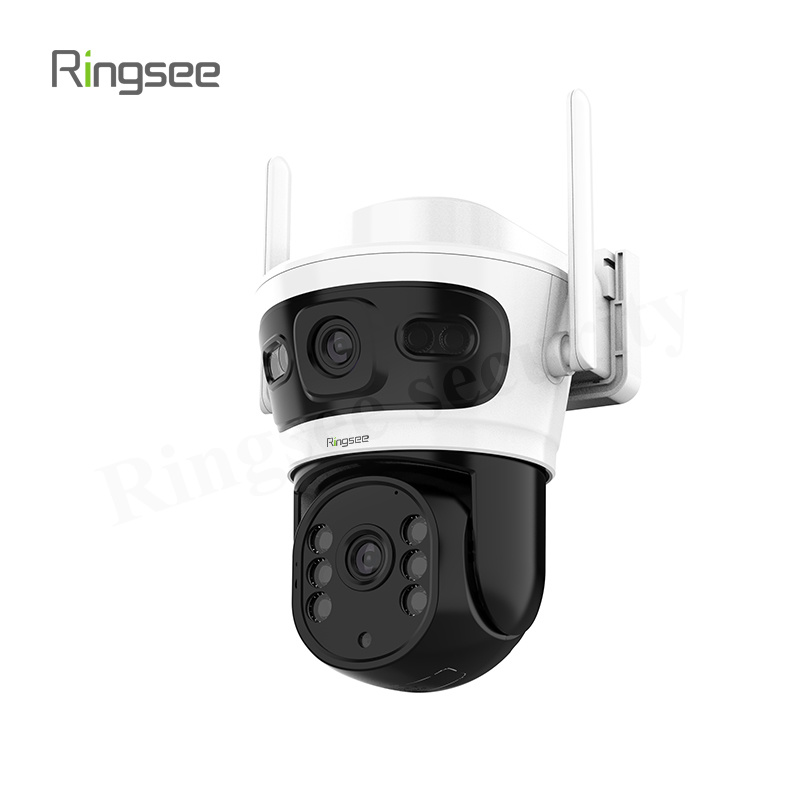
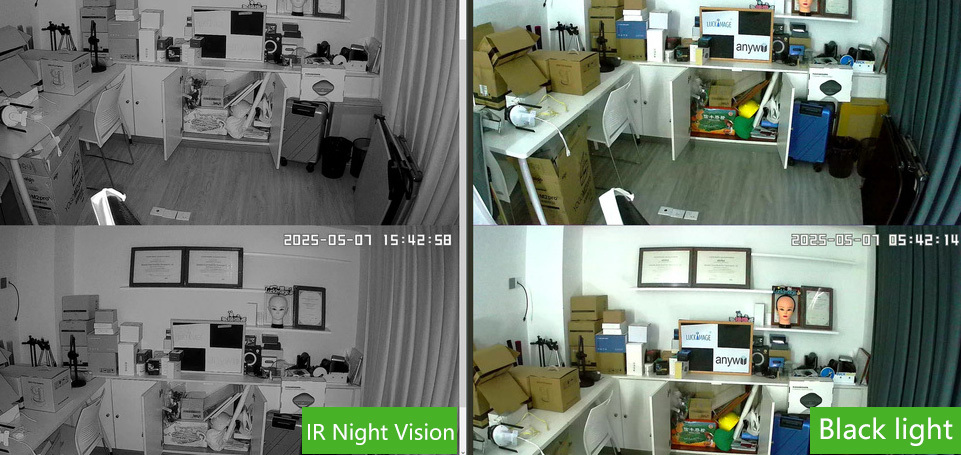
Until recently, seeing clearly in the dark meant relying on infrared (IR) night vision cameras that render a ghostly black-and-white image. These traditional systems, while once innovative, now fall short in today’s world where color, clarity, and detail are crucial.
Enter black light technology, now at the heart of AOV security cameras — a breakthrough that’s reshaping what’s possible after sunset. With it, full-color night surveillance becomes a reality, pushing the boundaries of home and business security.
What Exactly Is Black Light Technology?
Let’s break it down.
Black light technology in surveillance cameras doesn’t refer to UV “blacklights” like the ones in clubs. Instead, it refers to high-sensitivity optical imaging systems that can capture full-color video in extremely low-light conditions — often below 0.001 lux (the light level of a moonless night).
How It Works:
Ultra-Low-Light Sensors: These specialized CMOS image sensors are engineered to gather more light per pixel than conventional sensors.
Large Aperture Lenses (e.g., F1.0 or F1.2): Bigger apertures allow more ambient light (from the moon, stars, or distant streetlights) to reach the sensor.
Advanced Image Signal Processors (ISP): Real-time algorithms optimize contrast, brightness, and color in dim conditions without washing out the scene.
No Need for IR LEDs: Unlike traditional cameras that rely on infrared light emitters, black light cameras utilize ambient visible light to maintain natural color fidelity.
In essence, black light cameras don’t just see in the dark — they interpret it vividly.
Popular Science Perspective: Why Color Matters at Night
Human eyes depend on cones (for color) and rods (for low light) to see. In darkness, we rely heavily on rods, which explains why we see in black and white at night.
Most security cameras simulate this with infrared — showing you the night in grayscale. But black light cameras are the first to mimic low-light color perception in machines, using computational photography and ultra-sensitive sensors to bridge the gap between night and day.
The result? Surveillance footage that feels real, not just readable.
Why This Matters in Traditional Security Fields
1. Revolutionizing Law Enforcement & Urban Surveillance
In city centers, parking lots, and industrial zones, black light-enabled AOV cameras provide clearer facial features, clothing colors, and license plates — dramatically improving suspect identification and event reconstruction.
2. Smarter Smart Homes
As smart homes grow, users want clarity — not blurry blobs. With black light technology, home users can check on family, pets, or intruders at night in color, providing reassurance with every glance.
3. Industrial and Perimeter Security
Factories, warehouses, and remote sites often suffer from insufficient lighting. AOV black light cameras eliminate the need for floodlights or IR bulbs, saving power and maintenance costs while offering better visual data.
Full-Color Night Surveillance vs. Infrared: A Paradigm Shift
| Feature | IR Night Vision | AOV Black Light Technology |
|---|---|---|
| Image Output | Black & white | Full-color |
| Light Source | Infrared LEDs | Ambient visible light |
| Facial Recognition | Poor | Clear & detailed |
| Deterrence Factor | Low | High (clear visibility) |
| Installation Requirements | May need IR LED setup | Works with minimal ambient light |
| Visual Trustworthiness | Low (limited detail) | High (natural, true color) |
Market Impact and Future Development
A Booming Market
According to market research (Statista, MarketsandMarkets), the global video surveillance market is projected to exceed USD 90 billion by 2027, with a growing preference for AI-enhanced, full-color, and smart low-light technologies.
As AI-powered analytics become the norm, the demand for high-quality color footage in all lighting conditions will grow — and black light technology will lead that charge.
Where the Tech Is Heading
Integrated AI & Color Footage: Combining black light tech with real-time AI object detection will enable smarter surveillance — identifying humans, vehicles, or anomalies in real time, even at night.
Consumer Adoption: As costs drop, black light cameras like AOV’s will become standard in homes, replacing outdated IR systems.
Edge Computing: Future cameras will process full-color night footage on-device, ensuring privacy, lower latency, and smarter alerts.
Final Thoughts: The Future Is Bright — Even at Night
AOV security cameras equipped with black light technology represent more than just a technical upgrade — they are a leap forward in visual intelligence. With crystal-clear, full-color night vision, these cameras redefine what we expect from surveillance — at home, at work, and in the public sphere.
In a world that never sleeps, your camera shouldn’t either.
Don’t just see the night — understand it.
Related News
Target readers: security owners, system integrators, and EHS engineers for petrochemical, oil and gas, pharmaceutical, powder processing, and coal mining sites where explosive gas or combustible dust exists. Core takeaway: a normal camera is itself an ignition source in flammable environments. You must use explosion proof cameras certified to ATEX, IECEx, or China Ex, selected by hazard zone, installed with proper grounding, and documented for compliance. This guide gives a reusable selection, install, and acceptance workflow.
Nov 08,2026
4G 5G Cellular Surveillance Camera Guide: Remote Video without Broadband
Target readers: security owners and integrators for farms, orchards, fisheries, construction, oil and mining sites, vehicle fleets, and remote African villages where broadband is scarce. Core takeaway: when there is no fiber, no broadband, and frequent power loss, a SIM card cellular camera is the easiest and most scalable remote video option. This guide gives a reusable architecture covering power, data, backhaul, AI, and compliant deployment.
Nov 08,2026
Analog CCTV Upgrade Guide: Coax HD Reuse vs Full IP Rebuild, Cost and Timeline Compared
Factory, campus and retail chains running analog surveillance for five or six years face the same wall: blurry images, unretrievable footage, and no path to AI analytics on legacy hardware. This guide breaks down pre-upgrade system inventory, compares the coax-HD reuse route against a full IP rebuild, gives bandwidth and storage recalculation formulas, and lays out a zoned, non-disruptive cutover plan with a selection checklist.
Oct 31,2026
CCTV Maintenance Outsourcing: SLA Tiers, Market Rates, KPI and Contract Playbook
Conclusion first: the real cost of a surveillance system is in its operation. Three years of maintenance typically equals 30% to 50% of the build cost, yet most buyers spend the budget at install and leave operation to whoever happens to notice. Lock the maintenance boundary while signing the build contract. This guide breaks down the in-house versus outsourced decision model, a three-tier SLA (P1 / P2 / P3), per-point market rates and how to read a quote, the two KPIs that decide payment (camera online rate and footage integrity), the five clauses every contract must hold, the 90-day handover that most often loses control, plus a selection checklist and acceptance tests.
Oct 25,2026
Links:One Belt Power Technology
Add: 14th Floor, Baoshan Building, Longhua District, Shenzhen China.
Privacy Policy | SEO | CitySite | Support: 300.cn Dongguan