





AI Security Camera Buying Guide
Publish:
2026-07-11 17:37
Source:
https://www.ring-see.com
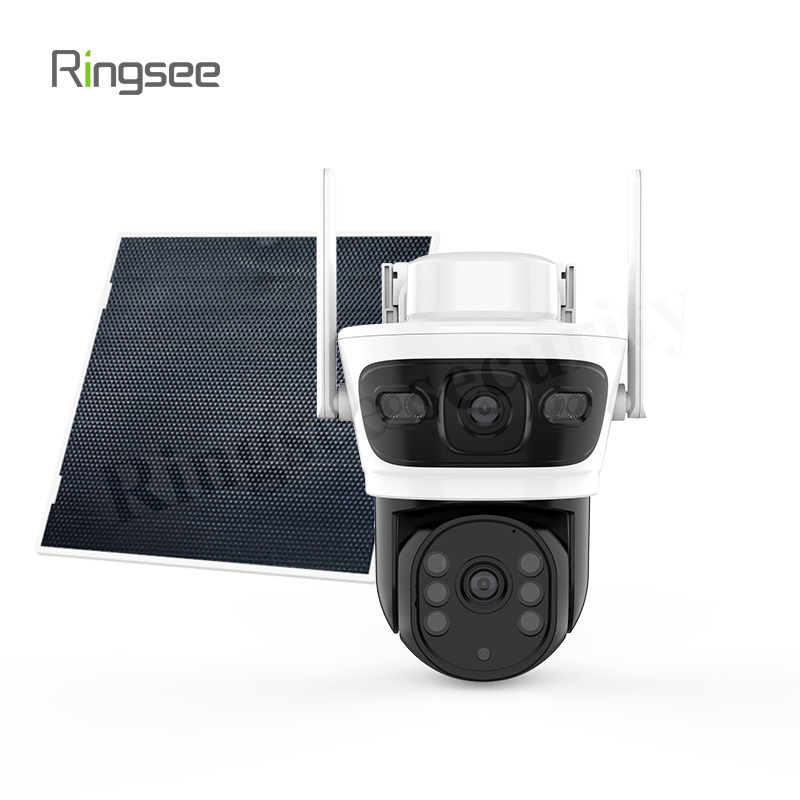
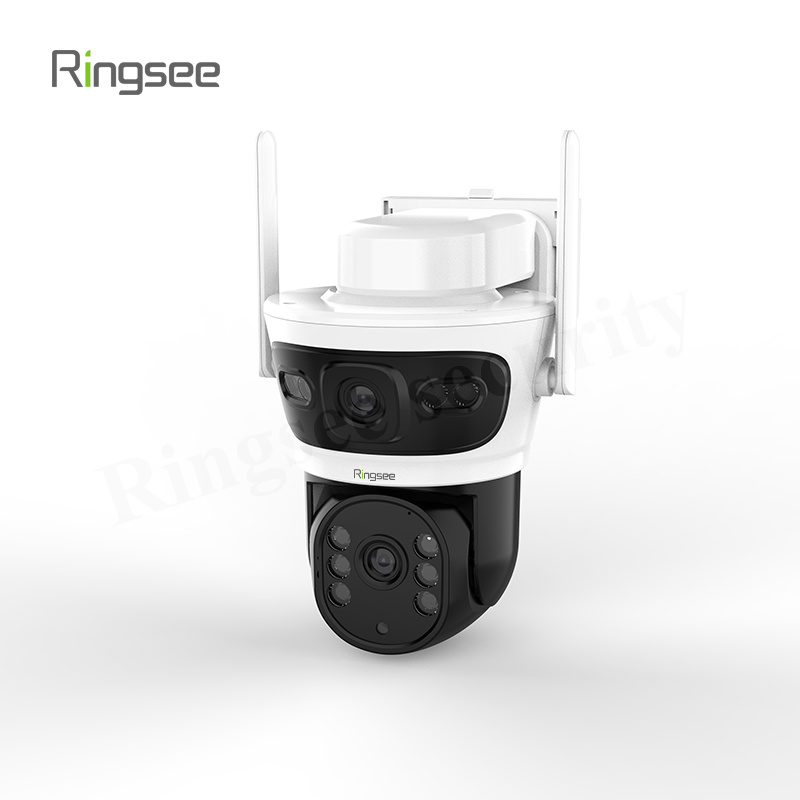
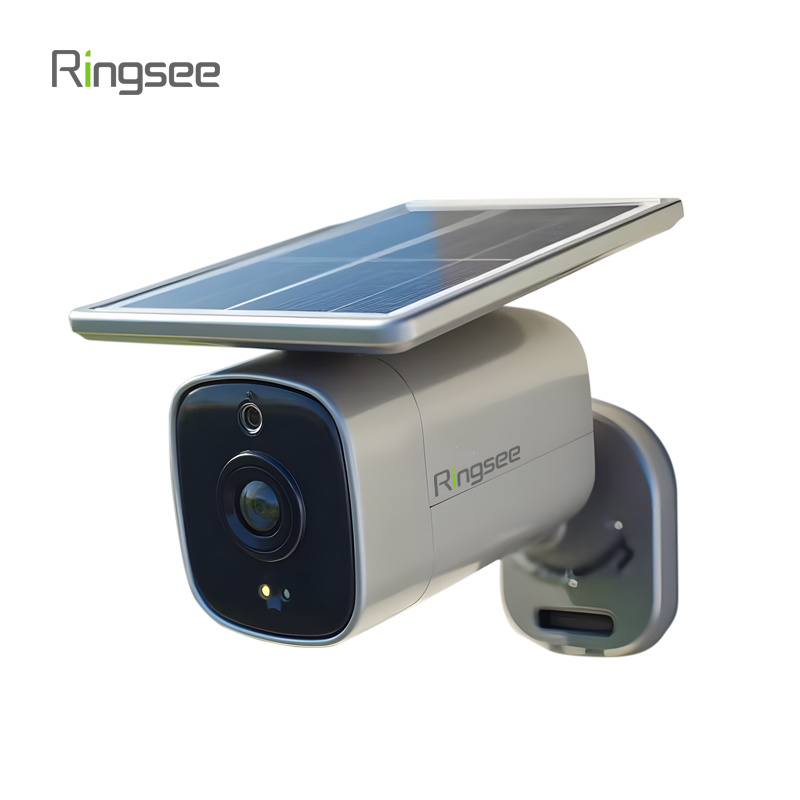
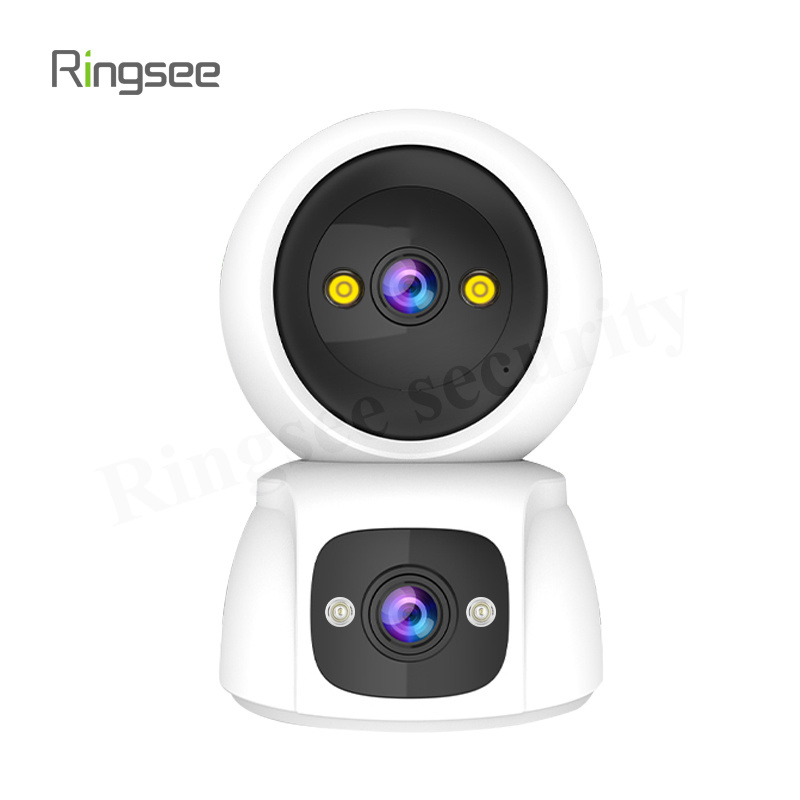
A practical guide to AI-powered security cameras: edge AI vs cloud AI vs NVR AI, false alarm rates, detection capabilities, and compliance tips for face recognition.
• AI person/vehicle detection is genuinely useful, reducing false alarms from 60–90% to 5–15%.
• Edge AI is best for 1–4 cameras (homes/small shops), no monthly fee, works offline.
• NVR AI suits 8+ camera systems (factories/commercial complexes), shared local processing.
• Cloud AI offers the strongest compute but adds monthly fees and privacy risks.
• Face recognition is legally restricted in China: requires separate consent and alternative options.
• AI capability depends on the chip (NPU TOPS), not the brand name.
AI vs. Traditional Cameras
AI cameras understand scene content, while traditional cameras only detect pixel changes. This directly determines how many useless notifications you receive daily.
Dimension | Traditional | AI |
Trigger principle | Pixel change threshold | Neural network object classification |
False alarm rate | 60–90% | 5–15% |
Can distinguish targets | No | Yes (person, vehicle, pet, package) |
Can analyze behavior | No | Yes (line crossing, loitering, falling) |
Power consumption | Low | Higher (NPU running) |
Price range | $15–45 | $45–300 |
AI Architecture Comparison
Architecture | Latency | Monthly fee | Offline | Privacy | Best for |
Edge AI | <50 ms | No | Yes | Low | 1–4 cameras |
Cloud AI | 200–800 ms | $10–50/cam | No | High | Chain stores |
NVR AI | <100 ms | No | Yes | Low | 8+ cameras |
Detection Capability Levels
Level | Function | Usefulness |
Level 1 | Person/vehicle detection | Essential, 90% users only need this |
Level 2 | Line crossing, intrusion, loitering | Optional, useful for factories |
Level 3 | Face recognition, license plate | High legal risk, needs compliance |
FAQ
Q1: Is AI in cameras real or just marketing?
Real AI uses neural-network chips (NPU/TPU) and can classify persons, vehicles, pets, and packages. Pseudo-AI uses pixel-difference filters and only offers 'smart motion detection'.
Q2: Is face recognition legal in stores?
In China it is allowed only with separate consent, clear signage, and an alternative method. Forced facial recognition violates the Personal Information Protection Law.
Q3: Does AI increase storage usage?
No. AI event recording saves 2–5 GB/day vs. 15–20 GB/day for 24/7 recording, because only relevant events are stored.
Compliance Note
Public areas require prominent surveillance notices. Face recognition needs separate consent and an alternative. Video data should generally be kept no longer than 30 days unless required by law. EU users must also comply with GDPR.
Related News
PoE was power. This is control: CCTV Network Security Hardening Guide
Short answer: video systems get breached the boring way, not through clever exploits - (1) factory default credentials never changed, (2) camera or NVR management ports forwarded to the public internet, (3) no separation between the CCTV network and the office LAN. Do three things: replace every default account and disableTelnet/FTP/UPnP/raw RTSP; put cameras in their own VLAN and only allow the NVR to initiate sessions; and reach video over VPN or a zero-trust gateway instead of a port mapping.
Oct 03,2026
PoE Power Design Guide for Security Cameras: Power Budget, Cable Voltage Drop and Distance Limits
Most "cameras keep restarting at night" incidents are not camera defects — they are power design errors. Three root causes cover the overwhelming majority of PoE failures: the power budget was sized on daytime draw instead of night peak, the cable is too thin so voltage drop exceeds the device undervoltage threshold, and the run simply exceeds the 100-metre channel limit. Memorise three numbers and you avoid most of the traps: 802.3af delivers 15.4 W, 802.3at delivers 30 W, and cable reach stops at 100 m.
Oct 03,2026
Bitrate (Mbps) is the single parameter that determines hard drive size, switch selection, and remote-viewing smoothness. Two formulas answer everything: storage per camera per day (GB) ≈ bitrate × 10.8, and total bandwidth = sum of simultaneous bitrates × 1.3 headroom. This guide covers encoding, calculation, and procurement sizing.
Sep 26,2026
CCTV Night Vision Technology Explained: Infrared vs Starlight Full-Color vs Hybrid Light
Three night vision routes and their real limits: 850nm vs 940nm infrared (red glow and range trade-offs), the lux threshold of true starlight cameras (0.001-0.005 lux), light-pollution risks of warm-light supplement, and AI-triggered hybrid switching — plus a six-point datasheet verification method and a 20-minute night PoC test.
Sep 26,2026
CCTV Lens Selection Technical Guide: Focal Length, Pixel Density & the DORI Standard in Practice
Why can't a 4K camera read faces? Because identification depends on pixel density, not total pixels. Using the EN 62676-4 DORI standard, this guide gives the full focal-length / distance / field-of-view formulas, a lens selection lookup table, and the real impact of sensor size and aperture on night vision.
Sep 19,2026
Links:One Belt Power Technology
Add: 14th Floor, Baoshan Building, Longhua District, Shenzhen China.
Privacy Policy | SEO | CitySite | Support: 300.cn Dongguan