





Security Camera Clarity: An Expert Guide to How Lenses, Focal Length, and the ISP Determine Video Quality
Publish:
2025-06-03 16:13
Source:
https://www.ring-see.com
Discover how lens quality, focal length, and image processing influence the performance of outdoor security cameras. Learn how to choose the best surveillance system for sharper, high-resolution footage.
When evaluating a surveillance system, many users focus solely on the megapixel count (e.g., 4MP or 4K). However, true, high-resolution image clarity is determined by three interconnected hardware components: the lens quality, the focal length, and the camera’s digital brain, the Image Signal Processor (ISP).
Understanding how these elements work together is essential for selecting a camera that delivers reliable, detailed footage—whether for a complex business installation or a [smart home security camera setup].
1. Lens Quality: The Optical Foundation
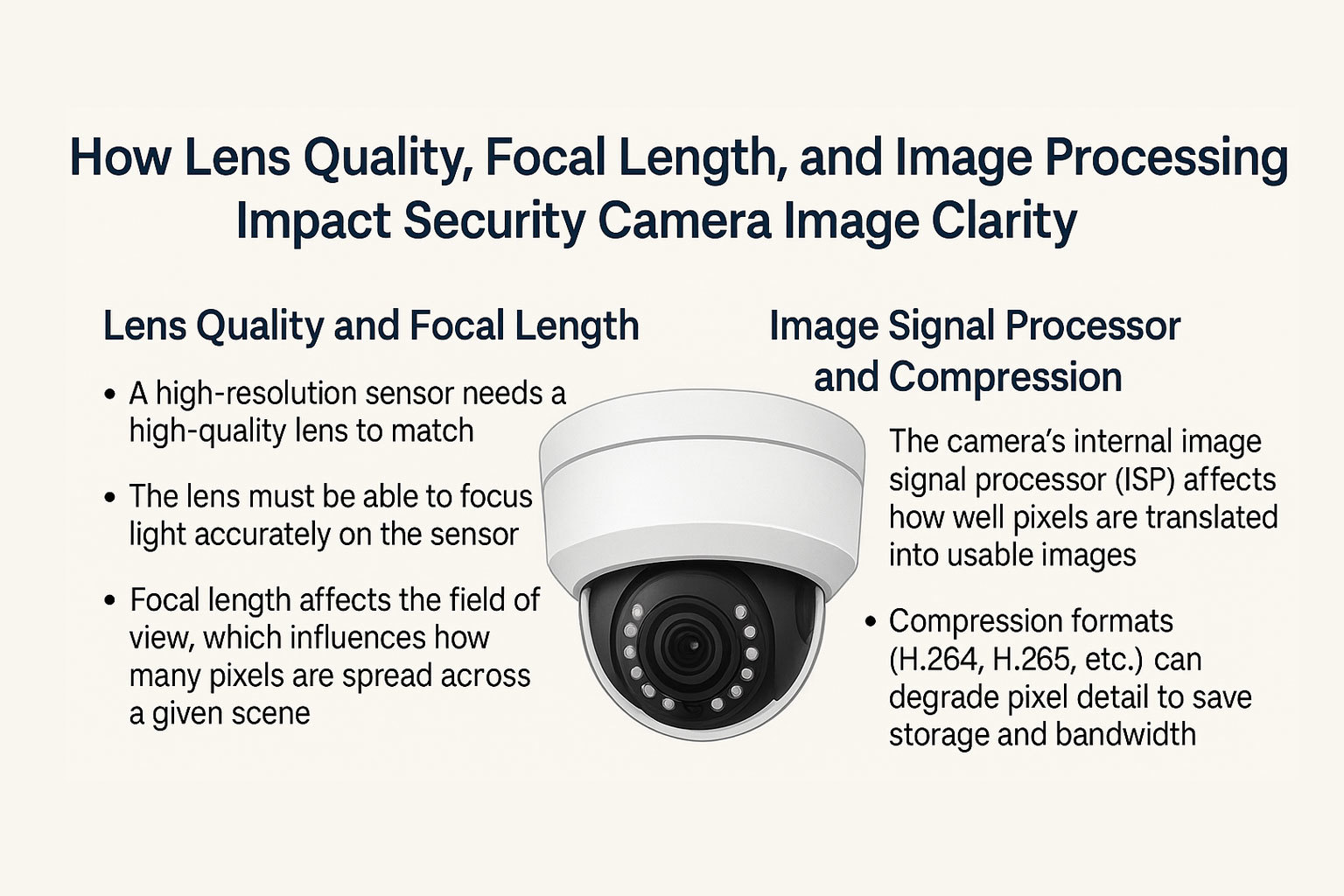
The camera lens is the first, and most critical, component light encounters. Its primary function is to focus incoming light accurately onto the image sensor. Even a top-tier sensor (CMOS) cannot compensate for a low-quality lens.
Minimizing Optical Aberrations
High-quality lenses are built with premium materials and precision engineering to minimize distortions known as optical aberrations:
Chromatic Aberration (Color Fringing): This occurs when a lens fails to focus all colors of light to the same point, resulting in visible purple or green fringes around high-contrast edges. This is highly problematic for detail recognition, particularly when trying to identify faces or license plates at night.
Geometric Distortion: Cheaper wide-angle lenses often suffer from "barrel distortion," where straight lines near the edge of the frame appear curved. A high-quality lens maintains linear fidelity, providing a more reliable and accurate representation of the scene.
For outdoor security cameras exposed to elements, lens quality is also crucial for durability, ensuring continued performance in fluctuating temperatures and humidity.
2. Focal Length: Defining the Field of View (FOV)
The focal length is the distance between the optical center of the lens and the image sensor when the subject is in sharp focus. Measured in millimeters (mm), it directly dictates the camera’s field of view (FOV).
Understanding the Trade-Off
Choosing the right focal length is a classic surveillance trade-off between coverage and detail:
| Focal Length | Description | Best for Scenarios |
| Short (e.g., 2.8mm - 4mm) | Wide-Angle View | Monitoring large, close-range areas like small rooms, porches, and backyard overviews. Provides maximum coverage but less detail in the distance. |
| Long (e.g., 8mm - 22mm) | Telephoto/Zoom | Monitoring distant, narrow zones like long driveways, gates, or specific entry points. Provides high detail and powerful identification capability, but a much narrower FOV. |
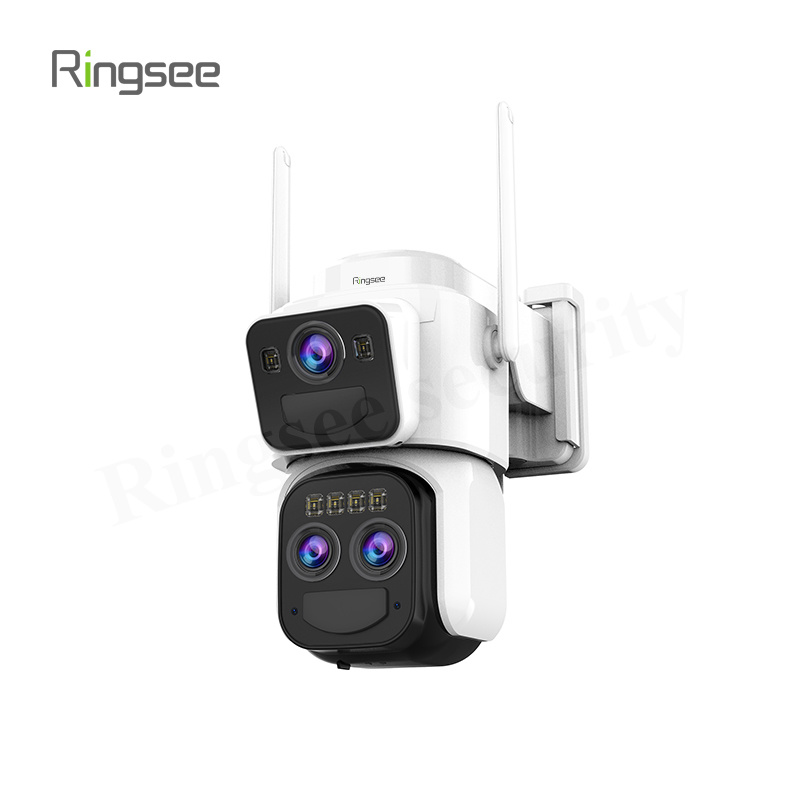
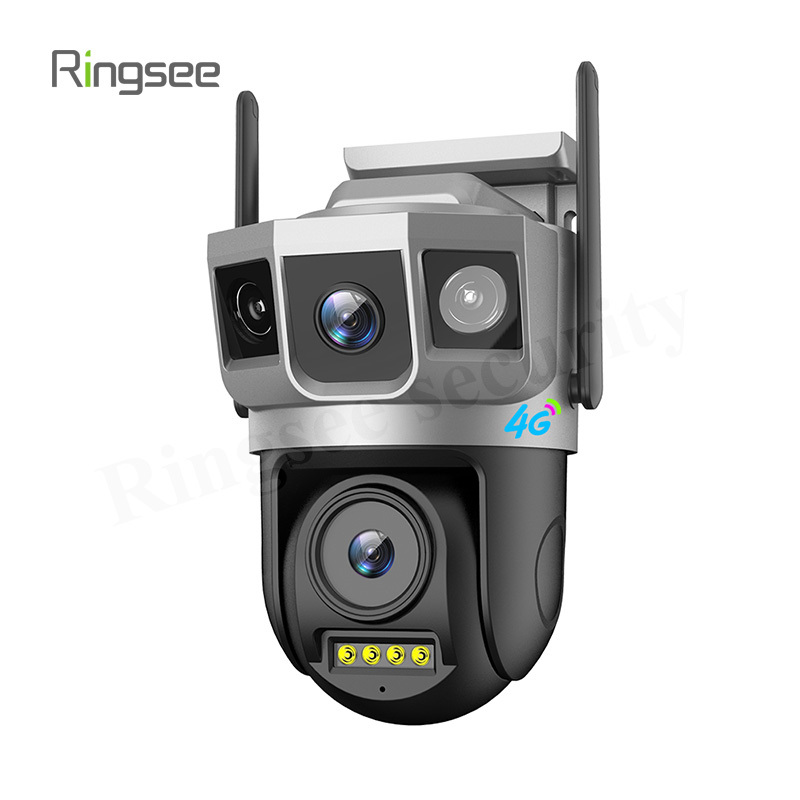
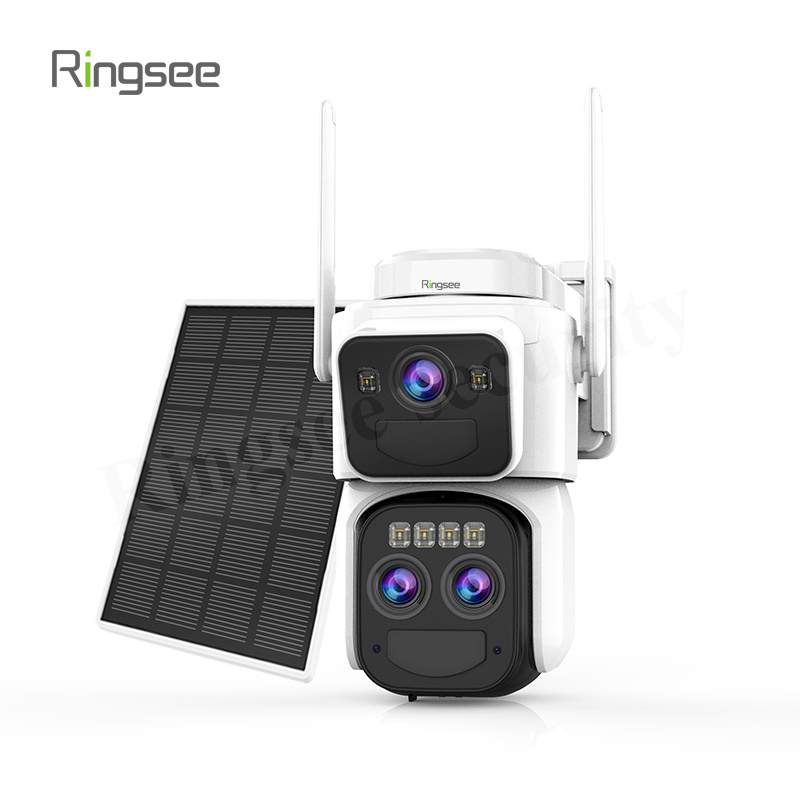
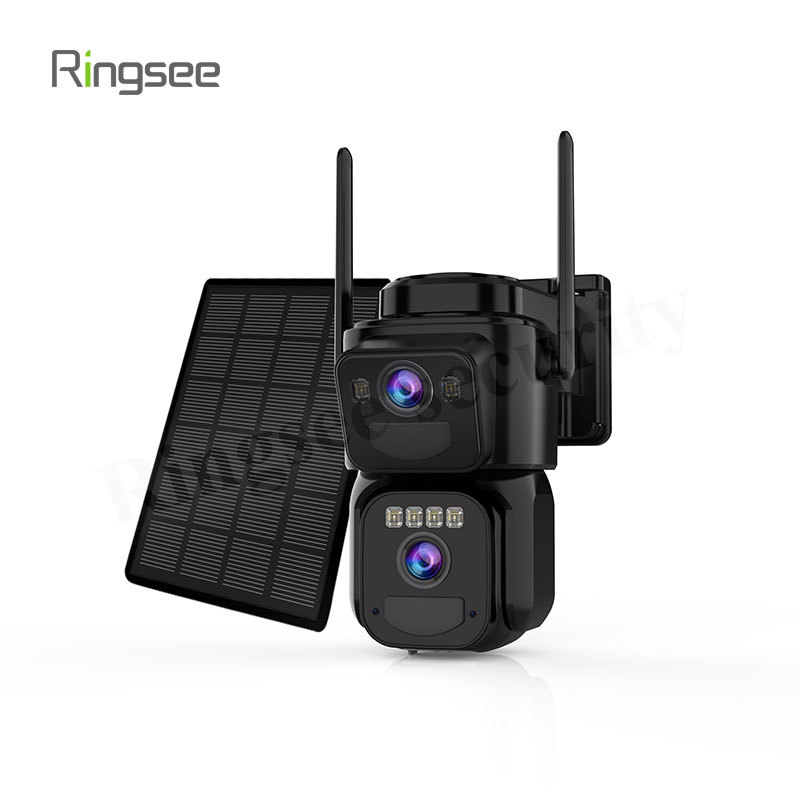
| Varifocal Lens | Adjustable Zoom | Provides flexibility during installation, allowing the installer to manually adjust the focal length to balance the scene’s required coverage and detail (common in professional [multi-lens PTZ security cameras]). |
For security monitoring, selecting the correct focal length ensures that the critical objects (e.g., a person, a vehicle) are captured with enough pixel density to be identifiable—a concept known as DORI (Detection, Observation, Recognition, Identification) standards.
3. Image Signal Processor (ISP): The Digital Brain
Once the lens gathers the light and the sensor captures the raw data, the Image Signal Processor (ISP) takes over. The ISP is a dedicated chip that converts the raw sensor data into the final, compressed video stream you see. It is responsible for all the critical digital enhancements that define the final image quality.
Key ISP Functions for Clarity
A powerful, well-optimized ISP is what separates a decent camera from a high-performance one, particularly in challenging conditions:
1. Noise Reduction (NR)
In low-light conditions, the sensor often generates digital noise (graininess). The ISP uses sophisticated 2D and 3D Noise Reduction algorithms to smooth out this graininess while attempting to preserve fine details. A poor ISP can remove both noise and valuable details, resulting in a blurry, "mushy" night image.
2. Wide Dynamic Range (WDR)
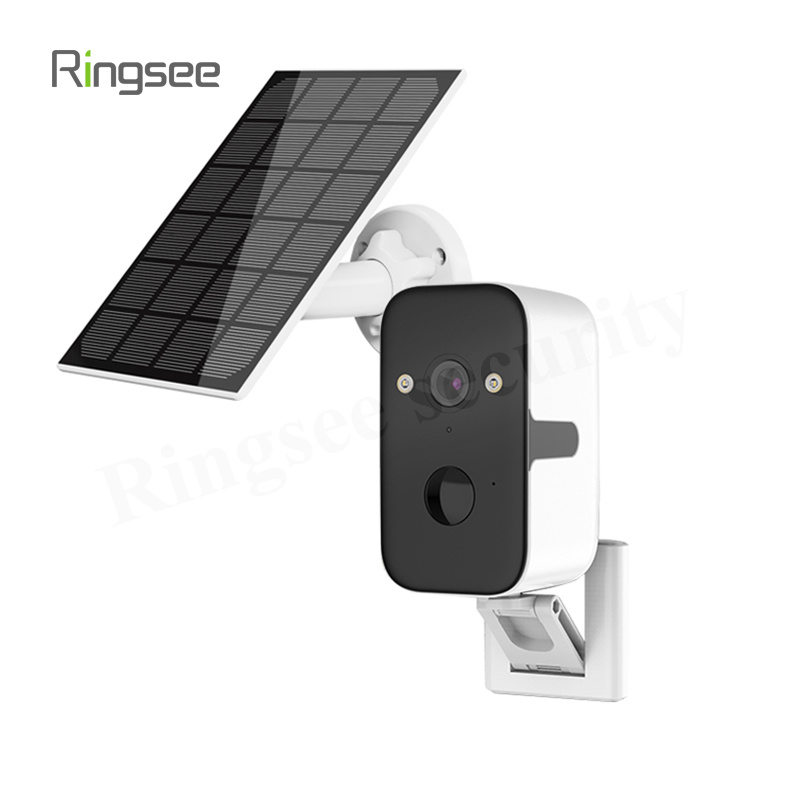
WDR is the ISP’s ability to handle scenes with extreme differences in brightness (e.g., a sunny street visible through a dark hallway). The ISP captures multiple exposures (short, medium, and long) simultaneously and stitches them together to ensure that details are visible in both the darkest shadows and the brightest highlights. This is crucial for cameras placed near glass entrances or [solar-powered outdoor cameras] facing the sunrise.
3. Compression and Encoding
The ISP is responsible for compressing video data using codecs like H.264 or the more efficient H.265. A powerful ISP handles compression quickly and intelligently, reducing the file size and bandwidth requirements without losing noticeable visual fidelity. This ensures smooth transmission and reliable storage, even for high-resolution 4K streams.
Conclusion: The Holistic Approach to Surveillance
Achieving superior security camera image clarity is a holistic effort. Simply upgrading one component will not yield the best result; all three must be optimized:
High-Quality Lens: Ensures the light reaching the sensor is pure and undistorted.
Appropriate Focal Length: Guarantees you capture the required level of detail for identification.
Advanced ISP: Processes the raw data to remove noise, balance lighting, and efficiently package the final, crisp video stream.
By focusing on this trinity of hardware components, you can select and optimize a surveillance system that consistently delivers sharp, high-resolution footage under any condition.
Related News
PoE was power. This is control: CCTV Network Security Hardening Guide
Short answer: video systems get breached the boring way, not through clever exploits - (1) factory default credentials never changed, (2) camera or NVR management ports forwarded to the public internet, (3) no separation between the CCTV network and the office LAN. Do three things: replace every default account and disableTelnet/FTP/UPnP/raw RTSP; put cameras in their own VLAN and only allow the NVR to initiate sessions; and reach video over VPN or a zero-trust gateway instead of a port mapping.
Oct 03,2026
PoE Power Design Guide for Security Cameras: Power Budget, Cable Voltage Drop and Distance Limits
Most "cameras keep restarting at night" incidents are not camera defects — they are power design errors. Three root causes cover the overwhelming majority of PoE failures: the power budget was sized on daytime draw instead of night peak, the cable is too thin so voltage drop exceeds the device undervoltage threshold, and the run simply exceeds the 100-metre channel limit. Memorise three numbers and you avoid most of the traps: 802.3af delivers 15.4 W, 802.3at delivers 30 W, and cable reach stops at 100 m.
Oct 03,2026
Bitrate (Mbps) is the single parameter that determines hard drive size, switch selection, and remote-viewing smoothness. Two formulas answer everything: storage per camera per day (GB) ≈ bitrate × 10.8, and total bandwidth = sum of simultaneous bitrates × 1.3 headroom. This guide covers encoding, calculation, and procurement sizing.
Sep 26,2026
CCTV Night Vision Technology Explained: Infrared vs Starlight Full-Color vs Hybrid Light
Three night vision routes and their real limits: 850nm vs 940nm infrared (red glow and range trade-offs), the lux threshold of true starlight cameras (0.001-0.005 lux), light-pollution risks of warm-light supplement, and AI-triggered hybrid switching — plus a six-point datasheet verification method and a 20-minute night PoC test.
Sep 26,2026
CCTV Lens Selection Technical Guide: Focal Length, Pixel Density & the DORI Standard in Practice
Why can't a 4K camera read faces? Because identification depends on pixel density, not total pixels. Using the EN 62676-4 DORI standard, this guide gives the full focal-length / distance / field-of-view formulas, a lens selection lookup table, and the real impact of sensor size and aperture on night vision.
Sep 19,2026
Links:One Belt Power Technology
Add: 14th Floor, Baoshan Building, Longhua District, Shenzhen China.
Privacy Policy | SEO | CitySite | Support: 300.cn Dongguan