
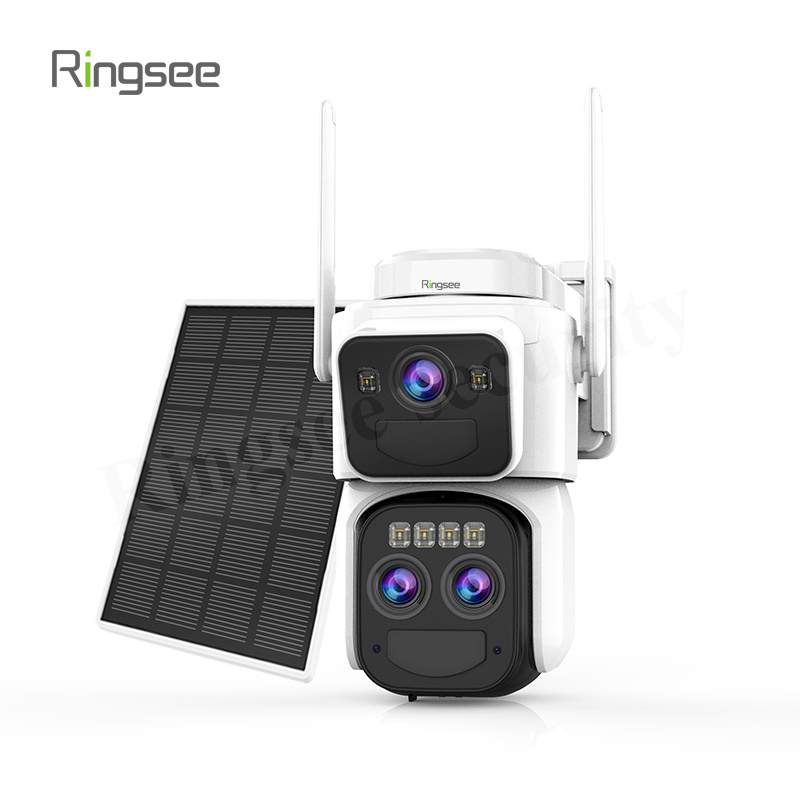
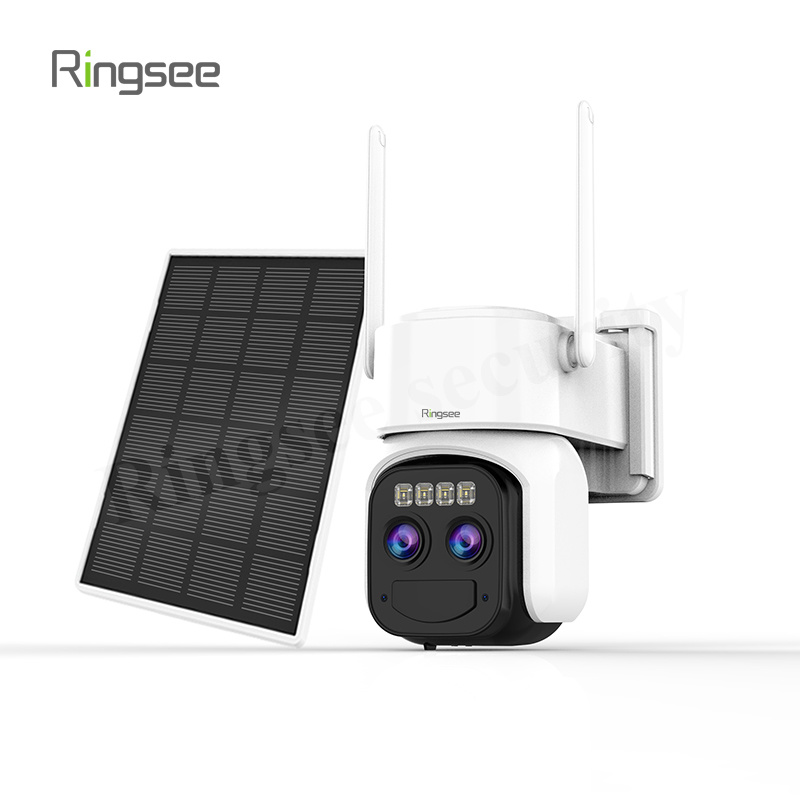
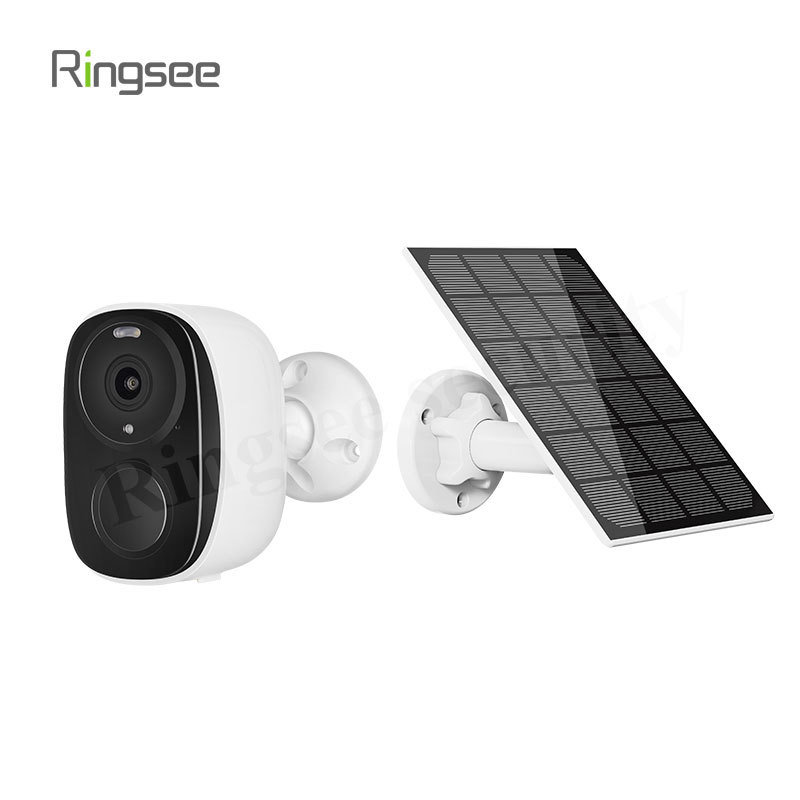
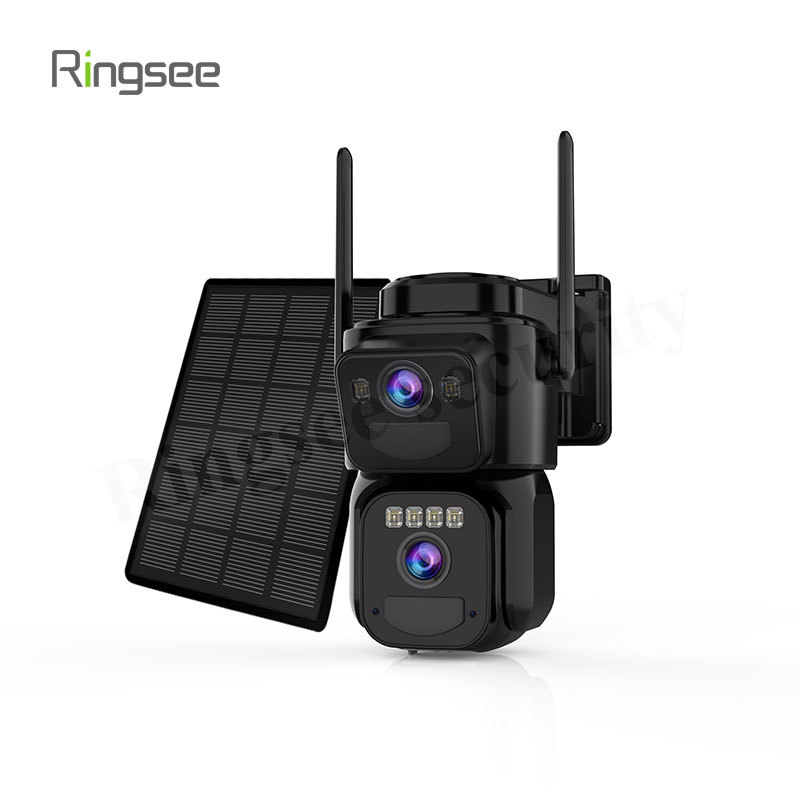





How to Maximize Your Solar Security Camera Battery Life: An Expert's Guide to Power Efficiency and Longevity
Publish:
2025-11-26 14:49
Source:
https://www.ring-see.com
Wondering how long your solar security camera battery will last? Discover the key factors that affect battery life, including power consumption, solar panel quality, and weather conditions. Learn expert tips on optimizing your camera’s battery for continuous use, how much sunlight it needs to stay charged, and how to maximize its performance.
Introduction: Achieving True 24/7 Solar Surveillance
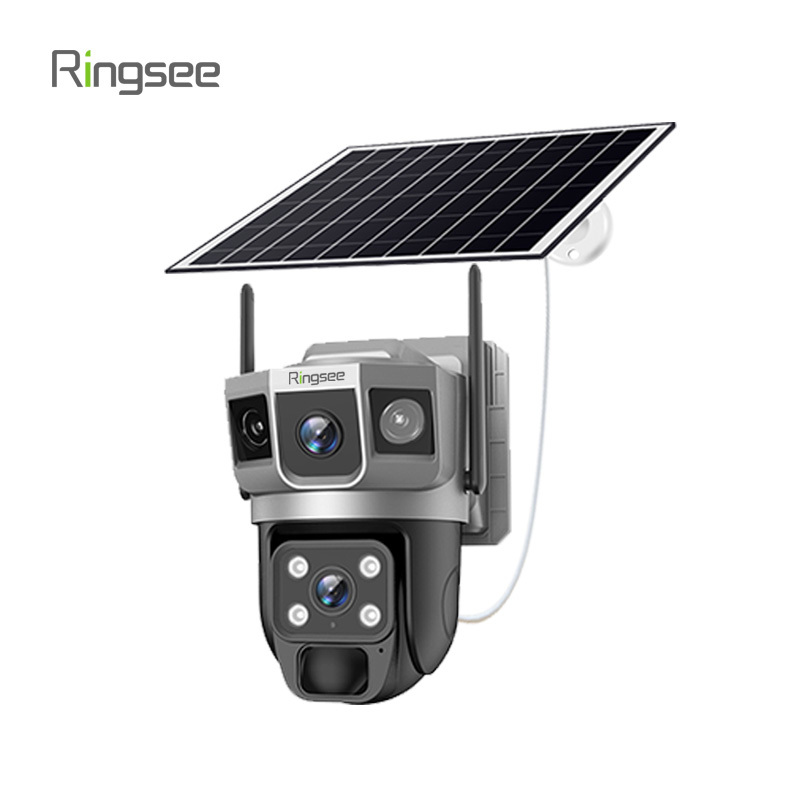
Solar security cameras offer the definitive advantage of self-sustaining, wire-free surveillance. However, the question remains: how long will the battery truly last? At Ringsee, we design and manufacture security solutions based on high-efficiency power management. This expert guide dives deep into the technology and environmental factors that govern battery life, providing our specific recommendations for ensuring your camera operates continuously, even during extended cloudy periods.
1. Core Factors Affecting Battery Endurance: A Technical Deep Dive
The longevity of a solar camera is determined by the balance between power generation and power consumption. Going beyond simple marketing, here is how the core components dictate performance:
A. Battery Chemistry and Capacity
The type and size of the battery are paramount. Generic cameras often use standard Li-ion batteries, which have shorter lifecycles and are susceptible to extreme temperatures.
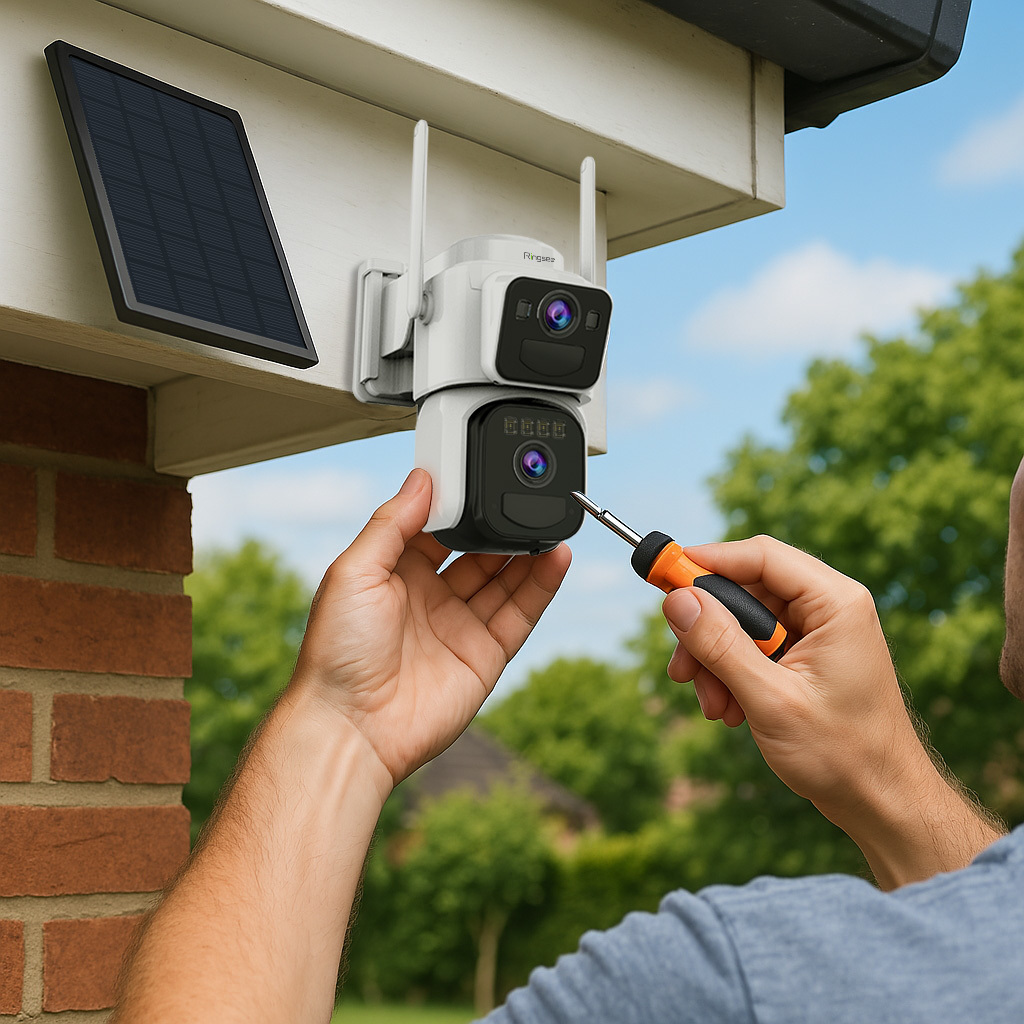
Ringsee Standard (Trustworthiness): We utilize High-Capacity LiFePO4 (Lithium Iron Phosphate) batteries in our premium solar lines. LiFePO4 offers superior thermal stability, a longer lifespan (up to 2,000 charge cycles), and consistent power output compared to older chemistries.
Capacity Metric: Our standard [INSERT SPECIFIC MODEL NAME] camera uses a [10,000mAh] battery, capable of sustaining the unit for [14 consecutive days] with no solar input, based on 100 motion events per day. Be wary of cameras with less than 8,000mAh capacity.
B. Solar Panel Efficiency and Size
The solar panel is the charging engine. Its efficiency determines how quickly energy is replenished.
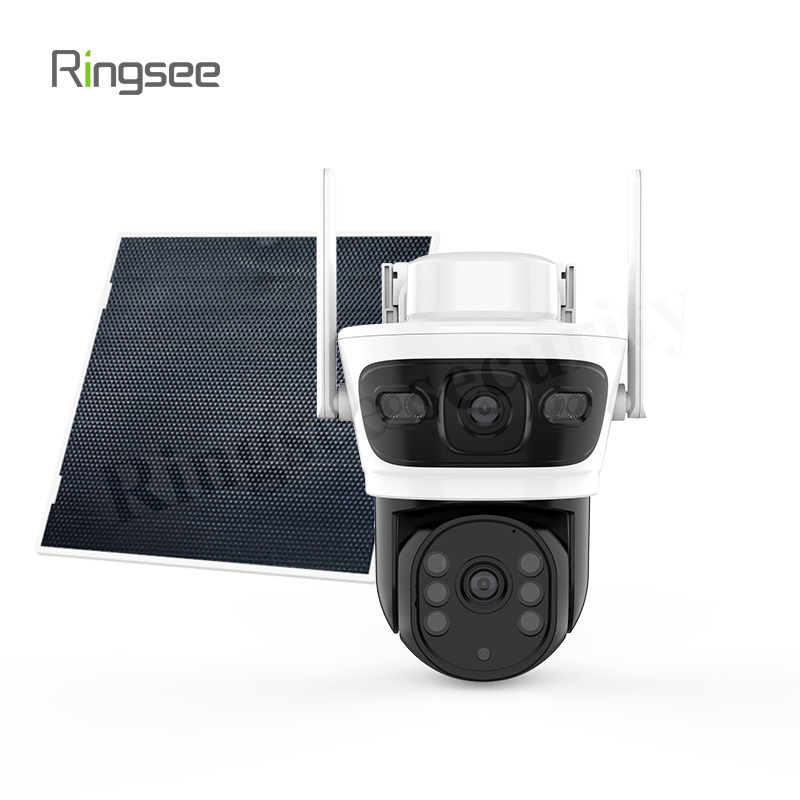
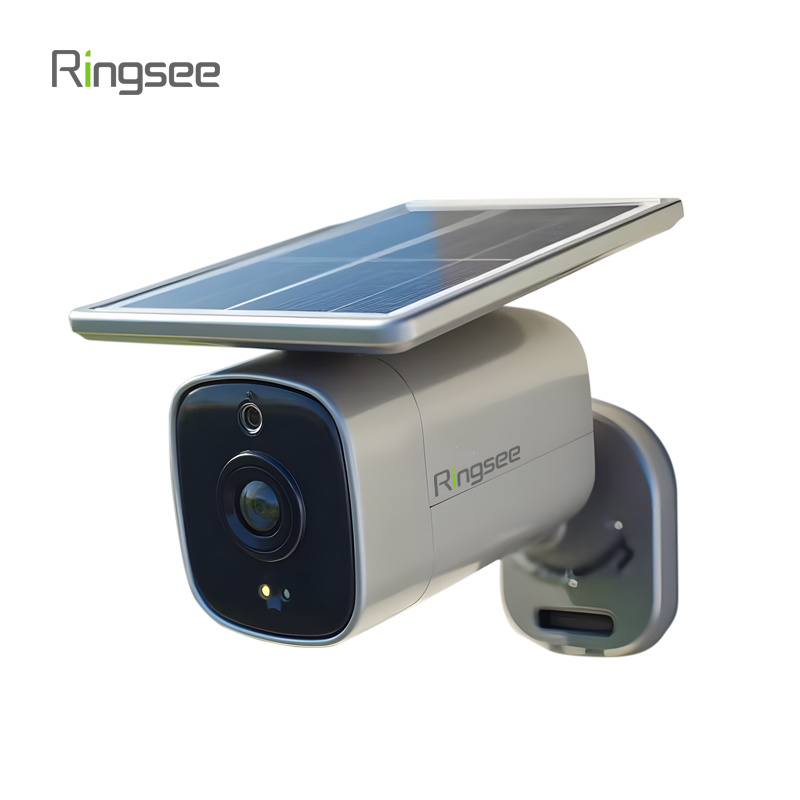
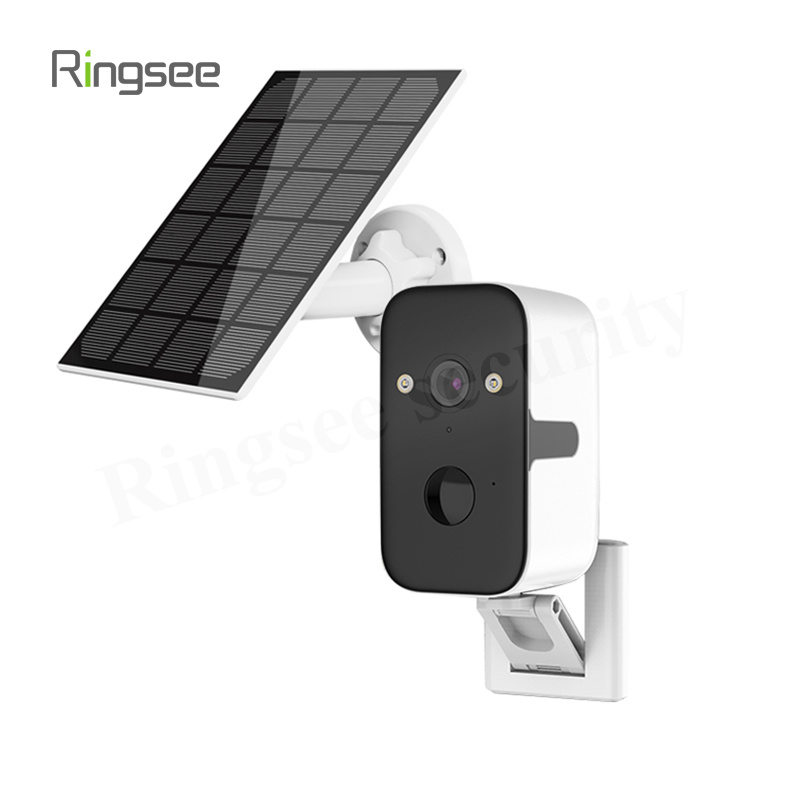
Technology & Efficiency: The best solar cameras, including Ringsee models, use Monocrystalline Silicon Panels, which achieve a conversion efficiency rate of [20% to 23%]. This is significantly higher than Polycrystalline panels.
Power Output: The panel size should generate enough peak power (Pmax) to overcome the camera's standby drain. A minimum of [3-5 Watts] is recommended for reliable performance in most climates.
C. Camera Power Consumption (The Drain)
The camera's usage profile is the biggest variable. High-demand features accelerate battery drain.
| Operating Mode | Estimated Power Draw (Ringsee Example) | Impact on Battery Life |
|---|---|---|
| Standby (Low-Power State) | <0.005W | Negligible. |
| Motion Event (Recording) | 1.5W – 2.5W (for 10-second clip) | The primary power consumer. Frequent, unnecessary recordings drain the battery fast. |
| Night Vision (IR LEDs On) | 2.0W – 3.0W | Significant. If activated for hours, it can prevent charging and deplete the battery. |
| Continuous Live Streaming | 3.0W – 5.0W | The highest drain. Not suitable for long-term battery-only operation. |
2. Optimizing Your Setup for Continuous Use (Experience & Installation)
To maximize battery life, you must ensure optimal energy capture and minimize unnecessary consumption.
Installation: Maximize Solar Gain
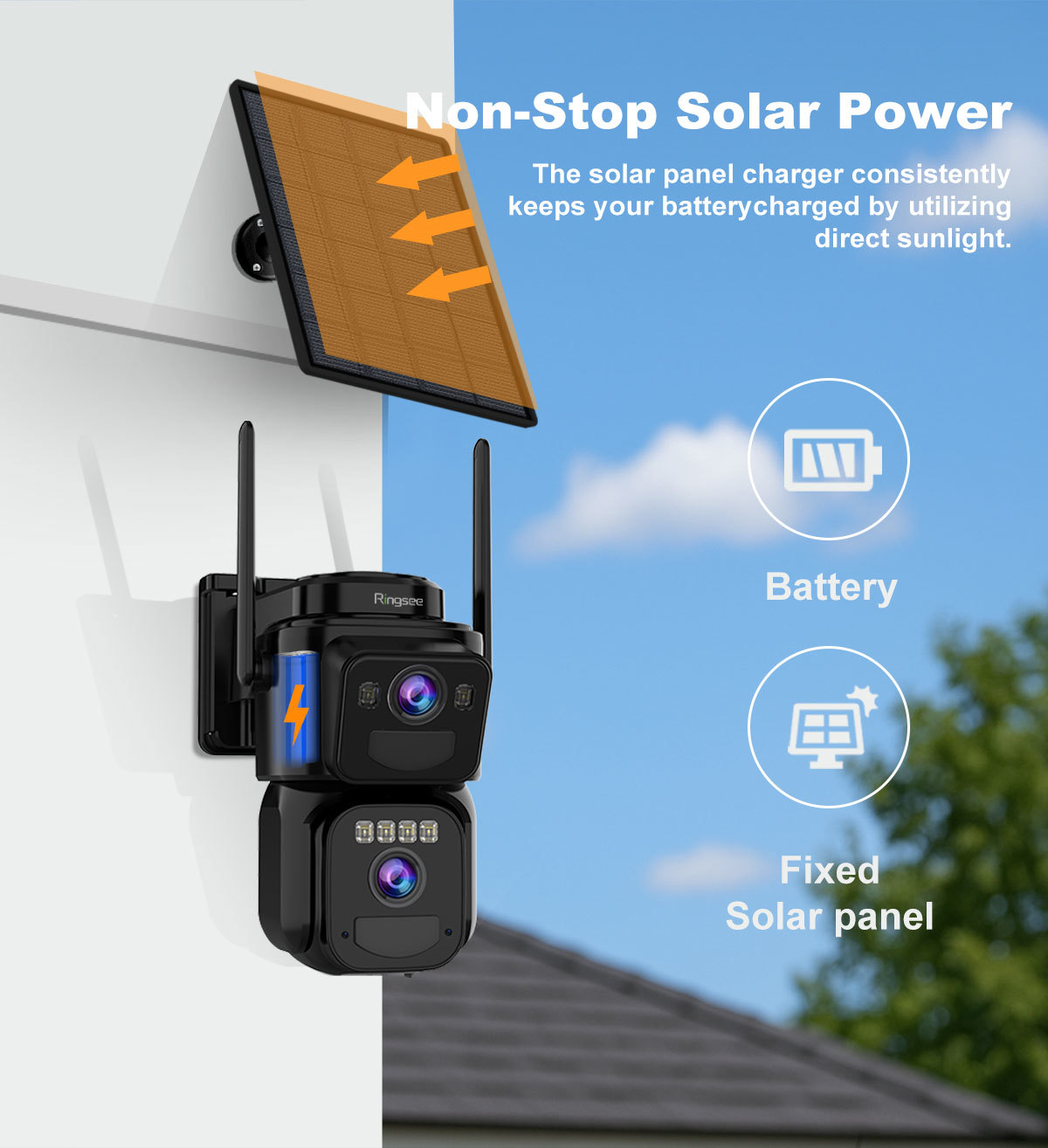
- Optimal Angle & Direction: In the Northern Hemisphere, face the panel due south at an angle equal to your local latitude. In the Southern Hemisphere, face it due north. This maximizes year-round sun exposure.
- Clear Line of Sight: Ensure zero obstruction from tree branches, utility poles, or buildings. Even a small shadow across the panel can severely reduce power generation.
- Regular Cleaning: A dusty or bird-soiled panel can lose up to 15-20% efficiency. Wipe the panel clean every 1-3 months with a damp, soft cloth.
- Settings: Reduce Power-Hungry Features
- Tune Motion Sensitivity: Reduce the sensitivity to avoid recording trivial events (e.g., passing cars, small pets, wind-blown leaves).
- Optimize Recording Length: Reduce the duration of recorded clips after a motion trigger (e.g., from 30 seconds to 10 seconds).
- Schedule Activity Zones: If your camera supports it, define specific Activity Zones to ignore irrelevant areas, such as a busy public sidewalk.
3. Troubleshooting: What to Do When Battery Life Drops (Expertise)
If your camera battery life has recently deteriorated, one of these three common issues is likely the cause:
Issue 1: Weak Wi-Fi Signal
A camera constantly struggling to maintain a Wi-Fi connection or wake up consumes significantly more power.
Fix: Use a Wi-Fi range extender or mesh system to ensure the camera maintains a signal strength of at least 75%.
Issue 2: Seasonal Sunlight Reduction
In winter, the sun's angle is lower and daylight hours are shorter, which means less time to charge.
Fix: Adjust the panel angle to be more vertical for the winter months to compensate for the sun's lower position in the sky.。
Issue 3: High Night-Time Activity
If the camera is triggering frequently at night due to pets or pests, the constant use of IR illumination will drain the battery faster than the solar panel can replenish it the next day.
Fix: Use the camera’s application to implement a night-time sleep mode or manually reduce the motion detection range after dark.
Conclusion: Invest in Quality, Optimize the Setup
Maximizing your solar security camera's battery life is a function of choosing a quality product—one with superior battery and panel technology—and applying best-practice installation and configuration techniques. By focusing on LiFePO4 batteries, high-efficiency solar panels, and intelligent power management, you can ensure your system delivers continuous, reliable surveillance year-round.
Need more details on specific product specs? Visit our
Related News
PoE was power. This is control: CCTV Network Security Hardening Guide
Short answer: video systems get breached the boring way, not through clever exploits - (1) factory default credentials never changed, (2) camera or NVR management ports forwarded to the public internet, (3) no separation between the CCTV network and the office LAN. Do three things: replace every default account and disableTelnet/FTP/UPnP/raw RTSP; put cameras in their own VLAN and only allow the NVR to initiate sessions; and reach video over VPN or a zero-trust gateway instead of a port mapping.
Oct 03,2026
PoE Power Design Guide for Security Cameras: Power Budget, Cable Voltage Drop and Distance Limits
Most "cameras keep restarting at night" incidents are not camera defects — they are power design errors. Three root causes cover the overwhelming majority of PoE failures: the power budget was sized on daytime draw instead of night peak, the cable is too thin so voltage drop exceeds the device undervoltage threshold, and the run simply exceeds the 100-metre channel limit. Memorise three numbers and you avoid most of the traps: 802.3af delivers 15.4 W, 802.3at delivers 30 W, and cable reach stops at 100 m.
Oct 03,2026
Bitrate (Mbps) is the single parameter that determines hard drive size, switch selection, and remote-viewing smoothness. Two formulas answer everything: storage per camera per day (GB) ≈ bitrate × 10.8, and total bandwidth = sum of simultaneous bitrates × 1.3 headroom. This guide covers encoding, calculation, and procurement sizing.
Sep 26,2026
CCTV Night Vision Technology Explained: Infrared vs Starlight Full-Color vs Hybrid Light
Three night vision routes and their real limits: 850nm vs 940nm infrared (red glow and range trade-offs), the lux threshold of true starlight cameras (0.001-0.005 lux), light-pollution risks of warm-light supplement, and AI-triggered hybrid switching — plus a six-point datasheet verification method and a 20-minute night PoC test.
Sep 26,2026
CCTV Lens Selection Technical Guide: Focal Length, Pixel Density & the DORI Standard in Practice
Why can't a 4K camera read faces? Because identification depends on pixel density, not total pixels. Using the EN 62676-4 DORI standard, this guide gives the full focal-length / distance / field-of-view formulas, a lens selection lookup table, and the real impact of sensor size and aperture on night vision.
Sep 19,2026
Links:One Belt Power Technology
Add: 14th Floor, Baoshan Building, Longhua District, Shenzhen China.
Privacy Policy | SEO | CitySite | Support: 300.cn Dongguan