





Buyer's Technical Guide: Black Light Night Vision & AOV Always-On Recording — How Core Security Camera Technologies Determine Procurement Decisions
Publish:
2026-07-25 12:05
Source:
https://www.ring-see.com
When overseas distributors, system integrators, and procurement managers at chain enterprises select a security camera, the spec sheet's "resolution, night vision range, frame rate" rarely reveal the true experiential difference. What really separates the user experience are two underlying technologies: Black Light night vision and AOV (Always-On Video, 24/7 online recording). Written from a buyer's perspective and in plain language, this article explains the principles of these two technologies, how they differ from traditional approaches, and their suitable use cases. It also provides a verification checklist that can be used directly for sample testing and supplier audits, helping you turn "technical understanding" into "precise model selection" — thereby reducing return rates and improving end-customer satisfaction. Whether you are procuring a solar security camera, an AOV low-power camera, or indoor/outdoor smart surveillance, this guide applies.
1. Introduction: Why Buyers Should Understand the Technology Principles
In cross-border B2B security procurement, a common phenomenon is that buyers spend enormous energy comparing prices and spec parameters, yet few truly understand what "Black Light night vision" and "AOV always-on recording" actually are. The result is often this: the goods ship out, but the end customer discovers "can't make out faces at night" or "a segment was missed when power cut out at midnight" — and returns and complaints follow one after another.
Specs can be copied, but experience cannot be faked. Black Light and AOV are precisely two types of "experience-grade" technologies: they directly determine whether the night image is color-distinguishable or a blob of black-and-white, and whether surveillance is blind-spot-free or missing critical moments. Understanding these two technologies is equivalent to holding the discourse power over model selection.
Core insight: Only when buyers understand the technology principles can they ask suppliers the right questions, explain value to end customers, and ultimately upgrade from "parameter competition" to "experience competition."
1.1 Why These Two Technologies Have Become Today's Procurement Hotspots
Three macro trends have pushed them to the front of procurement. First, off-grid surveillance demand is exploding: farms, construction sites, fisheries, orchards, and remote base stations — scenarios lacking stable power and network — are growing rapidly, and the combination of solar + battery + AOV fits them perfectly. This is an incremental market traditional wired cameras cannot cover. Second, end-customer expectations are rising: from "can see movement" to "can see clearly who it is and what color they're wearing." The experience gap delivered by color night vision makes customers willing to pay a premium for more expensive models — that premium margin is real. Third, brand owners, to avoid homogenized price wars, urgently need differentiated selling points, and Black Light and AOV are the technology labels easiest to demonstrate on-site and easiest to turn into a story for consumers. For buyers, understanding early pays off — you can push these high-margin, low-price-comparison products to customers earlier than competitors, and better answer the question "why is it worth a bit more." Moreover, these two technology types are naturally suited to content marketing: a "black night turns color" comparison video spreads far more powerfully on social media than a list of parameters, indirectly boosting your sell-through efficiency.
2. What Is Black Light Night Vision Technology
2.1 Definition
Black Light night vision is an imaging system designed for low-illumination environments. Its goal is to output color video that retains natural color and detail even in near-total-darkness — rather than the black-and-white image traditional infrared (IR) produces.
2.2 How It Works (A Version Buyers Can Understand)
It does not rely merely on "a brighter light," but on the coordination of three things:
- High-sensitivity image sensor: captures more photons even under faint light, improving the signal-to-noise ratio;
- Low-glare illumination design: uses calibrated supplemental lighting to reduce "overexposure blobs," avoiding blowing out the center of the frame to white;
- Optimized image processing pipeline: performs noise reduction, color restoration, and detail enhancement at the ISP (Image Signal Processing) layer, "translating" weak signals into clear color images.
With the three combined, the effect is: under moonlight, residual streetlight, or even near-total darkness, the image still approaches daytime color and recognizability.
From the processing-pipeline perspective, Black Light roughly goes through five steps: ① Signal acquisition — the high-sensitivity sensor collects as many photons as possible under low illumination; ② Noise reduction — suppresses weak-light noise points in the ISP to avoid a blurry image; ③ Color restoration — recovers the color temperature and saturation lost under low light; ④ Detail enhancement — sharpens edges and preserves texture; ⑤ Encoded output — trades off between clarity and bandwidth. Buyers need not understand every line of code, but should know that "Black Light" is a system engineering effort, not simply adding a lamp — this determines the effect differences between manufacturers, which are hard to see at a glance from a spec sheet.
2.3 The Essential Difference Between Black Light and Traditional IR
Traditional infrared night vision relies on IR LED fill light, and the sensor only records brightness (no color information), so it is naturally black-and-white; when objects are close or reflection is strong, it also easily produces "IR overexposure blobs" that wash out key information. Black Light, by contrast, preserves the color channel as much as possible, and can therefore distinguish key details such as "wearing a red or blue shirt" or "the base color of a license plate."
2.4 How Does Black Light Differ from Warm-Light and Full-Color Night Vision?
Buyers often hear terms like "full-color night vision" and "warm-light night vision" and easily get confused. A simple distinction: warm-light night vision mostly uses warm-color fill lights (yellowish) and still feels monochrome; full-color night vision relies on ambient light or white-light fill to present color, but fails in light-free environments; Black Light emphasizes "low glare + retaining natural color + usable in near-darkness," more like a system engineering effort that balances sensor and algorithm. When questioning suppliers, don't just ask "is it color?" — instead press: "can it produce color sample footage under near-total-darkness with no fill light?" This one question filters out most manufacturers who only play with terminology.
3. What Is AOV (Always-On Video) 24/7 Recording
3.1 Definition
AOV (Always-On Video, 24/7 online recording) means the camera records continuously without interruption, but achieves a balance between image quality and power consumption through "adaptive frame rate": when there is a moving target it uses a high frame rate (e.g., 25fps) to capture detail, and when idle it drops to an extremely low frame rate (e.g., 1fps) to save power — yet it never stops recording.
3.2 How Is It Different from Traditional Approaches?
- Versus "motion-triggered recording": traditional schemes only start recording when movement is detected; the idle period is a blind spot — if a thief approaches slowly, or the trigger zone is misconfigured, the critical segment may simply not be recorded. Because AOV records all the time, this kind of "didn't capture it" vacuum does not exist.
- Versus "24-hour continuous recording but high power": ordinary 24/7 recording depends on wired power, with high consumption and no freedom from the network. AOV uses the "high frame rate on motion, low frame rate when still" approach to bring power consumption down, and together with solar and battery can stay online long-term at power-free, network-free remote sites.
3.3 Off-Grid Power Logic
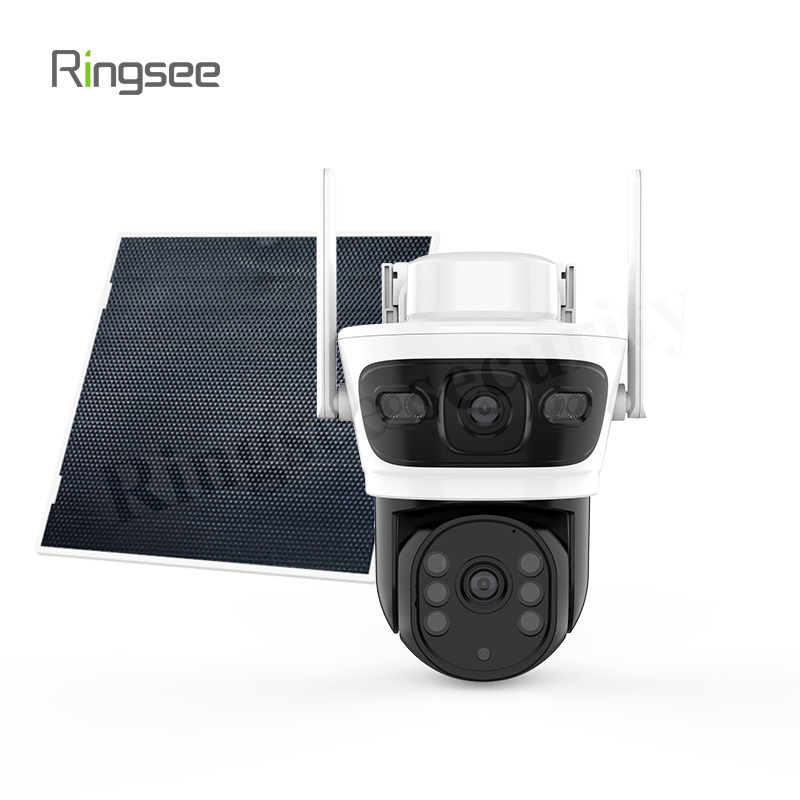
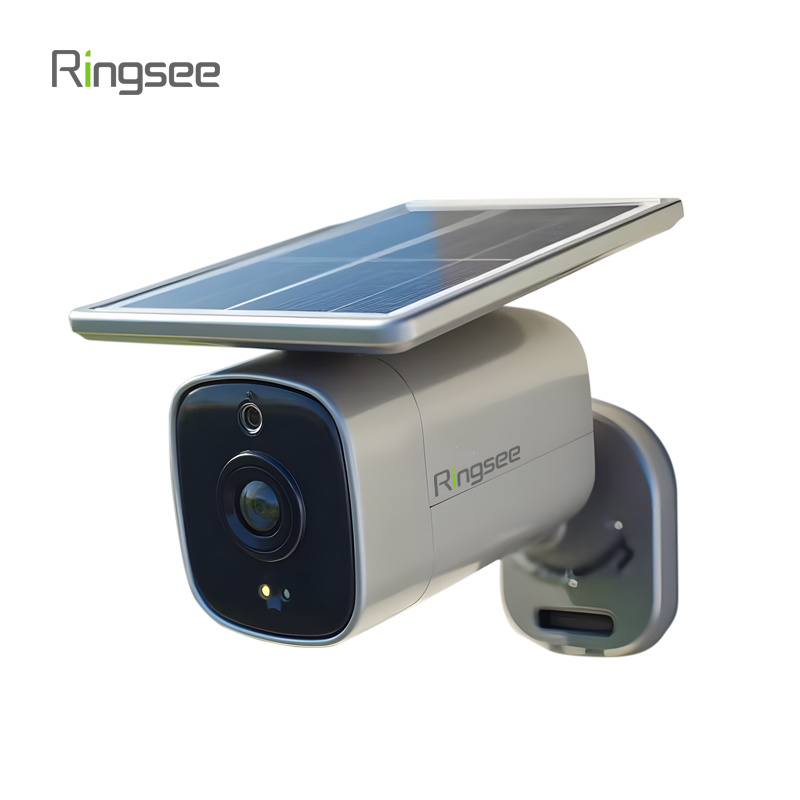
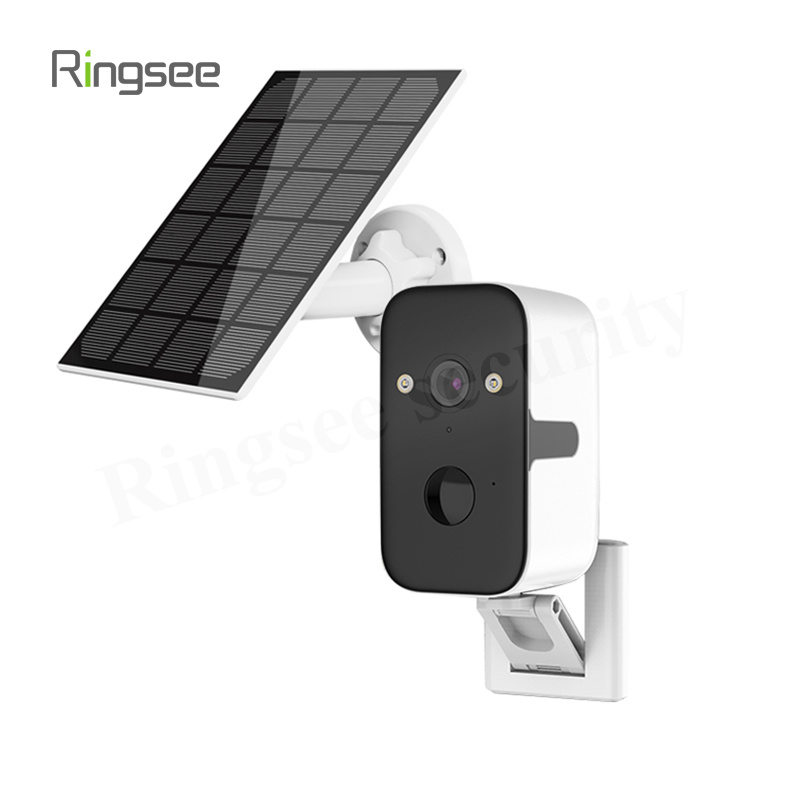
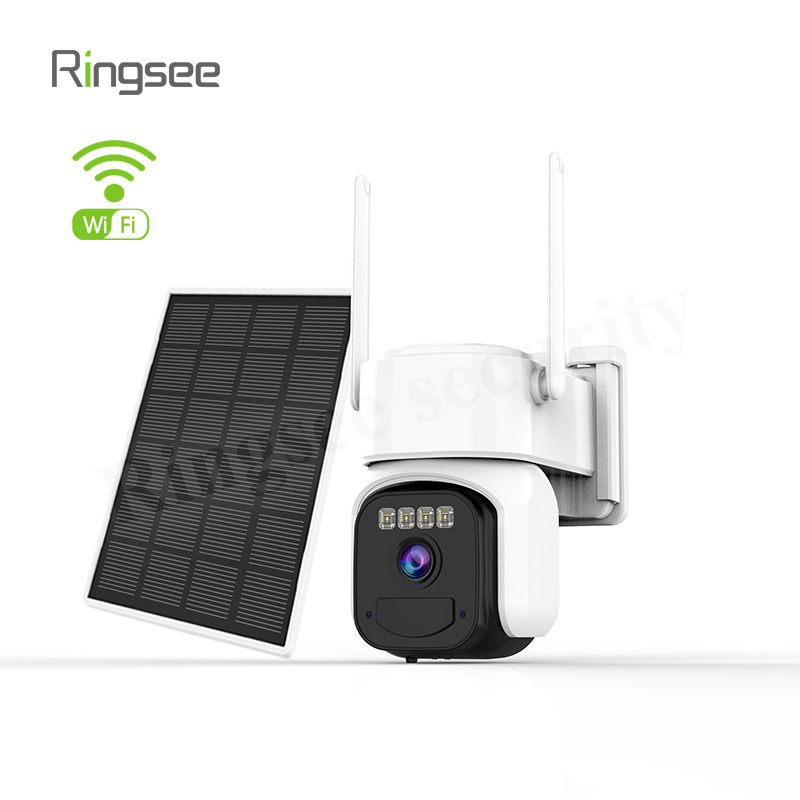
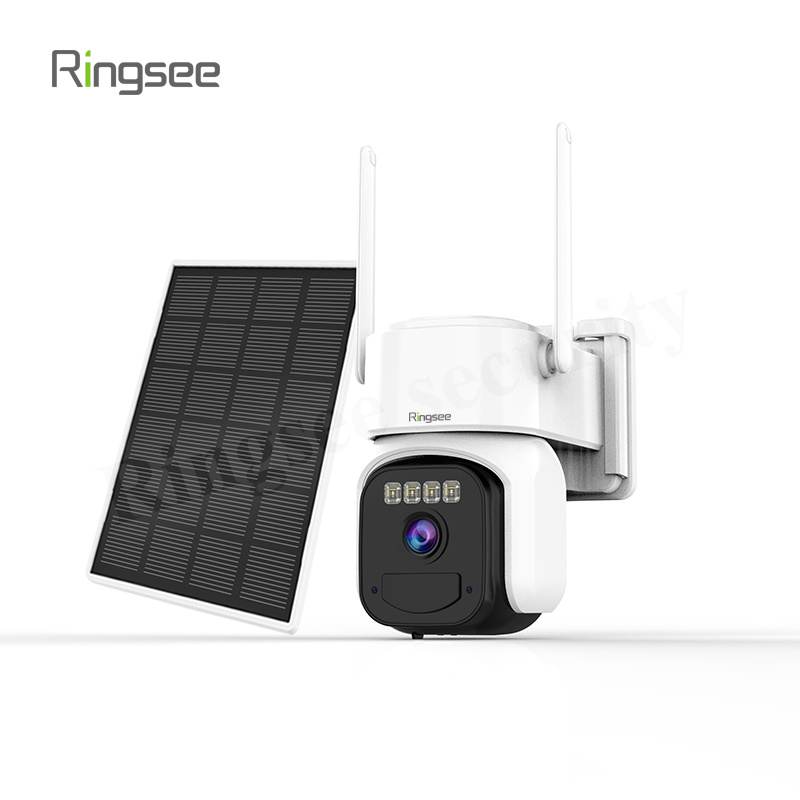
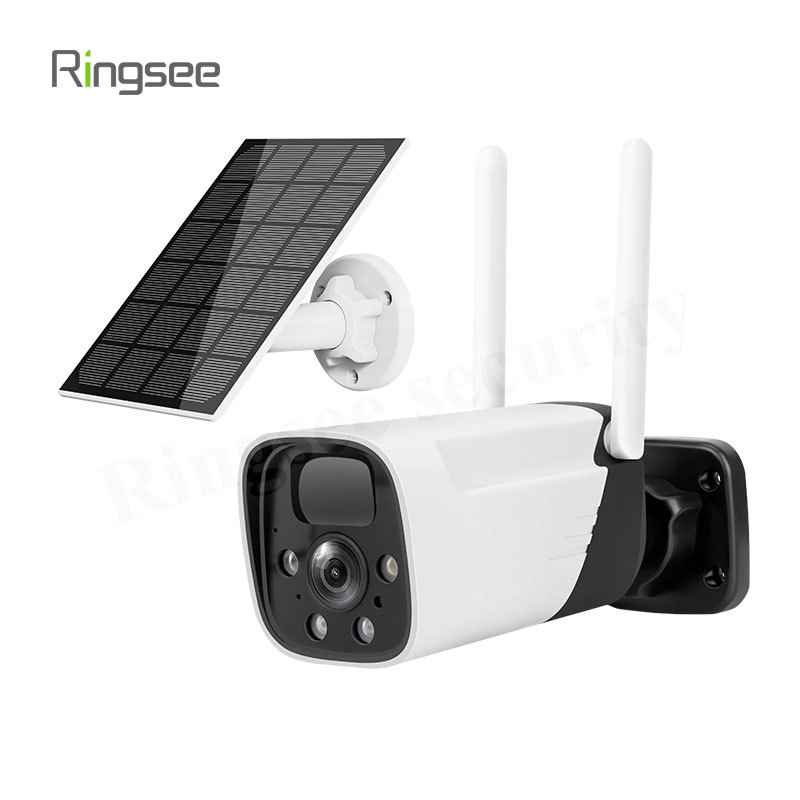
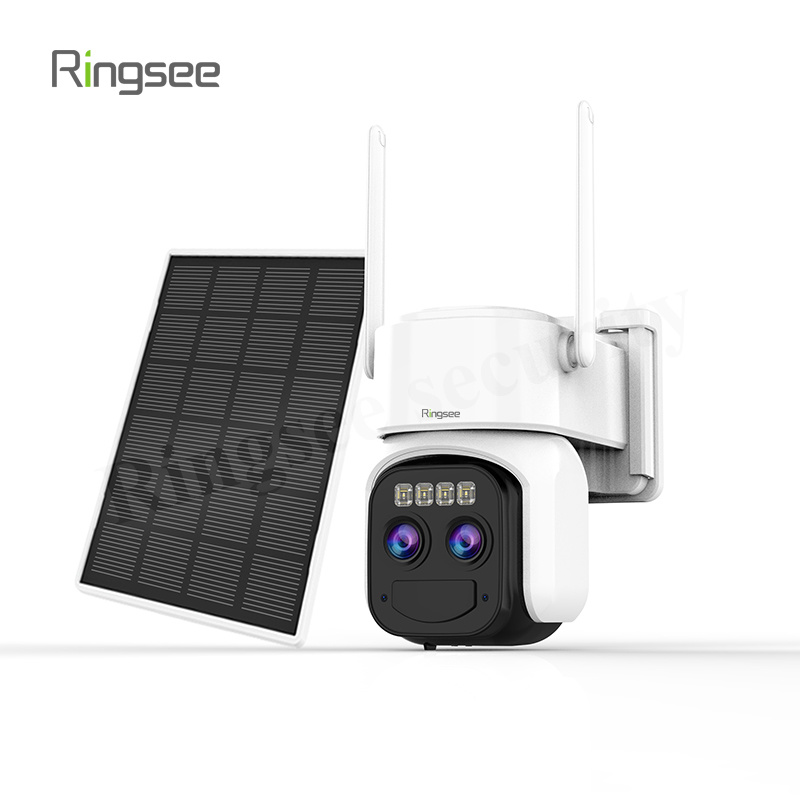
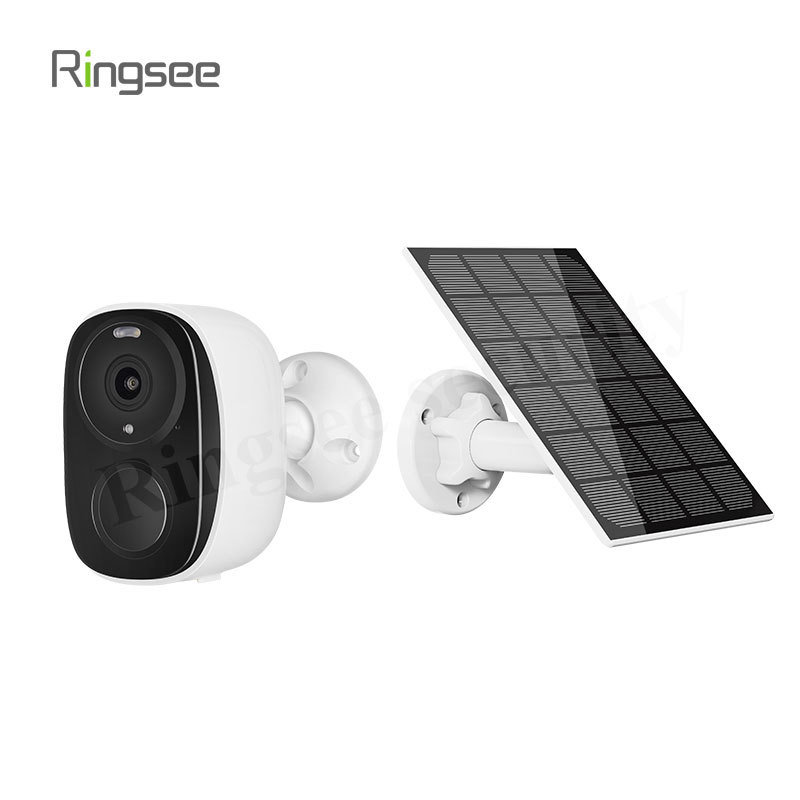
An AOV camera typically has a built-in battery and supports an external solar panel (for example, Ringsee RS-AOV-9103 recommends a 5W–15W solar panel). Sunny daylight charges the battery; night and overcast days rely on the battery to survive — thus achieving "no power interruption, no recording interruption."
An intuitive example: suppose a camera has only about 2 hours of personnel or vehicle activity in a day (at 25fps high frame), and the other 22 hours are essentially idle (dropping to 1fps low frame). Its average frame rate is far lower than "constant 25fps recording throughout," so total power consumption can drop severalfold. This is the key to why AOV can both "keep recording" and "stay off-grid" — it does not rely on piling up batteries, but on intelligently allocating frame rates.
Translating "technology value" into procurement language has one more easily overlooked layer: once you can clearly explain Black Light and AOV, you are no longer just "the person who sells cameras," but "the person who helps customers solve can't-see-clearly, missed-footage, and can't-run-cable problems." This professional image significantly reduces the churn rate of price-comparing customers — they are more willing to pay a bit more for a "knowledgeable" supplier, because if problems arise later, someone can explain it clearly and take responsibility.
4. Why These Two Technologies Matter to Buyers
Translating technology into procurement value yields four very practical points:
- No blind spots (AOV): continuous recording means there is no "not recorded" vacuum period, reducing liability disputes and missed alerts.
- Color-distinguishable at night (Black Light): color images greatly improve target identification rates, and end customers are willing to pay a premium for "seeing clearly."
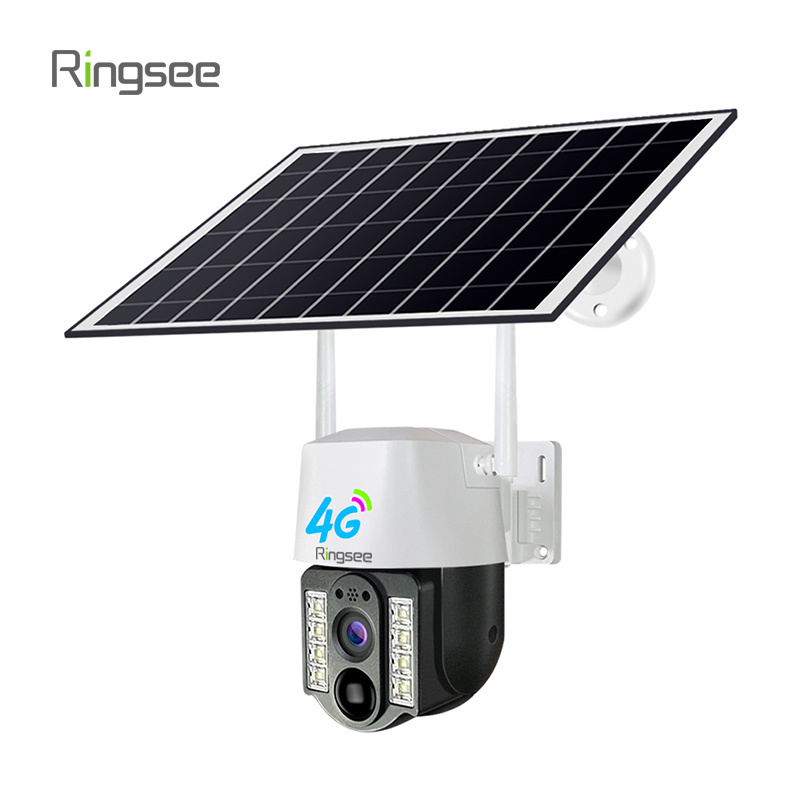
- Off-grid freedom: solar + battery + wireless (4G/WiFi) deploy cameras to places power lines cannot reach — farms, construction sites, fisheries, perimeters.
- Lower total cost of ownership: saves wiring, electricity, and maintenance; long-term ownership cost is significantly lower than traditional wired solutions.
5. Black Light vs. Traditional IR: Buyer's Comparison Table
Dimension | Black Light Night Vision | Traditional IR Night Vision |
Night color | Retains natural color | Black-and-white only |
Overexposure blobs | Low glare, center not blown out | Prone to light spots, washing out |
Target identification | Can distinguish clothing / license-plate color | Only silhouette |
Suitable environment | Near-dark, low light, under moonlight | Totally light-free relies on IR fill |
Experience premium | High, easy to tell stories to customers | Low, severe homogenization |
Cost | Slightly higher solution | Lower |
6. AOV vs. Traditional Cameras: Spec Comparison Table
Dimension | AOV Camera (e.g., RS-AOV-9103) | Traditional Security Camera |
Recording mode | 24/7 always-on, adaptive frame rate | Mostly motion-triggered or scheduled |
Power supply | Solar + battery, low power | Mostly wired / POE |
Night vision | Black Light color low-light | Mostly IR black-and-white |
Deployment flexibility | Off-grid capable, wireless (4G/WiFi) | Often depends on cabling |
Blind-spot risk | Extremely low (continuous recording) | Trigger blind spots exist |
Long-term cost | Low wiring / electricity | High wiring / electricity |
Typical scenarios | Farms, construction sites, perimeters, remote sites | Indoor, near-power, fixed points |
7. Procurement Decisions: Which Scenarios Must Choose AOV + Black Light
7.1 Scenarios Strongly Recommended
- Farm / Livestock: nighttime identification of livestock and intruders relies on color images; no utility power, relies on solar off-grid.
- Construction site: points change often, no stable power supply; AOV prevents missed recordings, solar prevents power outages.
- Fishery / Orchard / Greenhouse: scattered, remote; wireless + off-grid is key.
- Perimeter / Warehouse exterior: cannot tolerate blind spots; AOV continuous recording is safer.
- Remote base station / cabin: no network, no power; 4G + solar is the only solution.
- Wildlife observation: low glare does not disturb animals; color images aid research and viewing.
7.2 Scenarios Where Traditional Solutions Are Optional
Indoor, near-power, fixed points, and scenarios with no requirement for night-vision color (such as ordinary warehouse interiors, corridors) — traditional IR or wired solutions cost less and may not require AOV + Black Light.
8. Buyer's Checklist (Sample Testing & Supplier Audit)
To make technology "verifiable," we suggest testing as follows:
- Black Light sample footage test: require the supplier to shoot sample footage in a near-total-darkness environment, confirming whether it is truly color and whether there is overexposure; do not just look at daytime demos.
- AOV power-cut / network-cut demo: unplug the power and turn off the network to see whether the camera keeps recording and whether it can backfill segments after recovery.
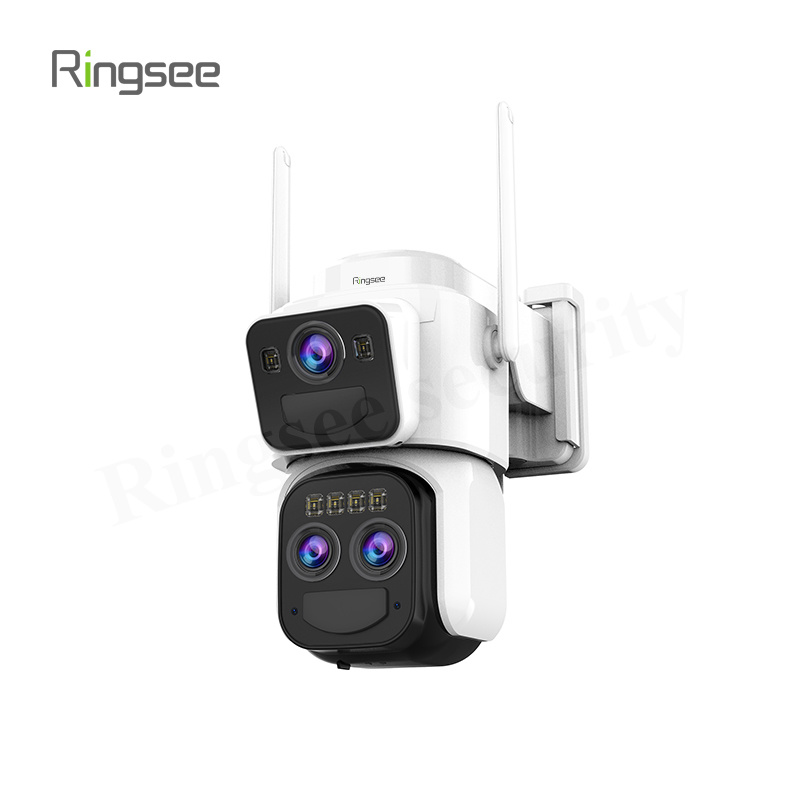
- Verify hard specs: dual lens (wide-angle + zoom/detail), resolution (2K/4K), connection form (4G/WiFi), protection grade (IP65/IP66), solar panel power range.
- Intelligence & alerts: human-shape detection accuracy, two-way voice, audiovisual deterrence (spotlight + siren) — are they easy to use?
- Certification & compliance: target-country certifications (CE/FCC, etc.), firmware security update commitments.
- Customization feasibility: can AOV / Black Light capabilities be ported to your other models or enclosures?
9. Common Procurement Myths
- "IR can see clearly too": IR is black-and-white and prone to overexposure; key details (color) are lost, far inferior to Black Light for identification.
- "24/7 recording = very power-hungry": AOV uses adaptive frame rate to lower idle power consumption, and combined with solar can actually stay online long-term.
- "Bigger night-vision distance number is better": distance depends on fill-light type and sensor; Black Light's "see clearly" matters more than "see far."
- "4G is always better than WiFi": where stable WiFi exists, WiFi saves traffic fees; only go 4G when truly network-free.
- "Having night vision is enough": night vision divides into IR black-and-white and Black Light color — the experience and premium differ vastly.
10. Ringsee RS-AOV-9103 as a Technical Benchmark
Using Ringsee's RS-AOV-9103 as an example, the earlier technologies can be mapped to concrete specs as a procurement benchmark:
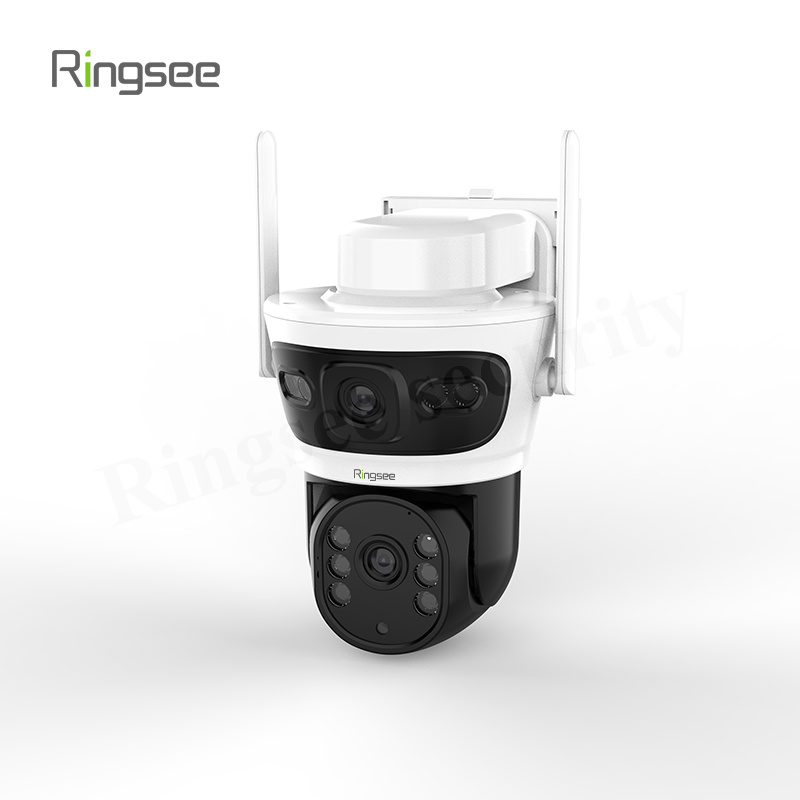
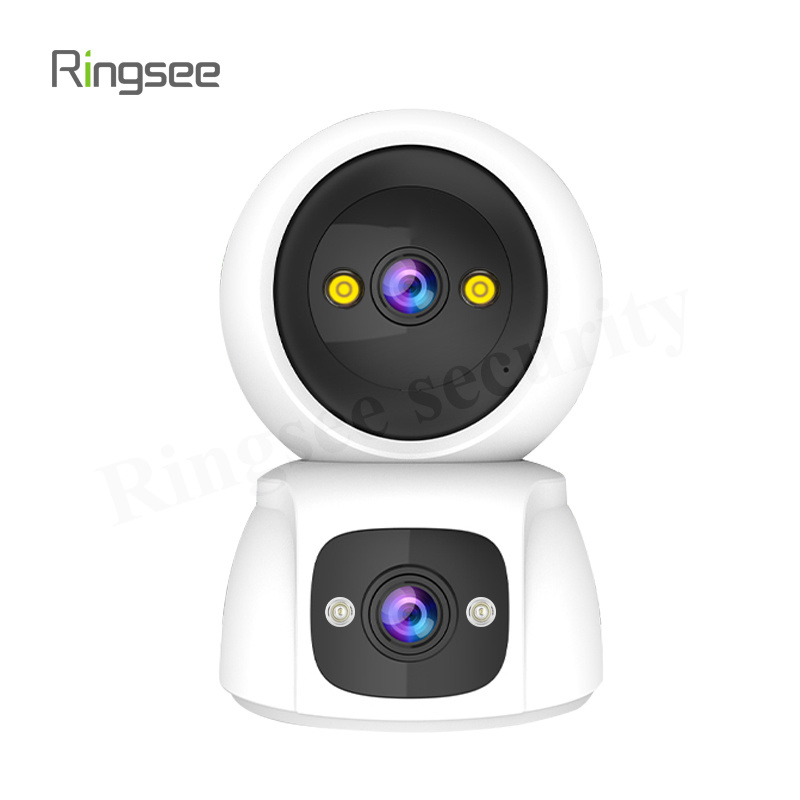
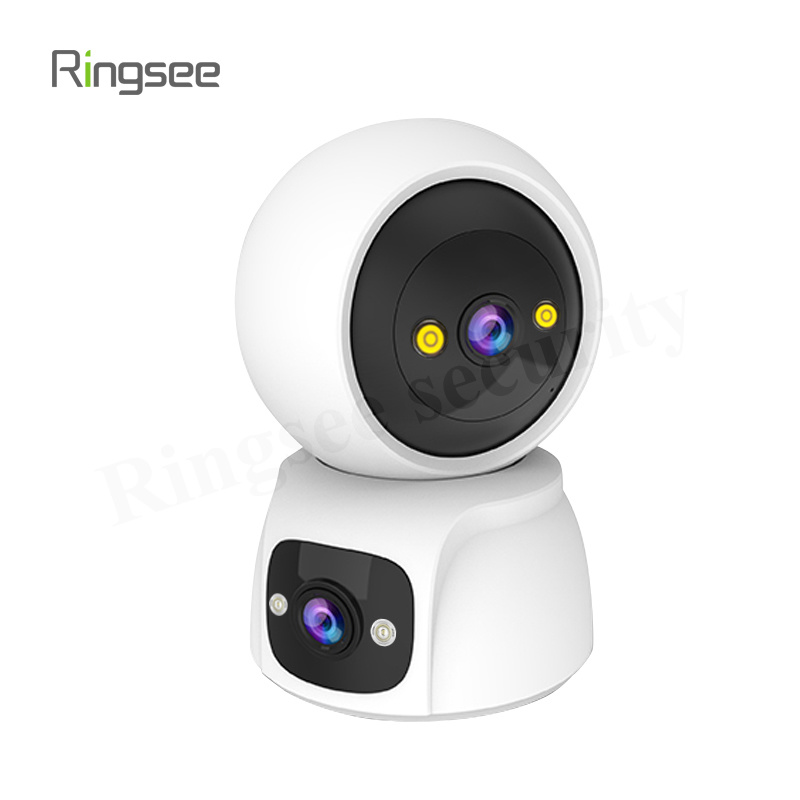
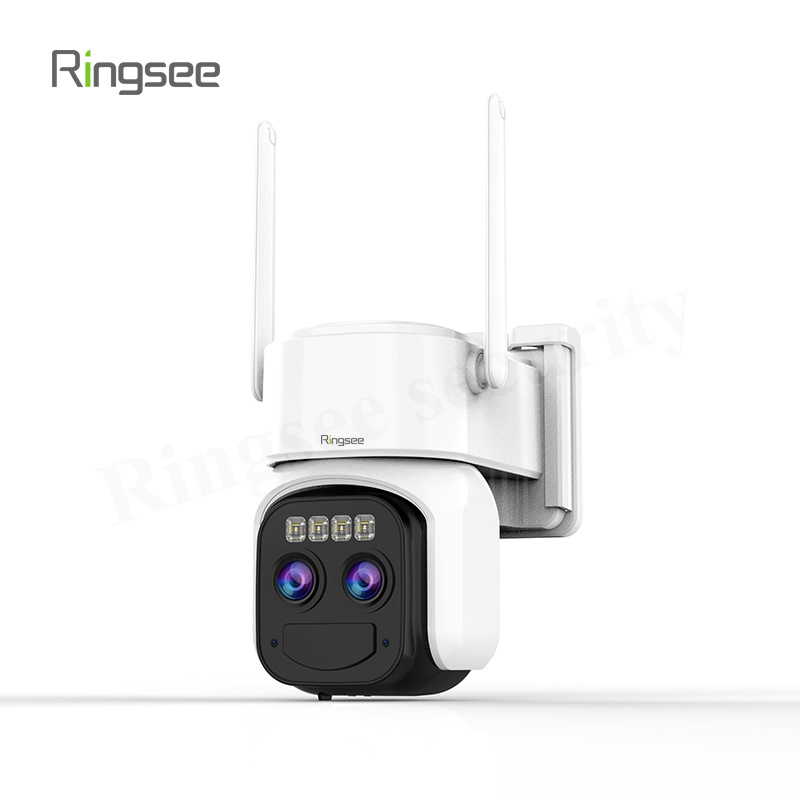
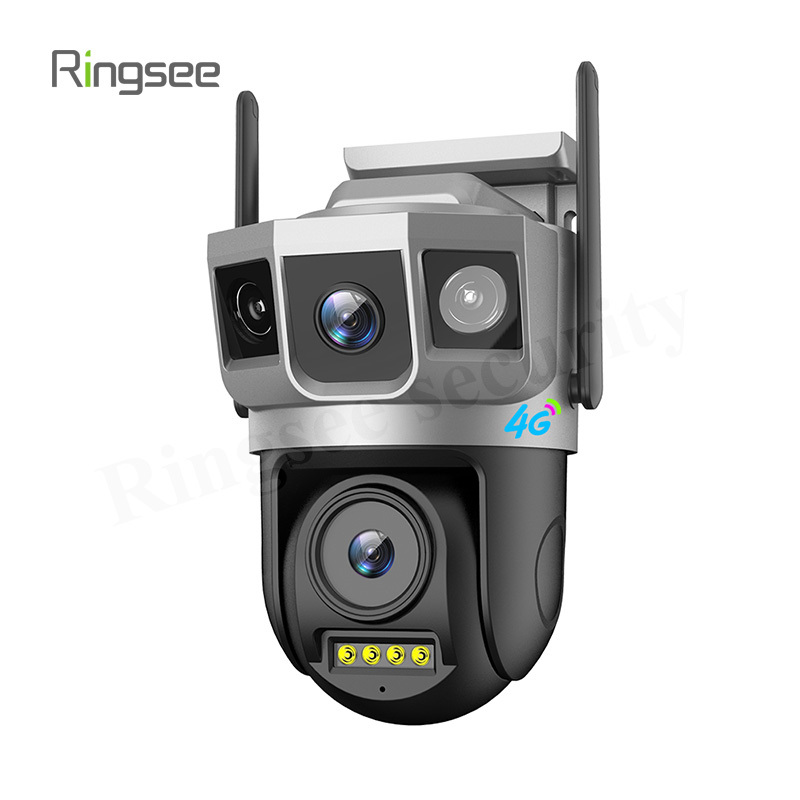
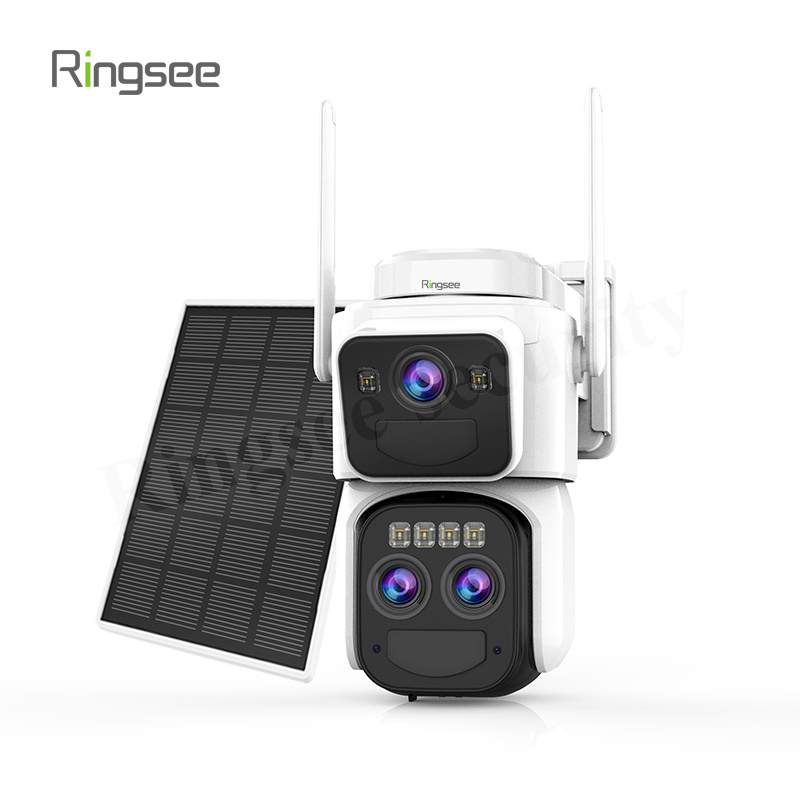
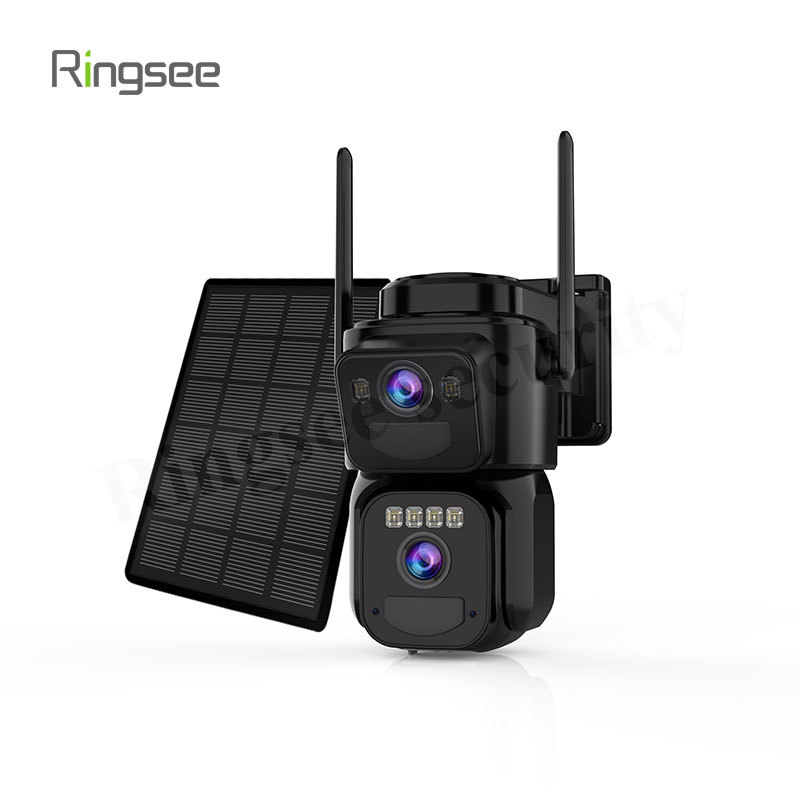
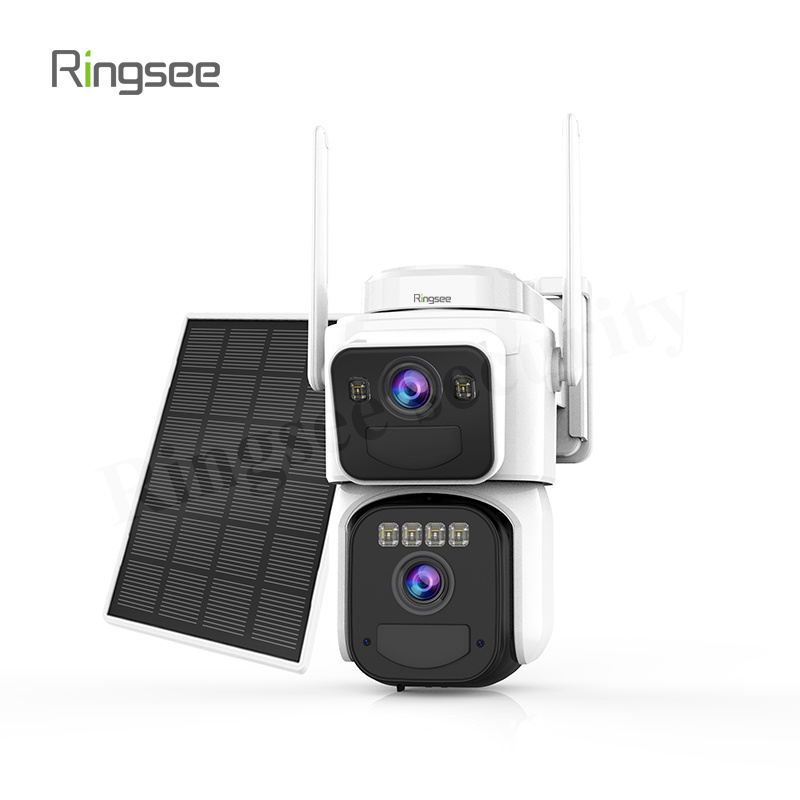
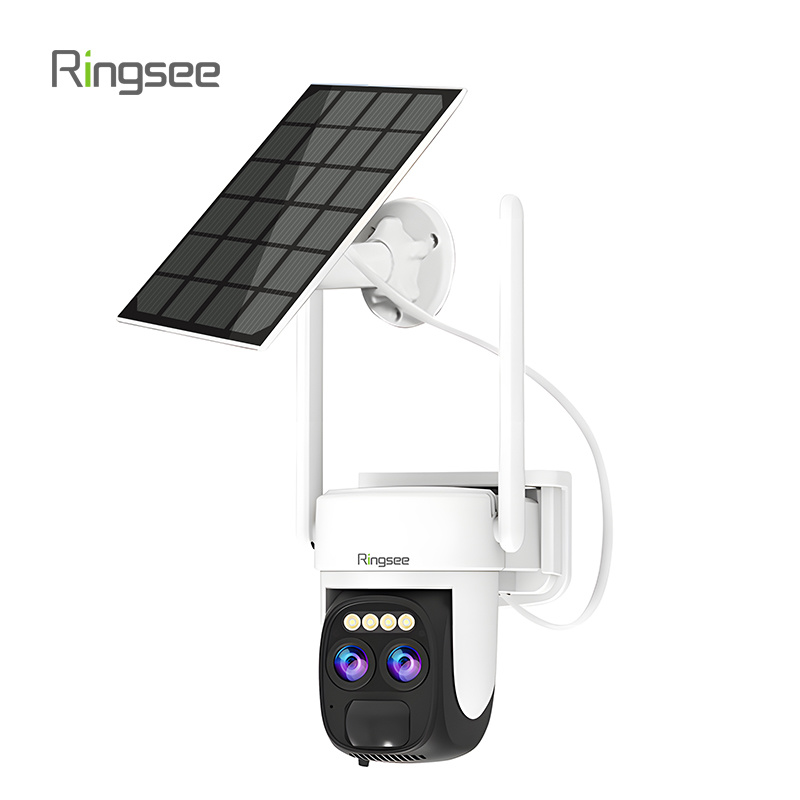
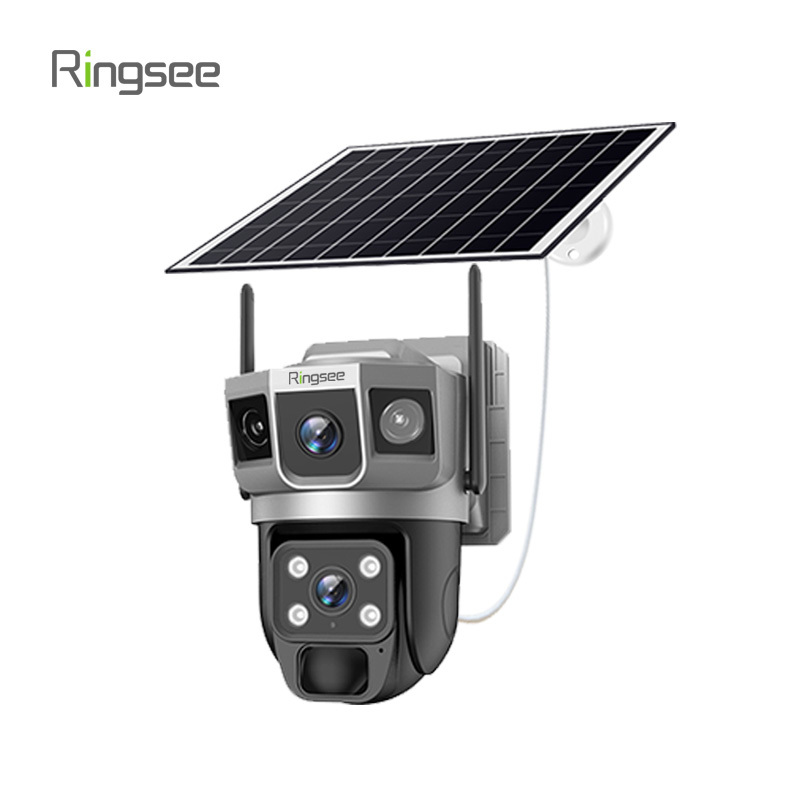
- Dual 2K lenses (wide-angle + zoom/detail), broad coverage and clear viewing;
- Black Light night vision technology: retains color and detail in near-dark environments;
- AOV always-on recording: adaptive frame rate, 24/7 non-stop recording;
- Solar-optimized low power: supports external 5W–15W solar panel + built-in battery;
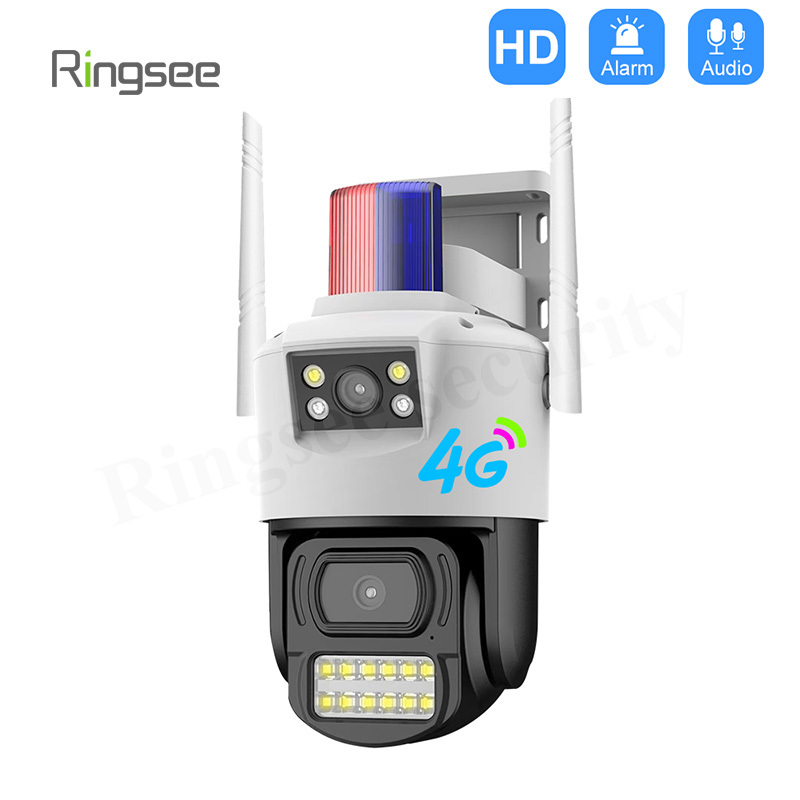
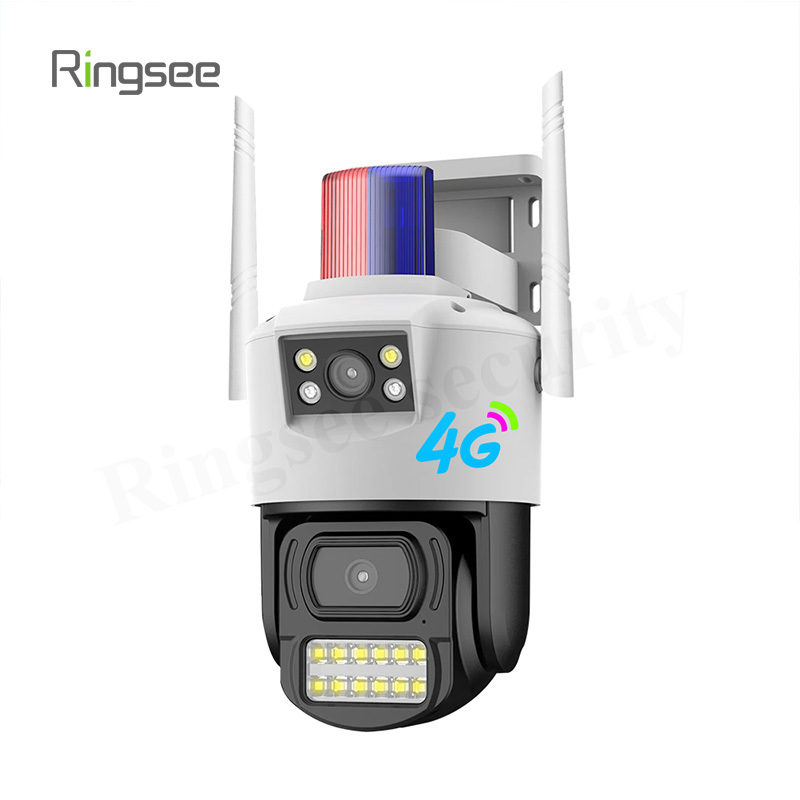
- 4G / WiFi optional: remote monitoring even in network-free environments;
- AI human detection + two-way voice + audiovisual deterrence: remote deterrence and interaction;
- Fast wake-up: near-instant recording on event trigger, no missing critical moments.
This set of parameters precisely corresponds to the procurement value of "no blind spots + night color + off-grid freedom," and can serve as your baseline for evaluating similar products.
4.5 Total Cost of Ownership (TCO) in Numbers
Take a remote farm as an example: traditional wired solutions often bear the cost of running power, cabling labor, POE switches, and monthly electricity; whereas the AOV + solar solution eliminates running power and cabling — the main cost is equipment and one-time installation. Although the single-unit equipment price is slightly higher, amortized over 3 years, the off-grid solution is often cheaper. Buyers should require suppliers to provide a calculation template for similar scenarios, rather than only comparing single-unit prices — this also helps you appear more professional in front of customers.
11. Technical Limitations & Applicability Boundaries (Honest Guidance for End Customers)
Even the best technology has boundaries; when buyers clarify them in advance, they instead reduce after-sales disputes:
- Black Light depends on faint light: in an environment of absolute zero light and no fill light, color capability declines; if the customer's site is pitch black year-round, they should pair it with low-brightness fill light or accept a quality concession.
- AOV is not "infinite endurance": under extreme consecutive rainy days, if solar recharge is insufficient and the battery is exhausted, recording may still stop; for high-latitude winter scenarios with short daylight, verify battery capacity and solar panel power.
- Color does not equal unlimited long-distance HD: Black Light solves "color-distinguishable," but long-distance detail is still limited by lens and resolution; if you want both color and to read a distant license plate, choose a 4K dual-lens model.
- 4G has traffic cost: using 4G without WiFi incurs traffic fees; for massive 24/7 recording, local storage + event-to-cloud is recommended to control traffic.
Writing these boundaries into your selection advice will make your professionalism clearly stand out.
12. How to Tell the Technology Story to Three Types of Channel Customers
- To distributors: emphasize "differentiated selling points + premium space." Black Light color night vision is a store-demonstratable, story-friendly hit point that helps you sell at a higher unit price.
- To system integrators: emphasize "no blind spots + hassle-free off-grid deployment." AOV continuous recording reduces project liability risk, solar eliminates cabling work orders, and project delivery becomes easier.
- To end-enterprises (farm / construction site): use scenario-based language rather than parameters — "see clearly who, don't miss those critical few seconds, no need to run power or network" — customers understand instantly.
13. The 10 Questions Buyers Must Ask the Factory
Turn the preceding content into an executable questioning list:
- Can you provide Black Light color sample footage in a near-total-darkness environment?
- After AOV loses network and power, can it keep recording, and after recovery can it backfill the missed segments?
- What is the solar panel power range and battery capacity, and how large a daylight shortfall can it withstand?
- Are the dual lenses wide-angle or zoom / detail? What is the resolution?
- Does it support 4G or WiFi, and can it be dual-mode?
- Is the protection grade IP65 or IP66, and is there a real test report?
- What are the human-detection accuracy and false-alarm rates?
- Is it 100% fully inspected, and can defect-rate data be provided?
- Are target-country certifications (CE / FCC, etc.) complete, and can documents be produced instantly?
- Can AOV / Black Light capabilities be migrated to my customized models?
These 10 questions are both a sample-testing outline and a touchstone for supplier strength.
14. Glossary (Quick Reference)
- Black Light night vision: low-illumination color imaging technology that retains color and detail in near-dark environments.
- AOV (Always-On Video): 24/7 online recording, using adaptive frame rate to achieve non-stop recording.
- ISP (Image Signal Processing): image signal processing; determines noise reduction and color restoration.
- IR (Infrared): infrared fill light; traditional night vision is mostly black-and-white.
- Adaptive frame rate: a power-saving strategy of high frame rate on motion and low frame rate when idle.
- Low-light: imaging capability under extremely weak ambient light.
- Solar + battery off-grid: a deployment method that supplies power continuously even without utility power.
- IP rating: dustproof and waterproof grade; outdoors commonly IP65/IP66.
- 4G / WiFi: two wireless connection forms, chosen according to on-site network conditions.
- Audiovisual deterrence: remote deterrence combining spotlight fill light + siren alarm.
15. FAQ (High-Frequency Buyer Questions)
Q1: Is Black Light the same as "full-color night vision"?
Similar but not completely identical. Both pursue night color, but Black Light emphasizes "low glare, retaining natural color, usable in near-darkness," and is one specific implementation route; when procuring, you should require near-total-darkness sample footage rather than just listening to terminology.
Q2: AOV records all the time — will the battery die quickly?
No. AOV uses adaptive frame rate, dropping to an extremely low frame rate when idle to save power, and combined with a solar panel for charging can stay online long-term at off-grid sites. The key is to verify that the solar panel power and battery capacity match.
Q3: Can it be used where there is no WiFi on site?
Yes. Choose the 4G version; insert a SIM card and you can monitor remotely — suitable for network-free farms, construction sites, and remote sites.
Q4: Can Black Light still produce color in complete darkness?
It performs best under near-darkness with faint ambient light (moonlight / starlight / residual streetlight); if there is absolute zero light and no conditional fill light, the effect declines. When procuring, you should clarify the customer's real lighting environment before selecting a model.
Q5: How do I explain the value of this technology to end customers?
In one sentence: "At night it's not a blurry black-and-white blob, but color where you can see clearly who it is and what color they're wearing; and it records continuously, so it won't miss those critical few seconds." Translate the technology into "see clearly, don't miss the shot."
Q6: When customizing, can AOV / Black Light capabilities be applied to my other models?
It depends on the manufacturer's R&D and platform capabilities. Manufacturers with in-house ISP, 3A, and deep intelligent R&D capabilities (such as Ringsee) can more easily port these capabilities to your customized models; you should confirm directly when requesting a quote.
Q7: How do Black Light cameras perform in rain, snow, and fog?
Rain and snow form reflections and obstructions in front of the lens, and any night vision is affected. It is recommended to choose models with raindrop / fog optimization and keep the lens clean; add a sunshade to reduce glare when necessary.
Q8: Can it store locally only and not go to the cloud, to protect privacy?
Yes. AOV cameras mostly support local SD card storage; sensitive scenarios can store locally only and send events to the cloud, controlling traffic while protecting privacy, and better complying with data-compliance requirements in some regions.
Q9: Are Black Light cameras suitable for indoors?
Indoors there is usually lighting, and ordinary IR or constant white light can also satisfy; whether to go Black Light depends on whether you want the selling point of "color even at night." For indoor scenarios requiring color distinction such as stores and cash registers, Black Light still has value.
Q10: How do AOV and cloud storage / NVR work together?
AOV cameras mostly support local SD + event-to-cloud, and can also connect to compatible NVR / VMS. When procuring, you should confirm whether your existing platform is compatible, to avoid the awkwardness of "the camera is advanced but the platform can't connect."
Q11: When buying an AOV + Black Light camera, what is the pitfall to avoid most?
What to avoid most is looking only at specs and not at sample footage: a nominal "night vision 30 meters" does not mean it can distinguish color at night, and "24/7 recording" does not mean it records after a power cut. You must require near-total-darkness sample footage + power-cut/network-cut live testing, turning marketing language into verifiable facts before discussing an order.
16. Conclusion & Action Recommendations
Technology is not decoration for procurement, but the underlying logic of model selection. For buyers, understanding Black Light and AOV means being able to ask suppliers the right questions, explain value to customers, and block return risk before shipment. We suggest a four-step approach:
- List scenarios: first clarify whether your end customers are mainly on farms, construction sites, or perimeters;
- Get sample footage: require near-total-darkness Black Light samples and power-cut/network-cut AOV demos;
- Benchmark: use RS-AOV-9103-class parameters as a benchmark to filter out manufacturers who "only copy terminology";
- Small-batch validation: first launch a small batch to market, collect end feedback, then scale up.
Once you thoroughly understand the technology, what you sell is no longer just a camera, but the peace of mind of "see clearly, don't miss the shot, installable anywhere."
Prev:
Related News
When overseas distributors, system integrators, and procurement managers at chain enterprises select a security camera, the spec sheet's "resolution, night vision range, frame rate" rarely reveal the true experiential difference. What really separates the user experience are two underlying technologies: Black Light night vision and AOV (Always-On Video, 24/7 online recording). Written from a buyer's perspective and in plain language, this article explains the principles of these two technologies, how they differ from traditional approaches, and their suitable use cases. It also provides a verification checklist that can be used directly for sample testing and supplier audits, helping you turn "technical understanding" into "precise model selection" — thereby reducing return rates and improving end-customer satisfaction. Whether you are procuring a solar security camera, an AOV low-power camera, or indoor/outdoor smart surveillance, this guide applies.
Jul 25,2026
For overseas distributors, system integrators, and procurement managers at chain enterprises, selecting a security camera is only the first step; what truly determines project delivery quality, supply stability, and profit margins is often the manufacturer behind the product. Written from the buyer's perspective, this article examines six major dimensions—factory strength, R&D reserves, OEM/ODM customization capability, quality system and certifications, supply chain delivery, and after-sales service—providing a practical evaluation framework and an on-site audit checklist, and uses Ringsee (Shenzhen Ruishi Technology Co., Ltd.), a manufacturer with more than 20 years of industry experience, as a reference case to help you establish clear criteria for judging a "quality security camera manufacturer." Whether you are evaluating a solar security camera, a low-power AOV camera, or indoor/outdoor intelligent surveillance solutions, this methodology applies.
Jul 25,2026
How to Manage Multi-Branch/Plant Surveillance? Distributed Security Architecture Guide
A B2B architecture guide for unified management of surveillance across multiple stores, factories, or warehouses. Covers protocol unification (ONVIF/GB28181), three-layer network architecture, VPN/SD-WAN/leased-line options, VMS platform selection, alarm filtering, and cross-region video retrieval.
Jul 19,2026
Security Camera Project Budget Guide — B2B Procurement Cost Breakdown Template
A practical cost breakdown template for security surveillance project budgets — covering equipment, installation, networking, software, maintenance, and hidden costs. Helps B2B procurement managers avoid 20–40% budget overruns.
Jul 19,2026
Bought a security camera but don't know how to use it properly? This guide covers first-time setup, alert tuning to cut false alarms by 80%, remote viewing optimization, video search, smart home integration, and a quarterly maintenance checklist.
Jul 11,2026
Links:One Belt Power Technology
Add: 14th Floor, Baoshan Building, Longhua District, Shenzhen China.
Privacy Policy | SEO | CitySite | Support: 300.cn Dongguan