





Security Camera IP66/IP67 Weatherproofing and Lightning Protection Selection Guide
Publish:
2026-08-08 16:07
Source:
https://www.ring-see.com
Whether an outdoor security camera lasts three years or three months rarely depends on image quality — it depends on weatherproofing and lightning protection. Water ingress and fogging, lightning-induced burnout, salt-fog corrosion, and cold-crack failure account for the vast majority of on-site returns of outdoor cameras. Using applicable parameters and typical values, this article breaks down the waterproofing boundaries of IP66/IP67/IP68, the IK impact rating, operating temperature and materials, salt-spray test duration, lightning entry paths, SPD surge protector selection, grounding resistance and equipotential bonding — then provides a protection comparison table for four typical scenarios, a 5-year total-cost comparison and a 6-step decision tree, so buyers can avoid the common failure points at the selection stage.
1. Why weatherproofing and lightning protection are the first life-or-death line for outdoor cameras
Many buyers pour budget into "megapixels and zoom," only to see devices fail within six months of installation at a construction site or by the sea. We have seen plenty of real-world failure cases:
- Coastal fishing port: a dome camera rated IP66 developed water droplets on the inside of the lens after one typhoon season, blurring the image — the seal had aged prematurely in the salt-fog environment.
- Northern highway: after a −25°C cold snap, an IR bullet camera's lens cracked and the housing became brittle — the material lacked low-temperature toughness and had no internal heating/defog.
- Rural power pole: three wireless bridge cameras burned out consecutively during thunderstorm season; the network transformers on the boards were scorched — induced lightning traveled in along the network cable with zero surge protection.
- Mining site: a housing advertised as "vandal-proof" cracked from a single thrown stone, leaving a blind spot for a full week — the IK rating was not what it claimed.
The common thread of these four cases: the failures occurred in the easily-overlooked "housing, sealing, and electrical interfaces," not the core imaging components. In other words, weatherproofing and lightning protection are the "foundation" of outdoor camera reliability — no matter how good the image, a collapsed foundation is useless.
One sentence: For outdoor selection priority — power supply (see the "Power & Connectivity 12-Combination Decision Tree") decides whether the device can power on, night vision (see the "Night Vision & Low-Light Selection Guide") decides how much you see in the dark, and weatherproofing + lightning protection decide how long the system survives.
2. Decoding the IP rating: what exactly differs between IP66, IP67 and IP68
The IP (Ingress Protection) rating consists of two digits: the first digit is dust protection (0–6), the second is water protection (0–8). A common misconception is "a bigger number is always better," but the second digit's Water test conditions differ greatly and must be read together with the test method.
Rating | First digit (dust) | Second digit (water) — typical test | Applicable judgment |
IP65 | Fully dust-tight (6) | Low-pressure spray (6.3 mm nozzle, typically 12.5 L/min, 3 min) | Rain-proof, not short-immersion-proof |
IP66 | Fully dust-tight (6) | Powerful spray (12.5 mm nozzle, typically 100 L/min, 3 min) → typical value | Heavy rain, high-pressure washer washing; the mainstream outdoor choice |
IP67 | Fully dust-tight (6) | Immersion 1 m under water, typically 30 min | Short-term submersion / flooding; not long-term underwater |
IP68 | Fully dust-tight (6) | Manufacturer-defined depth/duration (typically 1.5–3 m, several hours+) | Long-term underwater, pools/rivers, etc. |
Key reminder: IP67 beats IP66 at "immersion resistance," but that does not mean "high-pressure washer resistance" — IP66's powerful spray pressure is actually higher than IP67's static-water immersion. So:
- Open-air, afraid of heavy rain and washing → IP66 is usually sufficient and cost-effective;
- Possible submersion, low-lying flooding, frequent washing → IP67 is safer;
- Long-term underwater (e.g. river monitoring) → then consider IP68.
Selection rule: Don't just look at the second digit — check whether the test conditions match your site. A manufacturer that labels "IP67" but never does an immersion test, versus one labeling "IP66" with a third-party report, differ enormously in reliability.
Two common misuses:
- Using IP65 as IP66 in a livestock farm washed with high-pressure washers — the pressure gap between low-pressure and powerful spray is nearly 8×, leading to ingress and fogging after wash season.
- Buying IP68 as a "universal shield" for an arid inland site — IP68 tests long-term underwater, giving you zero benefit on site while costing more; what the site really needs to guard against is dust (IP6X already satisfied) and impact (IK).
Housing structure is more hidden than the numbers: Two products both labeled IP66 — a threaded, press-fit housing with double seals usually beats a snap-fit one; cable entries should use waterproof connectors (PG thread or cable glands) rather than drilled holes sealed with glue. When buying, request the exploded view / seal-structure description, check the seal material (silicone / EPDM outperforms ordinary rubber) and how cable holes are treated.
3. IK impact rating: how to choose IK08, IK10
The IK rating measures the housing's resistance to mechanical impact, in joules (J). Common levels:
IK rating | Impact energy tolerated (typical) | Analogy |
IK08 | 5 J | ~1.7 kg object dropped from 0.3 m |
IK09 | 10 J | ~5 kg from 0.2 m |
IK10 | 20 J | ~5 kg from 0.4 m, or an adult punch / hard-object strike |
Buyer pain point: many "vandal-proof" housings only reach IK08 yet are marketed as "anti-destruction." Recommendations:
- Ordinary campuses, residences: IK08–IK09 is usually enough;
- Construction sites, stations, prisons, easily-damaged public areas: prefer IK10, and require the manufacturer's impact test report (pendulum hammer method, typically tested at several points at −20°C~+40°C);
- Note that models with a transparent dome often have their vandal rating limited by the glass dome, which must be confirmed separately.
4. Operating temperature and materials: cold-crack and heat-softening
The camera's rated operating temperature is often overlooked. Typical industry ranges:
- Consumer / general grade: 0°C ~ 40°C (indoor or mild regions);
- Industrial grade (mainstream outdoor): −30°C ~ +60°C (typical value);
- Extended wide-temperature: −40°C ~ +60°C or +70°C (severe cold, desert, northern winters).
Materials and structure determine low-temperature performance:
- Housing material: die-cast aluminum alloy outperforms ordinary ABS plastic — less brittle at low temperatures;
- Sealant: silicone seals stay elastic at −40°C; inferior rubber hardens and leaks;
- Defog / de-ice: in low-temperature, high-humidity scenes the lens easily condenses and ices up — needs heated glass (defog/de-ice) or a breathable valve (pressure equalization + waterproof membrane) — the breathable valve greatly reduces in-housing condensation;
- Startup temperature: some cameras are labeled "operating temp −30°C," but the "startup temperature" may only reach −10°C; cold regions must confirm low-temperature startup capability.
Real pitfall: a northeastern China project bought bullet cameras labeled −30°C, but they failed to start at −28°C in winter — because the manufacturer rated "operating temperature," not "startup temperature." Always distinguish these two metrics when buying.
UV aging is often ignored: Outdoor housings under long-term sun exposure — ordinary ABS/PC plastic yellows, becomes brittle and cracks; after three to five years the seal fails. UV-resistant practices: UV-stabilized masterbatch in the housing, powder-coat surface, or die-cast aluminum (no aging issue). Desert and plateau (strong UV) projects especially should ask about "housing UV rating / xenon-arc aging test hours," with a typical requirement of ≥1000 h xenon-arc aging with no obvious chalking.
Damp-heat cycling: In southern China's humid springs and regions with large day-night temperature swings, repeated in-housing condensation corrodes the PCB and lens coating. Beyond breathable valves / heated glass, some high-end models place a desiccant box or humidity-sensor-linked heating inside the housing to further suppress condensation. Treat "humidity management" and "temperature management" as equals, not just the upper operating-temperature limit.
5. Salt fog and corrosion: the invisible killer in coastal and chemical scenes
An ordinary camera in a coastal salt-fog environment rusts through its metal parts within months. Salt-spray testing per standards (e.g. neutral salt spray, NSS) is measured in hours:
Salt-spray test duration (typical) | Applicable scene |
48 h | Ordinary indoor / mild outdoor, basic threshold |
96 h | General outdoor, light-corrosion resistance |
240 h | Coastal, humid, rainy regions |
500 h and above | Heavy salt-fog coastlines, chemical, ports and other highly corrosive environments |
Supporting measures:
- Material: 316 stainless steel or anti-corrosion aluminum alloy outperforms 304 stainless / ordinary steel;
- Surface treatment: powder-coat / anodizing layer must be thick enough;
- Connectors: use corrosion-resistant metal waterproof connectors, not ordinary galvanized;
- Screws: stainless steel or titanium, to avoid galvanic corrosion from contact between different metals.
For coastal projects, don't just ask "is it IP66?" — ask "how many hours of salt spray, what material" — this is the key to whether the camera lasts three years at a fishing port.
6. Lightning strikes and surges: why cameras are especially easy to destroy
Outdoor cameras are mostly mounted on pole tops, rooftops and open areas — prime lightning targets. Lightning damage has two types:
- Direct strike: directly hits the pole or device, enormous energy, dissipated via lightning rod / belt + down-conductor + grounding;
- Induced lightning (surge): lightning-induced or line-coupled surges nearby travel into the device along power lines, network cables (PoE), and control signal lines — this is the real cause of most camera burnouts, because the lightning didn't hit the device but the electricity "slipped" in along the wires.
Entry-path priority (typical):
- AC power line: outdoor poles often draw 220V/110V, the most violent surge;
- Network cable / PoE: Cat5e cable run overhead, induced lightning goes straight into the network transformer;
- Signal / control lines: pan-tilt, alarm lines, etc.
Conclusion: lightning protection is not "install a lightning rod and done." Power, signal and network lines all need surge protection — otherwise induced lightning entering from any one line can destroy the device.
Lightning Protection Zone (LPZ) thinking: Per IEC 62305, lightning protection is divided into zones (LPZ0 exposed direct-strike zone → LPZ1 shielded by building → LPZ2 device front-end). The "multi-stage" nature of SPDs essentially means the lightning current is dissipated and voltage-limited at each stage, so the residual voltage at the device end is already very low. An overhead-run camera is almost entirely in LPZ0, so two-stage SPD at pole base and port is not "redundancy" but a hard requirement of zoned protection. In thunderstorm-heavy regions (e.g. South China, Southeast Asia) with high point density, SPDs should be standard, not optional.
7. SPD surge protector selection: discharge capacity, protection level, response time
The SPD (Surge Protective Device) is the core component against induced lightning. Selection looks at three hard metrics:
- Discharge capacity (Imax): typical 10/20/40 kA classes, representing how much lightning current it can dissipate. For outdoor poles recommend ≥20 kA (power end); thunderstorm-heavy regions use 40 kA;
- Protection level (Up): residual voltage, the lower the better, must be below the protected device's withstand voltage (camera network port typically withstands ~1–2 kV; choose a signal-class SPD with Up ≤1.5 kV);
- Response time: nanosecond level (typical <25 ns), faster is better;
- Protection mode: power SPDs split into L-PE, N-PE, etc., must match the supply system (single/three-phase).
Multi-stage protection principle (typical):
Stage | Location | Function |
First stage | Main distribution box (LPZ0→1) | Dissipate large current, coarse protection |
Second stage | Pole base / device front-end (LPZ1→2) | Further limit voltage |
Third stage | Device port (network / power interface) | Fine protection, lowest residual voltage |
Practical advice: at minimum do two stages at the camera — pole-base power SPD + device-end integrated network/power lightning protector. With only one stage, remote induced lightning can still break through.
An SPD is not "install and forget": A surge protector is a consumable; after dissipating several large currents its internal components age, leakage current rises, protection drops or it even fails outright. When selecting, confirm whether it has a failure-indicator window / remote-alarm contact (typically a green/red window or dry-contact alarm) and include it in periodic inspection — check the window color and measure grounding resistance once before and after thunderstorm season. Don't wait until the device burns to discover the SPD failed long ago.
8. Grounding: grounding resistance and equipotential bonding
No matter how good the SPD, lightning current with nowhere to dissipate is useless. Grounding is the foundation of lightning protection:
- Grounding resistance: typical requirement ≤10 Ω (general outdoor), thunderstorm-heavy / important sites require ≤4 Ω (typical value);
- Grounding electrode: angle steel / copper-clad steel driven into deep moist soil; in arid regions add reducing agent;
- Equipotential bonding: the camera metal housing, pole body, SPD ground terminal and device housing must be connected at one point to avoid sparking from potential difference;
- Lightning belt / rod: add a rod on the pole top (rolling-sphere method for protection radius), down-conductor independent, short and straight;
- Note: if a PoE camera is powered remotely by an indoor switch, the switch end also needs a network SPD, otherwise lightning travels from the outdoor line indoors and burns the switch.
Common failure: pole-base grounding resistance measured at 30 Ω, the SPD is virtually useless, devices still burn in rainy season. Grounding resistance must be measured on site, not just read from the design value.
9. Protection comparison table for four typical scenarios
Scenario | Recommended protection | Operating temp | Salt spray | Lightning | Notes |
Ordinary campus / community | IP66 + IK08 | 0~40°C or −30~60°C | 48–96 h | Basic SPD (≤10 kA) | Mild environment, cost-first |
Coastal / port | IP67 + IK10 + 316 stainless | −30~60°C | ≥500 h | Two-stage SPD (≥20 kA) + grounding ≤4Ω | Salt fog is the core risk |
Severe cold / north | IP66 + heated defog + wide temp | −40~60°C | 96–240 h | Two-stage SPD | Confirm low-temp startup temp |
Site / mine | IP67 + IK10 | −30~60°C | 240 h | Two-stage SPD + lightning rod | Dust/impact/vibration proof |
Quick regional risk memory: In thunderstorm-prone belts (typically South China, Southeast Asia, Central/South America rainy season), prioritize filling SPD + grounding; in high-salt belts (coastlines, salt-lake surroundings, chemical parks) prioritize pinning down salt-spray hours and material grade; in severe-cold belts (Nordic, Northeast/Inner Mongolia China, Canada) prioritize confirming wide-temperature and startup temperature; in strong-UV belts (plateau, desert) don't ignore housing UV aging. Judge the region first, then match the protection items — far more efficient than memorizing parameters one by one.
10. 5-year total cost comparison (typical values, not a quote)
The table below is a single-point typical-range estimate (currency unit: relative coefficient, for horizontal comparison, not an absolute quote):
Plan | Device unit price | 5-yr failure rate (typical) | Replacement + labor | 5-yr total cost of ownership |
Ordinary IP66 no lightning protection (coastal) | 1.0× | High (typical 40–60%) | High | 2.0–2.5× |
Reinforced protection + two-stage SPD + grounding | 1.4× | Low (typical <10%) | Low | 1.4–1.6× |
Conclusion: Spending 40% more up front on protection and lightning protection actually saves money over five years, and what you save is the operations labor of "climbing the pole at midnight to swap devices" and business-interruption loss. Protection is not a cost, it's insurance. The TCO above is estimated as "device price + failure-replacement count × unit price + single on-site labor (typical 0.5–1 person-day) × count"; in coastal scenes the failure-rate difference mainly comes from water ingress and salt-fog corrosion — exactly the focus of sections 2 and 5.
11. 6-step decision tree: define the environment first, then the rating
- Risk of water immersion? Yes (low-lying / submersion) → at least IP67; rain only → IP66 suffices.
- Min/max temperature? ≤−30°C or ≥60°C → choose extended wide-temp + confirm startup temp; need defog → heated glass / breathable valve.
- Coastal / chemical? Yes → salt spray ≥500 h + 316 stainless / anti-corrosion aluminum.
- Risk of vandalism? Site / public area → IK10; ordinary area → IK08.
- Local thunderstorm frequency? Heavy → two-stage SPD (≥20 kA) + grounding ≤4Ω + lightning rod; light → basic SPD.
- Power wiring method? Overhead PoE / AC → network + power dual SPD; indoor remote supply → add network SPD at switch end too.
Decision core: First screen with the "environmental four evils" (water / temperature / salt / lightning) one by one, then add vandal rating, finally calculate TCO. Don't reverse it and pick image quality first.
12. Five hidden pitfalls in installation and maintenance
- Seal installed reversed / pinched: during installation the seal twists or gets a notch from cable pressure, IP rating drops to zero on the spot — inspect before mounting, use waterproof connectors + self-amalgamating tape at cable holes.
- Breathable valve protective film not removed: the factory protective film forgotten, in-housing condensation can't escape, fogging within six months.
- SPD ground floating: the protector's ground wire not actually connected to the grounding electrode, becoming decorative.
- In-pole cables run parallel with power lines: network cable bundled with 220V, stronger inductive coupling — should be in separate trays / conduits.
- Ordinary stainless screws in salt-fog zone: contact between different metals causes galvanic corrosion, the whole pole rusts solid within a year.
A grounding measurement sample: A coastal project designed grounding resistance ≤4Ω, but didn't measure after construction; two dome cameras burned consecutively in rainy season. Re-measurement found dry sand backfill at the pole base, measured 28Ω — SPD dissipation nearly ineffective, lightning current coupled into the circuit via the housing. After replacing the grounding electrode (copper-clad steel driven into moist deep soil + reducing agent), re-measurement was 3.2Ω, with no further lightning damage since. The lesson is blunt: grounding resistance is "measured," not "written." The delivery checklist must carry the on-site measured value, not the design value.
13. Procurement verification checklist + FAQ
Procurement verification checklist (recommend requesting evidence from the manufacturer line by line):
- [ ] IP rating third-party test report (look at test conditions, not just the number)
- [ ] IK rating impact test report (better if tested at low temperature)
- [ ] Operating temperature + startup temperature dual metrics
- [ ] Salt-spray test hours + material grade (316? anti-corrosion aluminum?)
- [ ] SPD parameters: discharge capacity kA, protection level Up, response time
- [ ] Grounding resistance design requirement + whether on-site measurement service is included
- [ ] Seal structure drawing (seal material, waterproof connector spec at cable entries)
- [ ] Breathable valve / heated glass configuration (mandatory to ask in high-humidity / low-temp scenes)
FAQ
Q: IP67 is more waterproof than IP66, so always choose IP67?
A: Wrong. IP66 excels at high-pressure spray, IP67 at short-term immersion; the test conditions differ. For open-air heavy rain, IP66 is more cost-effective; you need IP67 only if submersion / flooding is possible. Look at the site, not the number size.
Q: With a lightning rod installed, the camera won't be struck?
A: The rod protects against direct strikes, but induced lightning traveling along power / network lines still burns the device. Power + network + signal lines all need SPD surge protection, and grounding resistance must meet the standard.
Q: Is 10Ω vs 4Ω grounding resistance a big difference?
A: A big difference. Higher resistance means slower lightning-current dissipation and higher residual voltage, weakening SPD protection. Heavy-thunderstorm / important sites should aim ≤4Ω and measure on site.
Q: Does an ordinary community need IK10?
A: Usually not. IK08–IK09 suffices; IK10 is mainly for vandal-prone public / industrial scenes. Paying extra for unused vandal-proofing is not cost-effective.
14. Related standards and certification quick-reference (for procurement cross-checking)
When requesting reports from manufacturers, recognize these typical standards to avoid being fooled by "self-defined standards":
Dimension | Typical standard | What to check |
Dust/water | IEC 60529 (GB/T 4208) | IP number + test conditions |
Vandal impact | IEC 62262 (GB/T 20138) | IK rating + impact energy |
Surge protector | IEC 61643 / GB 18802 | Discharge capacity, Up, response time |
Lightning system | IEC 62305 / GB 50057 | LPZ zones, grounding resistance |
Salt spray | IEC 60068-2-11 / GB/T 10125 | Neutral salt spray NSS hours |
High/low temp | IEC 60068-2 series | Operating / startup temp, damp-heat cycling |
One sentence: A standard number is more trustworthy than the manufacturer's self-description. Require reports to carry the standard number and measured conditions, so procurement has a basis to verify.
Final notes
For outdoor surveillance reliability, image quality is only half — weatherproofing and lightning protection decide the other half or more. Using this article's IP/IK rating boundaries, the temperature-vs-startup-temperature distinction, salt-spray hours, SPD three-stage protection, grounding-resistance measurement and 6-step decision tree, you can avoid most of the "pretty specs, dead in six months on site" pitfalls.
This article is the fourth in the "security camera" topic cluster, complementing the "Power & Connectivity 12-Combination Decision Tree," the "4G + Solar Off-Grid Surveillance Selection Guide" and the "Night Vision & Low-Light Selection Guide": power decides whether it powers on, connectivity decides whether it communicates, night vision decides how much you see in the dark, and weatherproofing + lightning protection decide how long the system survives.
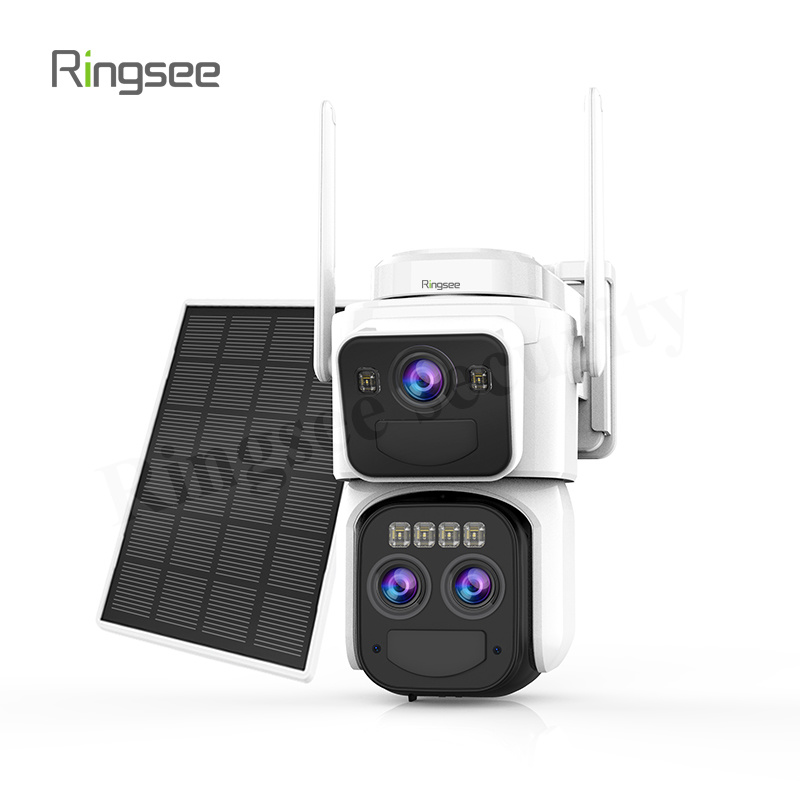
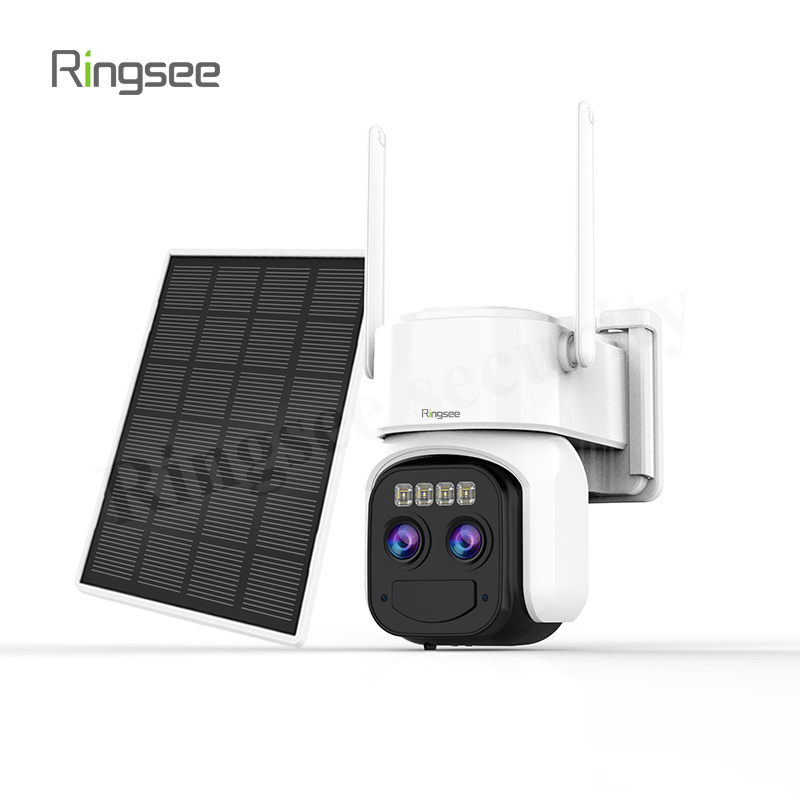
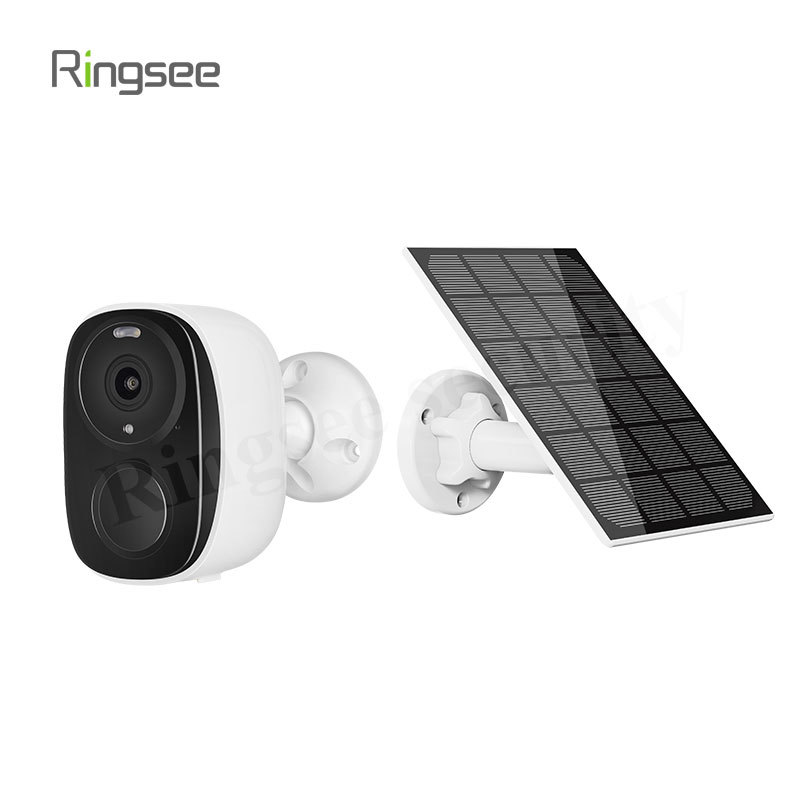
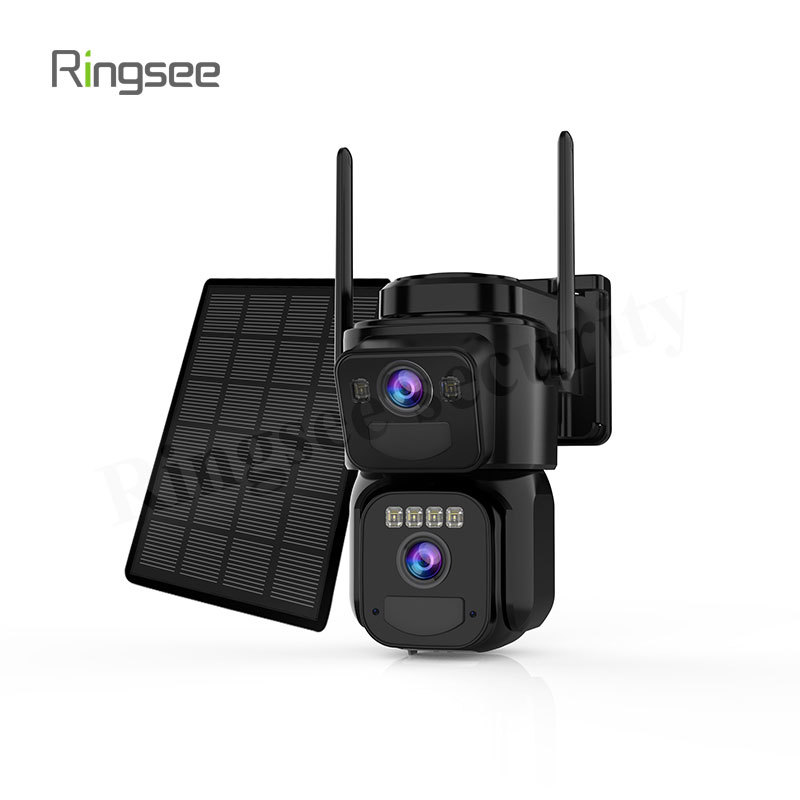
As a manufacturer focused on outdoor security, Ringsee has fairly complete engineering accumulation in wide-temperature housings, breathable-valve defog, IP67 sealed structures and integrated lightning-protection design; relevant models can be checked item by item against the verification checklist above. The next article will cover Lens, Field of View & Focal Length Selection — miscalculate the angle and you install it only to find it can't frame the target, another high-frequency failure point.
Selection priority ranking (for buyers纠结 about budget): When budget is tight and trade-offs are unavoidable, rank by "environmental lethality" — water / salt (seal material + salt-spray hours) > lightning (SPD + grounding) > temperature (wide-temp + startup temp) > vandal (IK). The first two decide whether the device "dies suddenly," the last two decide "how long it lasts, how tough it is." Put the reinforcement budget on the first two for the best ROI. Weatherproofing and lightning protection are never an "added bonus" — they are the baseline investment for whether an outdoor surveillance system survives beyond its warranty. Choose the right protection, and the system dares to talk about reliability beyond a three-year warranty.
Related News
Analog CCTV Upgrade Guide: Coax HD Reuse vs Full IP Rebuild, Cost and Timeline Compared
Factory, campus and retail chains running analog surveillance for five or six years face the same wall: blurry images, unretrievable footage, and no path to AI analytics on legacy hardware. This guide breaks down pre-upgrade system inventory, compares the coax-HD reuse route against a full IP rebuild, gives bandwidth and storage recalculation formulas, and lays out a zoned, non-disruptive cutover plan with a selection checklist.
Oct 31,2026
CCTV Maintenance Outsourcing: SLA Tiers, Market Rates, KPI and Contract Playbook
Conclusion first: the real cost of a surveillance system is in its operation. Three years of maintenance typically equals 30% to 50% of the build cost, yet most buyers spend the budget at install and leave operation to whoever happens to notice. Lock the maintenance boundary while signing the build contract. This guide breaks down the in-house versus outsourced decision model, a three-tier SLA (P1 / P2 / P3), per-point market rates and how to read a quote, the two KPIs that decide payment (camera online rate and footage integrity), the five clauses every contract must hold, the 90-day handover that most often loses control, plus a selection checklist and acceptance tests.
Oct 25,2026
CCTV NVR Selection & Recording Management: Channels, Decoding, ONVIF, Retention & Storage
Conclusion first: an NVR channel count is a license count, not a physical port count. Spec the machine by two hard numbers — intake bandwidth and decoding capacity — then by ONVIF compatibility and storage strategy. The three most common failures are: it records but the local preview stutters, mixed brands drop smart events, and desktop drives fail within a year. This guide covers architecture choice (embedded NVR / hybrid / VMS / edge), the three hard metrics (channels, intake bandwidth, decoding), ONVIF Profile compatibility and acceptance, recording plans and the retention-capacity formula, RAID and surveillance-drive selection, playback and forensic search, and the contract fields plus acceptance tests that stop disputes.
Oct 25,2026
Bottom line: AI surveillance is not turn it on and it works. In engineering you must first decide where compute runs - in the camera (edge), in the recorder or server (center), or both - choose the right algorithm and know its accuracy preconditions, then use three moves: rule tightening, environment adaptation, and multi-stage verification, to push false alarms from dozens per day to usable. A camera that alarms all day is as good as no camera. This guide upgrades the earlier consumer view of how to choose an AI camera into a B2B engineering deployment view: how to choose the compute architecture, how to control false alarms, and how AI connects to image quality, bandwidth, and security covered in earlier articles.
Oct 17,2026
Links:One Belt Power Technology
Add: 14th Floor, Baoshan Building, Longhua District, Shenzhen China.
Privacy Policy | SEO | CitySite | Support: 300.cn Dongguan