














Security Camera AI Smart Analysis (Human / Vehicle / Cross-Line Detection) Selection Guide
Publish:
2026-08-22 21:56
Source:
https://www.ring-see.com
The previous seven articles each solved one problem: power supply (see the "Power & Connectivity 12-Combination Decision Tree") decides whether the device powers on; connectivity (see the "4G + Solar Off-Grid Surveillance Selection Guide") decides whether it communicates; night vision (see the "Night Vision & Low-Light Selection Guide") decides how much you see in the dark; weatherproofing and lightning protection (see the "IP66/IP67 Weatherproofing and Lightning Protection Selection Guide") decides how long the system survives; lens and field of view (see the "Security Camera Lens, Focal Length & Field of View (FOV) Selection Guide") decides whether it captures the target; storage and NVR (see the "Security Camera Storage & Recording Duration / NVR Selection Guide") decides whether the footage stays; and remote access and network security (see the "Security Camera Remote Access & Network Security / VPN Selection Guide") decides whether those images stay protected. But so far the system is still a "faithful recorder" — it captures everything, yet cannot tell the difference between "leaves rustling in the wind" and "someone climbing the fence." From a neutral technical perspective, this article pushes the surveillance system past the value inflection point of "being able to recognize": it breaks down the deployment forms of edge AI vs cloud AI, the real boundaries of the three core algorithms — human, vehicle, and cross-line detection — the generational gap in false-alarm rate between deep learning and traditional motion detection, edge NPU compute and power consumption, privacy compliance red lines, alarm linkage and platform integration, and provides a procurement verification checklist — helping buyers upgrade from "capturing" to "understanding and alerting accurately."
1、Why "Being Able to Recognize" Is the Value Inflection Point of Surveillance
The previous seven links solve "whether the system runs stably, whether the images stay, and whether what stays is secure"; this article solves "whether the footage that stays is automatically understood." The pain point of traditional surveillance is: 7×24 recording, where the truly useful events may account for only a few minutes, while the guard either misses them from fatigue or is drowned in massive playback.
- From "recording" to "understanding": AI smart analysis lets the camera not only "record," but also recognize "what is in the frame and what happened";
- From "post-incident tracing" to "in-incident interception": events such as cross-line, intrusion, and illegal parking trigger in real time, rather than waiting for an incident before scrubbing through footage;
- Freeing up manpower: it liberates people from screen-watching, intervening only when the system alarms, so one person can manage more points.
One sentence: Powering on, connecting, night vision, weather resistance, capturing, storing, and protecting are all ultimately redeemed by "being able to recognize" to deliver business value. Once this link is filled, the surveillance system upgrades from an "evidence safe" to an "active security sentinel." This article makes clear "how to choose AI analysis, how to suppress false alarms, and how to protect privacy."
2、Two Deployment Forms of AI Smart Analysis: Edge AI vs Cloud AI
To choose correctly, first distinguish where the algorithm runs.
2.1 Edge AI (Camera Built-in NPU)
The algorithm runs directly on the NPU (neural-network processor) of the camera or a local NVR:
- Low latency: events are recognized on-device instantly, without waiting for upload and then analysis;
- Bandwidth saving: only event snapshots / short clips are returned, not the full-day raw stream (echoing the bandwidth cost in the "Power & Connectivity 12-Combination Decision Tree");
- Better privacy: raw video never leaves the local boundary (echoing the data-localization point in the "Security Camera Remote Access & Network Security / VPN Selection Guide");
- Works offline: it can recognize and store evidence locally even when disconnected.
2.2 Cloud AI (Analysis After Upload)
The raw stream or sampled frames are uploaded to the cloud / central server for centralized analysis:
- Concentrated compute: it can run larger models and is easy to upgrade uniformly;
- Depends on bandwidth and stability: returning a full-day stream is costly and risky for 4G / weak-network scenarios (echoing the "4G + Solar Off-Grid Surveillance Selection Guide");
- Centralized management: algorithm policies are pushed uniformly across multiple sites.
2.3 Hybrid Form
The most common engineering approach is "edge pre-screening + cloud verification": the camera first frames the target and filters out most of the background, then the center performs a second recognition on suspected events, balancing real-time performance and accuracy.
Trade-off principle: Scattered points, expensive bandwidth, privacy sensitivity, and offline requirement — prioritize edge AI; concentrated points, large compute needs, and unified model iteration — consider cloud or hybrid. Don't be led astray by the "only cloud is smart" pitch; edge NPUs can already run mainstream object-detection models.
3、Human Detection: The Difference Between Human / Body / Face
"Human detection" is a term easily conflated; when procuring, distinguish three tiers of capability.
3.1 Human / Body Detection (Person Detection)
It only answers "is there a person in the frame, and where," outputting a bounding box. This is the most basic and mature capability, used for perimeter defense, area counting, and anti-theft alerts.
3.2 Face Detection vs Face Recognition
- Face Detection: frames "where the face is," without caring who it is;
- Face Recognition: further compares "is this Zhang San or Li Si," involving identity binding, with a sharply higher compliance threshold (see section ten).
Iron rule: The vast majority of security scenarios only need "human detection + event alarm," not face recognition. Selling "recognizing a face" as "recognizing a person" often brings unnecessary privacy-compliance burdens. Define the tier by the real business need when procuring; don't pay for capabilities you won't use.
3.3 Typical Applications and Accuracy Boundaries
Human detection is mature for frontal, side, and standing scenes; but extreme postures (crawling, lying prone), heavy occlusion, and distant small targets remain difficult. For selection, look at the effective recognition distance (strongly correlated with the focal length / pixel density in the "Security Camera Lens, Focal Length & Field of View (FOV) Selection Guide") and the coverage of the sample library.
4、Vehicle Detection: Vehicle Type / License Plate / Speed
Vehicle analysis is a must-have for campuses, roads, and parking lots.
4.1 Vehicle Detection
Recognizes "there is a vehicle, and the type (sedan / truck / bus)," used for traffic counting, illegal parking, and occupancy detection.
4.2 License Plate Recognition (LPR / ANPR)
Further captures and recognizes the license plate number and color; some systems can determine province / nationality:
- Trigger capture: combined with loop / radar / video triggering to improve recognition rate and reduce invalid captures;
- Typical scenarios: campus entrances and exits, parking billing, checkpoint control;
- Environmental constraints: rain, fog, strong backlight, and dirty plates lower the recognition rate — when procuring, look at the vendor's published typical recognition-rate range, not the advertised peak.
4.3 Speed / Wrong-Way / Illegal Parking
Advanced applications can estimate speed, judge wrong-way driving, and judge illegal parking, relying on calibration and algorithm stability, mostly used in road and in-plant traffic management.
One sentence: Vehicle detection is the "basic tier," license plate recognition is the "advanced tier," and speed / wrong-way is the "professional tier." Choose the corresponding capability by purpose — entrance management, billing, or checkpoint control — don't pile on features uniformly.
5、Cross-Line Detection and Region Intrusion: Tripwire / Region / Direction
This category is the "main algorithm" of perimeter security, turning "someone enters a forbidden zone" directly into an alarmable event.
5.1 Cross-Line Detection (Line Crossing / Tripwire)
Draw a virtual line in the frame; when a target crosses it, it triggers, with configurable one-way / two-way and crossing-direction filtering. Suitable for walls, boundaries, and passages.
5.2 Region Intrusion
Define a forbidden-zone polygon; when a target enters, it alarms, with a configurable dwell-time threshold (brief pass does not count, only lingering does). Suitable for construction forbidden zones, warehouse key areas, and around hazardous equipment.
5.3 Direction Filtering and Counting
- Direction filtering: only report "crossing from outside inward," ignoring "normal internal walking," greatly reducing false alarms;
- Counting: combined with people / vehicle flow statistics for heat-map and saturation warnings.
Strategy: The tripwire governs "boundary crossing," the region governs "forbidden-zone entry," and direction filtering governs "only reporting what should be reported." Combining the three can tune perimeter alarms from "flying everywhere" to "precise response."
6、Core Algorithm: Motion Detection vs Deep Learning (False-Alarm Rate Comparison)
This is the fundamental watershed of false-alarm rate, and a must-understand for selection.
6.1 Traditional Motion Detection (Pixel Difference / PIR)
It triggers based on "pixel changes in the frame" or infrared sensing:
- Swaying leaves, light and shadow changes, flying insects, rain and snow, reflections, and pets can all trigger it;
- In essence, it reports "whenever there is a change," without distinguishing "what changed";
- A typical single channel can produce dozens to hundreds of false alarms per day (typical value, rising with environmental harshness).
6.2 Deep Learning (CNN / Object Detection)
It recognizes "what the target is" based on a convolutional neural network:
- It reports only for people, vehicles, and specific targets; background noise is filtered by the model;
- Rules (time window, direction, region) can be layered on for a second round of false-alarm reduction;
- A typical single channel can be compressed to single digits of false alarms per week (typical value), a world of difference in experience.
6.3 The Essence of the Generational Gap
Dimension | Traditional motion detection | Deep-learning AI |
Judgment basis | Pixel / infrared change | Target semantics (what it is) |
False-alarm source | Wind, light, insects, shadow, pets | Extreme posture, heavy occlusion |
Typical false-alarm rate | High (dozens–hundreds / channel · day) | Low (single digits / channel · week, typical value) |
Compute need | Extremely low | Depends on NPU / cloud |
Suitable for | Minimal low-cost scenarios | Perimeter, anti-theft, counting |
Iron rule: Deep learning is not "smarter motion detection," but a different judgment logic — from "report on change" to "report on recognition." The false-alarm-rate gap is in orders of magnitude, not percentage points.
7、Edge Compute and Chips: NPU, TOPS, Power Consumption
Whether edge AI runs well depends on the chip.
7.1 NPU and the Compute Unit TOPS
The NPU is dedicated to running neural networks; compute is measured in TOPS (trillions of operations per second). The more compute, the more algorithms it can run simultaneously, the more channels it can process, and the higher frame rate it supports.
7.2 The Relationship Between Compute and Channels / Frame Rate
- A single chip running 1–2 channels of full-frame AI analysis vs running 8–16 channels of sampled-frame analysis requires several times the TOPS (typical value, varying with model complexity);
- High frame rate and high resolution (4K) significantly consume compute;
- When procuring, look at the vendor's "typical concurrent channel count + frame rate + algorithm combination," not an isolated TOPS number.
7.3 Power Consumption and Outdoor Cooling
The edge NPU adds power consumption; in hot outdoor environments (echoing the weather resistance in the "IP66/IP67 Weatherproofing and Lightning Protection Selection Guide") you must budget cooling margin to avoid summer frequency-throttling and frame drops. For low-power scenarios (echoing the "4G + Solar Off-Grid Surveillance Selection Guide"), the AI compute must also be included in the endurance budget.
One sentence: TOPS is the entry ticket; the real concurrent channel count is the delivery capability. Don't just look at the chip's slogan; press the vendor's typical values with "your channels × frame rate × algorithms."
8、False-Alarm Rate (Typical Value) and Environmental Factors
The false-alarm rate directly decides whether the system "has anyone willing to use it."
8.1 Where False Alarms Come From
- Natural interference: leaf sway, grass sway, gradual light/shadow change, rain/snow/fog, water reflection;
- Small creatures: flying insects, birds, cats and dogs;
- Human interference: car lights, searchlights, construction dust.
8.2 How to Bring False Alarms Down
- Algorithm layer: deep-learning target recognition + dual-technology (radar + video fusion, distinguishing "is it a person moving or a tree moving");
- Rule layer: time-window, direction, region, and minimum-size filtering;
- Engineering layer: reasonable siting (avoid facing dense foliage head-on) and proper focal length (echoing the pixel density in the lens article).
Trade-off: There is no "zero" false-alarm rate, only "low enough to accept." Look at the vendor's published typical-scenario false-alarm range, and run a pilot in your real environment (with or without trees, with or without backlight) — far more reliable than reading the brochure. Dual-technology fusion is a hard measure to suppress false alarms, and is worth deploying on key perimeters.
9、Alarm Linkage and Response: Push / Audio-Visual / Platform / API
Once AI recognizes an event, the value lies in "responding immediately."
9.1 Real-Time Push
The event is pushed to a person via app push, SMS, or email, turning "post-incident check" into "in-incident awareness."
9.2 On-Site Audio-Visual Deterrence
Link to an audio-visual alarm to deter on-site immediately, suitable for perimeters, construction sites, and warehouses.
9.3 Platform / NVR Event Linkage
- Events trigger key recording (echoing the "Security Camera Storage & Recording Duration / NVR Selection Guide": sampled-frame / motion recording normally, full-frame storage on events), saving storage while keeping evidence;
- Events are tagged and indexed, enabling second-level retrieval afterward by "human / vehicle / cross-line," without scrubbing the full-day footage.
9.4 API / ONVIF / Webhook Integration
- ONVIF / API: events connect to third-party VMS, access control, and lighting;
- Webhook: push to your own platform or ticketing system;
- Encrypted alarm channel: alarm pushes go over encryption (echoing the transport encryption in the "Security Camera Remote Access & Network Security / VPN Selection Guide"), so alarms are not eavesdropped or forged.
Strategy: The value of AI = recognition accuracy × linkage speed. No matter how accurate the recognition, if the event is stuck at "no one saw it," it is wasted. Push the alarm to people, to the platform, and to actions (audio-visual / lock / light) for a complete closed loop.
10、Procurement Verification Checklist + FAQ
Procurement verification checklist (recommend requesting evidence from the manufacturer line by line):
- [ ] Deployment form: edge AI / cloud AI / hybrid, with the algorithm location clearly stated
- [ ] Core algorithm coverage: human, vehicle, cross-line (tripwire / region), optional license plate recognition
- [ ] False-alarm rate: vendor-published typical-scenario range + support for pilot verification
- [ ] Edge compute: typical concurrent channel count × frame rate × algorithm combination (not an isolated TOPS)
- [ ] False-alarm reduction: rule filtering, dual-technology (radar + video) fusion
- [ ] Privacy: face collection off by default / can be disabled, supports event-only reporting without storing faces
- [ ] Linkage: app / SMS / email push, audio-visual, NVR event recording, API / ONVIF / Webhook
- [ ] Retrieval: second-level retrieval by event type, event tagging
- [ ] Compliance: data localization, notice signage, minimum-necessary retention
- [ ] Upgrade: algorithm OTA iterable, model version traceable
FAQ
Q: How to choose between edge AI and cloud AI?
A: Scattered points, expensive bandwidth, privacy sensitivity, and offline requirement — prioritize edge AI (camera built-in NPU, returning only event snapshots, saving bandwidth and keeping video local); concentrated points that need large models or unified iteration — consider cloud or the "edge pre-screening + cloud verification" hybrid. Don't be led astray by "only cloud is smart" — edge NPUs can already run mainstream object detection.
Q: What is the difference between human detection and face recognition, and what should I watch for when procuring?
A: Human detection only answers "is there a person, and where"; face recognition further compares "who it is," involving identity binding, with a sharply higher compliance threshold. The vast majority of security scenarios only need human detection + event alarm, not face recognition. Define the tier by the real business need, avoid taking on privacy-compliance burdens for unused capabilities, and confirm that face collection is off by default and supports event-only reporting without storing faces.
Q: After deploying AI smart analysis, how low can false alarms go?
A: Traditional motion detection triggers on pixel changes, with wind, light, insects, shadow, and pets all causing false alarms — a typical single channel can produce dozens to hundreds of false alarms per day; deep learning recognizes "what the target is," and with layered rules and dual-technology fusion, a typical single channel can be compressed to single digits of false alarms per week (both typical values). There is no zero false-alarm rate; the most reliable approach is to look at the vendor's published typical-scenario range and run a pilot in your real environment.
11、Privacy and Compliance: GDPR, Localization, Anonymization
AI analysis touches "human" data, and compliance is a red line.
11.1 Face / Body Belongs to Sensitive Personal Information
- Data localization: face and human imagery are sensitive personal information; some jurisdictions require local processing and no export (echoing the cross-border compliance in the "Security Camera Remote Access & Network Security / VPN Selection Guide");
- Notice and signage: the collection area should have surveillance-notice signage stating the purpose and retention;
- Minimum necessary: if "event + box" solves it, don't store the raw face; if it can be analyzed locally, don't put it on the cloud.
11.2 Anonymization and Desensitization
- Event-only reporting without storing faces: the system outputs "human intrusion in area Y at time X," without retaining an identifiable face;
- Retention cap: expired events and imagery are periodically cleared, reducing the leakage surface.
One sentence: The smarter the AI, the more it must protect privacy. Writing "face off by default, data localization, minimum-necessary retention" into the procurement terms costs far less than remediation after an incident.
12、Related Standards and Certifications Quick-Reference (for Procurement Cross-Checking)
Dimension | Typical reference | What to check |
Deployment form | Edge NPU / cloud / hybrid | Algorithm location and bandwidth cost |
Core algorithm | Human, vehicle, cross-line, license plate | Business coverage |
False-alarm rate | Typical-scenario range, dual-technology fusion | Hard usability metric |
Edge compute | TOPS, concurrent channels × frame rate | Real delivery capability |
Linkage | Push, audio-visual, NVR event, API / ONVIF | Response closed loop |
Privacy compliance | GDPR, localization, anonymization | Legal boundary |
One sentence: Algorithm coverage, false-alarm rate, edge compute, linkage capability, and privacy compliance must be cross-checked as a bundle; looking at "supports AI recognition" alone has no meaning. Require the vendor to give an algorithm and compute configuration recommendation based on your real scenario (point dispersion, whether cross-border, whether perimeter), so procurement has a basis to verify.
Final notes
The reliability of a surveillance system is a complete closed loop: power decides whether it powers on, connectivity decides whether it communicates, night vision decides how much you see in the dark, weatherproofing and lightning protection decide how long it survives, lens and field of view decide whether it captures the target, storage and NVR decide whether the images ultimately stay, remote access and network security decide whether those images stay protected — and AI smart analysis decides whether the system can "recognize anomalies." Applying this article's edge / cloud selection, the human / vehicle / cross-line algorithm boundaries, deep-learning false-alarm reduction, NPU compute, alarm linkage, and privacy compliance, you can basically avoid the three most common failures: "motion detection flying everywhere, can't find it in playback, stepping on the face-compliance line."
This article is the eighth in the "security camera" topic cluster, complementing the "Power & Connectivity 12-Combination Decision Tree," the "4G + Solar Off-Grid Surveillance Selection Guide," the "Night Vision & Low-Light Selection Guide," the "IP66/IP67 Weatherproofing and Lightning Protection Selection Guide," the "Security Camera Lens, Focal Length & Field of View (FOV) Selection Guide," the "Security Camera Storage & Recording Duration / NVR Selection Guide," and the "Security Camera Remote Access & Network Security / VPN Selection Guide": the first eight links solve "power on — connect — night vision — weather resistance — capture — store — protect — recognize," taking a surveillance system from "running" to "running stably, staying retained, held securely, understood clearly."
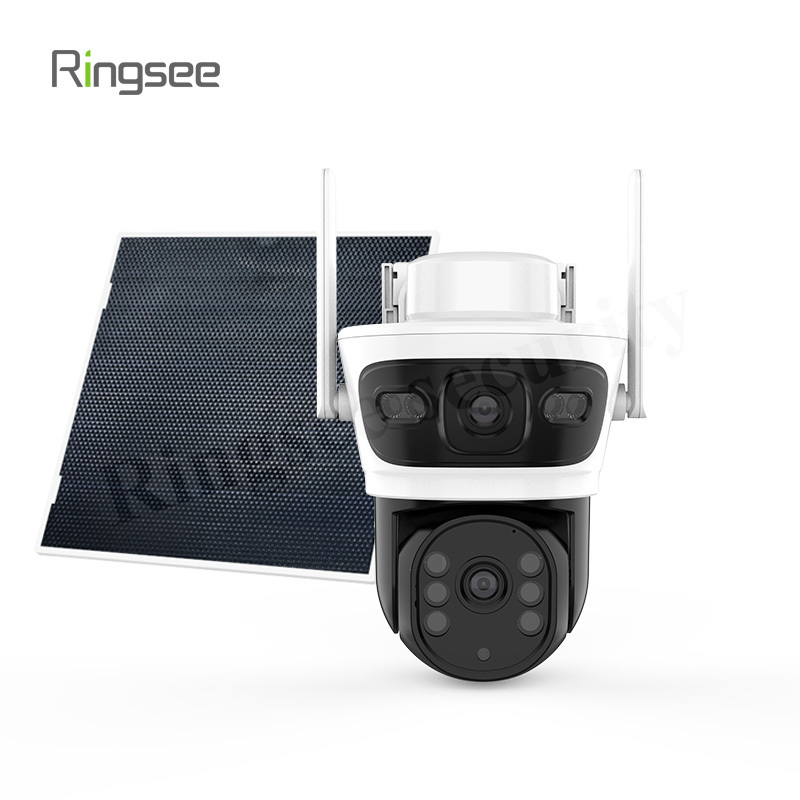
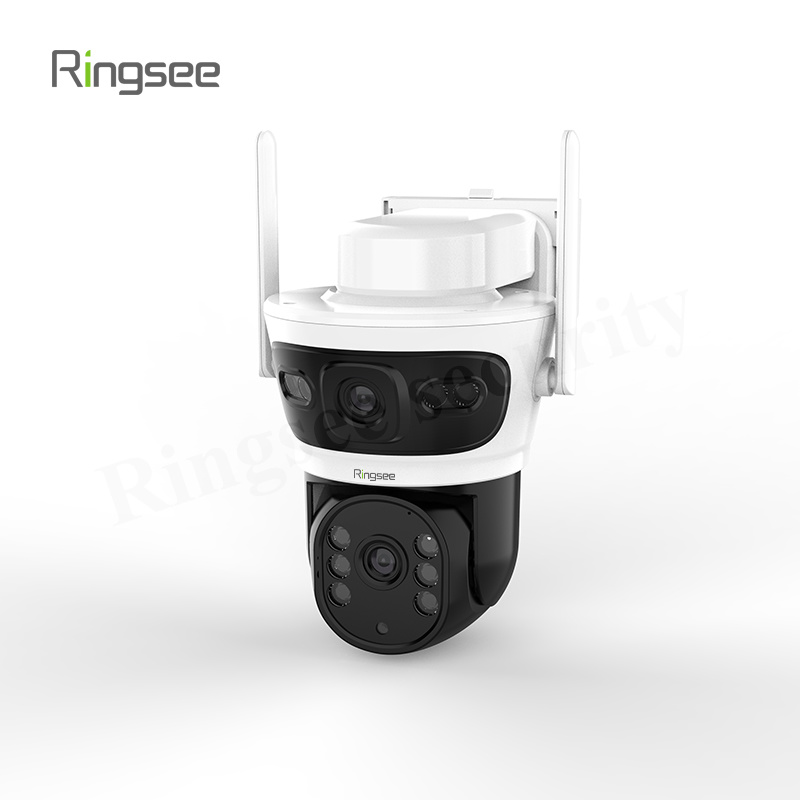
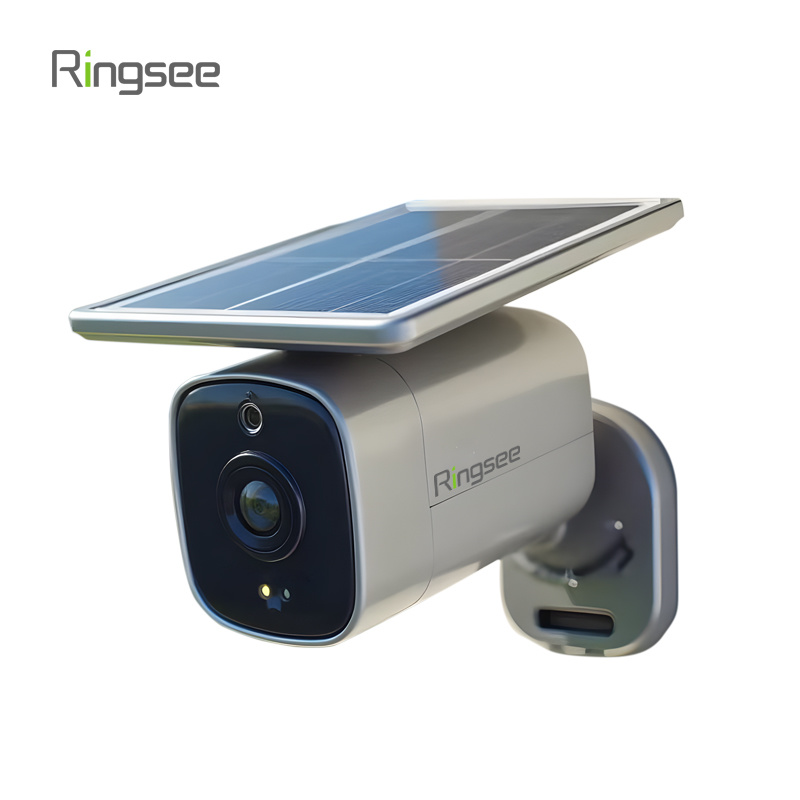
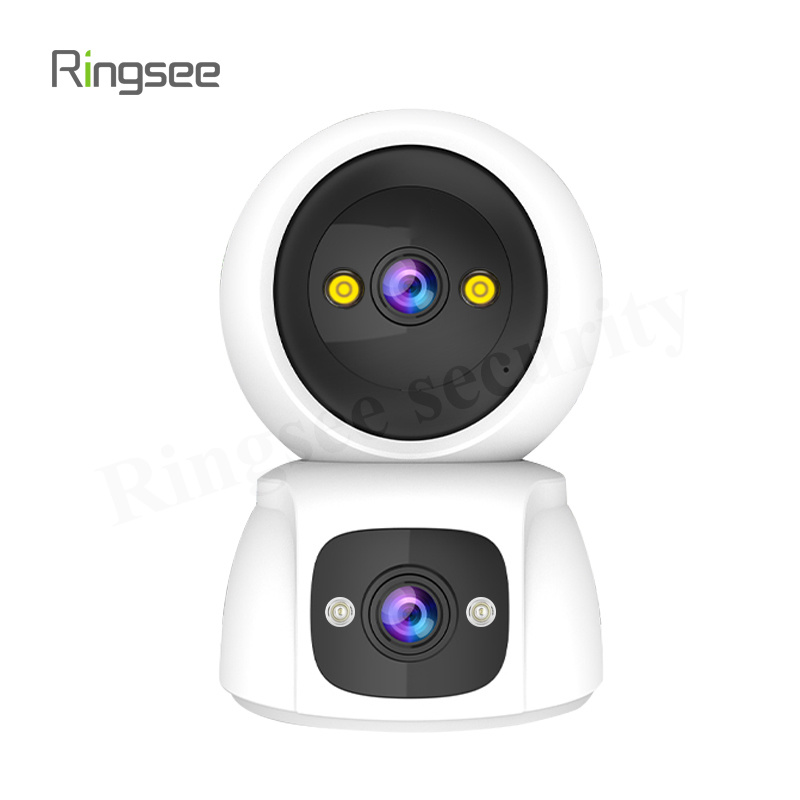
As a manufacturer focused on outdoor security, Ringsee has fairly complete engineering accumulation in edge AI (camera built-in NPU for human / vehicle / cross-line recognition), dual-technology fusion for false-alarm reduction, event-linked NVR key recording, and privacy-compliant design with data localization; relevant models and algorithm configurations can be checked item by item against the verification checklist above. The next article will cover Alarm Linkage and Platform Integration (Audio-Visual / Platform / API / ONVIF) Selection Guide — once the system "recognizes," the real closed loop is to make it "act": turning recognized events into on-site audio-visual deterrence, platform tickets, and cross-system actions, moving security from "visible" to "controllable."
Selection priority ranking (for buyer over budget): When budget is tight and trade-offs are unavoidable, the AI-analysis investment order is — algorithm coverage + false-alarm rate (recognize accurately, report little) > edge compute and concurrent channels (runs smoothly) > alarm linkage (responds fast) > privacy-compliance design (holds the baseline). The first item decides "whether anyone is willing to use the system" (a false-alarm barrage gets it turned off); the second is the delivery prerequisite; the last two are value amplification and legal boundaries. Put the AI budget on the first two items for the best ROI. AI is never "just add a recognition box" — it is the key leap deciding whether the whole surveillance system can evolve from "recorder" to "sentinel." Choose the right algorithm and configuration, and only then can the loop dare claim a true close.
Related News
Target readers: system integrators, engineering contractors, vendor pre-sales engineers and bid managers responding to surveillance camera tenders in Europe and Africa, plus security owners, procurement managers and consultants who write the tender documents. Typical projects cover public infrastructure, industrial parks, mining, oil and gas, hotels and retail chains. Core takeaway: surveillance projects are rarely won by the best product alone. They are won by a technical bid that an evaluator can verify line by line. This guide links the URS, technical specification, BOQ, evaluation criteria, compliance matrix, TCO model and FAT/SAT acceptance tests into one reusable bidding workflow: turn vague descriptions into measurable parameters, parameters into clause by clause responses, responses into traceable evidence, and promises into acceptance tests.
Nov 15,2026
Target readers: security owners, data protection officers (DPO), system integrators, and procurement managers deploying surveillance cameras across European and African sites, retail chains, hotels, warehouses, and industrial parks. Core takeaway: video footage showing identifiable people is personal data. Under GDPR a camera project is not just an engineering job but a compliance one. This guide maps legal basis, DPIA, data minimisation, retention, access control, subject rights, and vendor acceptance onto concrete camera and NVR settings, giving one reusable delivery framework.
Nov 15,2026
Target readers: security owners, system integrators, and EHS engineers for petrochemical, oil and gas, pharmaceutical, powder processing, and coal mining sites where explosive gas or combustible dust exists. Core takeaway: a normal camera is itself an ignition source in flammable environments. You must use explosion proof cameras certified to ATEX, IECEx, or China Ex, selected by hazard zone, installed with proper grounding, and documented for compliance. This guide gives a reusable selection, install, and acceptance workflow.
Nov 08,2026
4G 5G Cellular Surveillance Camera Guide: Remote Video without Broadband
Target readers: security owners and integrators for farms, orchards, fisheries, construction, oil and mining sites, vehicle fleets, and remote African villages where broadband is scarce. Core takeaway: when there is no fiber, no broadband, and frequent power loss, a SIM card cellular camera is the easiest and most scalable remote video option. This guide gives a reusable architecture covering power, data, backhaul, AI, and compliant deployment.
Nov 08,2026
Analog CCTV Upgrade Guide: Coax HD Reuse vs Full IP Rebuild, Cost and Timeline Compared
Factory, campus and retail chains running analog surveillance for five or six years face the same wall: blurry images, unretrievable footage, and no path to AI analytics on legacy hardware. This guide breaks down pre-upgrade system inventory, compares the coax-HD reuse route against a full IP rebuild, gives bandwidth and storage recalculation formulas, and lays out a zoned, non-disruptive cutover plan with a selection checklist.
Oct 31,2026
Links:One Belt Power Technology
Add: 14th Floor, Baoshan Building, Longhua District, Shenzhen China.
Privacy Policy | SEO | CitySite | Support: 300.cn Dongguan