














































































Comprehensive 2024 Battery Camera Industry Analysis: Global Sales, Trends & Innovations
Publish:
2025-03-25 09:08
Source:
https://www.ring-see.com
The battery camera industry is undergoing significant transformation in 2024. Innovations in battery technology and imaging solutions, coupled with the growing demand for mobile and connected devices, have redefined market dynamics.
The battery camera industry is undergoing significant transformation in 2024. Innovations in battery technology and imaging solutions, coupled with the growing demand for mobile and connected devices, have redefined market dynamics. This analysis provides expert insights into global sales shares, market trends, and technological advancements, offering a detailed perspective for stakeholders and industry professionals.
Battery Camera Industry Overview
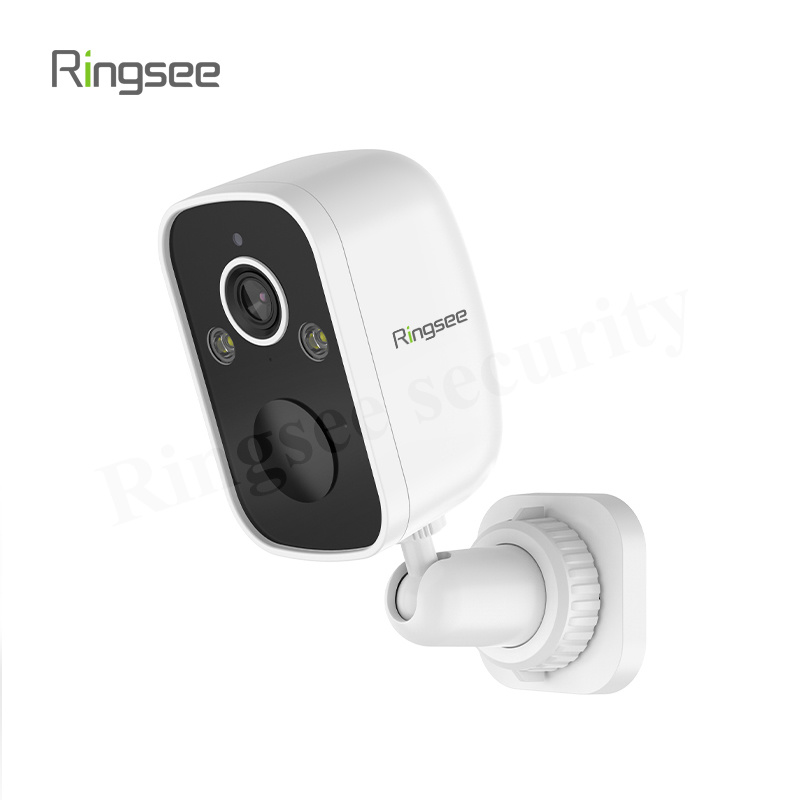
Battery cameras—including surveillance systems, action cameras, and mobile imaging solutions—are essential across various applications. Key drivers of industry growth include:
Technological Innovation: Enhanced battery life, energy efficiency, and seamless IoT integration.
Market Applications: Broad use in security, consumer electronics, automotive, and industrial sectors.
Consumer Demand: Rising expectations for high-resolution, reliable, and energy-efficient cameras.
Ongoing investments in R&D are expected to drive further advancements and market expansion.
Global Sales Share Analysis
In 2024, global sales data reveal distinct regional trends:
North America & Europe: Mature markets characterized by significant investments in smart infrastructure and automotive applications. Established companies and supportive regulatory environments bolster demand.
Asia-Pacific: The fastest-growing region, fueled by robust consumer electronics demand, large-scale manufacturing, and urban development. Leading countries include China, Japan, and South Korea.
Emerging Markets: Regions in Latin America, the Middle East, and Africa are gaining momentum as they adopt advanced security and industrial technologies, supported by increased investment in infrastructure modernization.
Technological Advancements and Market Trends
Key trends shaping the battery camera industry include:
Extended Battery Life & Efficiency: Breakthroughs in battery chemistry and power management are extending device autonomy.
Smart Technology Integration: AI and machine learning enhancements are enabling advanced surveillance, object detection, and real-time analytics.
Compact Design Innovations: Miniaturization of components leads to more portable, high-performance cameras suitable for both consumer and professional markets.
Sustainability Initiatives: Eco-friendly production practices and recycling programs are increasingly important to manufacturers and consumers alike.
Competitive Landscape
The competitive arena features both established giants and innovative startups:
Leading Industry Players: Major firms are investing in R&D, forging strategic partnerships, and pursuing acquisitions to expand their technological portfolios.
Niche Innovators: Agile startups specializing in battery optimization and sensor technologies are capturing market segments by partnering with larger entities.
Global Supply Chain Dynamics: Manufacturers are optimizing production processes and navigating complex supply chain challenges to meet rising global demand.
Challenges and Opportunities
Challenges:
Technological Integration: Balancing cutting-edge features with cost efficiency remains a significant hurdle.
Supply Chain Constraints: Global logistics issues can disrupt production schedules and increase costs.
Regulatory Compliance: Diverse data security and privacy regulations require careful navigation by multinational companies.
Opportunities:
Expanding Emerging Markets: New urban infrastructure and smart technology investments in developing regions offer substantial growth potential.
AI and IoT Integration: Enhanced camera functionalities through AI and IoT can create new revenue streams.
Sustainability Focus: Companies adopting green practices are likely to gain a competitive advantage with increasing consumer and regulatory focus on sustainability.
Future Outlook
The outlook for the battery camera industry remains positive in 2024. With continuous technological advancements and integration of smart systems, the market is poised for steady growth. Key factors include evolving consumer electronics trends, smart city developments, and the expanding role of surveillance in industrial and commercial applications.
Related News
Target readers: security owners, system integrators, and EHS engineers for petrochemical, oil and gas, pharmaceutical, powder processing, and coal mining sites where explosive gas or combustible dust exists. Core takeaway: a normal camera is itself an ignition source in flammable environments. You must use explosion proof cameras certified to ATEX, IECEx, or China Ex, selected by hazard zone, installed with proper grounding, and documented for compliance. This guide gives a reusable selection, install, and acceptance workflow.
Nov 08,2026
4G 5G Cellular Surveillance Camera Guide: Remote Video without Broadband
Target readers: security owners and integrators for farms, orchards, fisheries, construction, oil and mining sites, vehicle fleets, and remote African villages where broadband is scarce. Core takeaway: when there is no fiber, no broadband, and frequent power loss, a SIM card cellular camera is the easiest and most scalable remote video option. This guide gives a reusable architecture covering power, data, backhaul, AI, and compliant deployment.
Nov 08,2026
Analog CCTV Upgrade Guide: Coax HD Reuse vs Full IP Rebuild, Cost and Timeline Compared
Factory, campus and retail chains running analog surveillance for five or six years face the same wall: blurry images, unretrievable footage, and no path to AI analytics on legacy hardware. This guide breaks down pre-upgrade system inventory, compares the coax-HD reuse route against a full IP rebuild, gives bandwidth and storage recalculation formulas, and lays out a zoned, non-disruptive cutover plan with a selection checklist.
Oct 31,2026
CCTV Maintenance Outsourcing: SLA Tiers, Market Rates, KPI and Contract Playbook
Conclusion first: the real cost of a surveillance system is in its operation. Three years of maintenance typically equals 30% to 50% of the build cost, yet most buyers spend the budget at install and leave operation to whoever happens to notice. Lock the maintenance boundary while signing the build contract. This guide breaks down the in-house versus outsourced decision model, a three-tier SLA (P1 / P2 / P3), per-point market rates and how to read a quote, the two KPIs that decide payment (camera online rate and footage integrity), the five clauses every contract must hold, the 90-day handover that most often loses control, plus a selection checklist and acceptance tests.
Oct 25,2026
Links:One Belt Power Technology
Add: 14th Floor, Baoshan Building, Longhua District, Shenzhen China.
Privacy Policy | SEO | CitySite | Support: 300.cn Dongguan