

















China Hunting Camera Market Report: 4G Trail Camera Trends
Publish:
2025-12-15 11:46
Source:
https://www.ring-see.com
Professional market analysis of China’s 4G trail camera industry, covering annual sales, export volumes, key markets, and future development trends.
Date: December 2025 (data and sources cited are from 2023–2025 reports)
Executive summary
China is a major manufacturing and export base for trail / hunting cameras. Multiple market-research providers estimate the China trail-camera market revenue in the low-to-mid tens of US$ millions today, and project steady mid-single-digit CAGRs through the late 2020s as wireless (4G/IoT) and AI-capable models gain share.

On trade, China continues to be the largest exporter of camera products (camera categories) by value and volume; primary export destinations include the United States, Southeast Asia and parts of Europe. For camera products broadly, the U.S., Malaysia and Germany are top destination markets by value in 2023. OECD Observatory of Economic Complexity
Key market drivers: (1) adoption of cellular (4G/4G LTE) for remote deployments, (2) integration of AI detection and edge analytics, (3) low-power systems (battery + solar), and (4) demand from wildlife research, security and consumer hunters. Fact.MR
Downside/constraints: rising component costs, regulatory barriers for cellular devices in some markets, and variable consumer demand in Western hunting markets.
Market size (China) — revenue and units
Exact figures vary by report and by how “trail / game / hunting cameras” are defined (stand-alone game cams vs. networked camera categories). Representative estimates:
Revenue (China market): Research providers report China market values ranging from USD ~5–11 million (earlier 2020s) up to USD ~11.3 million in 2024 in focused China trail-camera models; global market estimates vary widely depending on scope (some global reports show global trail camera markets in the low hundreds of millions). Use the China-specific figure range as a working estimate: USD 5–12M (China, market-reports 2021–2024) and projected growth through 2030 at mid single-digit CAGRs in several forecasts. Grand View Research
Global context: Global trail-camera market estimates differ across houses (examples: global market ~US$125–160M depending on the report and year). This demonstrates that China’s domestic market is small relative to global production/export volumes — China produces and exports many units while domestic revenue can appear modest due to export orientation and low per-unit prices.
Interpretation: China’s production and export importance is larger than domestic revenue alone would imply — many Chinese manufacturers focus on OEM/ODM exports and white-label shipments.
Export volume & export share by country (trade picture)
Camera exports (broad camera category): In 2023 China exported cameras valued at roughly US$877M, with the largest destination by value being the United States (~US$157M), followed by Malaysia and Germany among the top destinations. (This is the HS-based camera trade snapshot — it includes various camera types, not only trail cameras.)
Trail/hunting-camera exports (industry sources): Industry estimates and trade-aggregation posts indicate that China is the dominant exporter of trail/camera-trap units globally — some industry commentary estimates China’s share of global camera-trap exports as large (estimates published in trade posts place China’s unit output at hundreds of thousands to >700k units annually in some compilations). These numbers are estimates from industry write-ups and should be treated as indicative rather than official customs tallies.
Practical export-share table (indicative)
Note: below is an indicative export-share breakdown for camera products and hunting/trail cameras aggregated from trade and industry sources. Percentages are rounded and illustrative.
| Destination (by value / importance) | Indicative share (camera products) | Note / source |
|---|---|---|
| United States | ~15–20% | OEC camera trade 2023 by value (largest single market). |
| Southeast Asia (Malaysia, Vietnam, Indonesia) | ~10–20% combined | Regional manufacturing + intra-Asia trade flows. |
| Europe (Germany, UK, others) | ~8–12% combined | Germany appears among top buyers by value for camera products. OECD Observatory of Economic Complexity |
| Russia / South America / Latin America | single-digit shares each | Industry posts list Russia, Chile, Latin American buyers as significant markets for hunting cameras specifically. |
| Other (domestic China / rest of world) | remainder | Domestic market relatively small compared with export volumes for many OEMs. |
Caveat: HS-level camera categories used in trade data are broader than “trail camera” product definitions; to get precise export units and destination shares for trail cameras you should query China Customs (HS codes) or paid trade-data services that filter to camera-trap SKUs.
Market structure — supply side
Manufacturing clusters: Guangdong (Shenzhen, Dongguan, Guangzhou) is the primary electronics ecosystem producing 4G trail cameras and supporting components; large numbers of suppliers and contract manufacturers are located in these provinces, enabling fast sampling and OEM/ODM relationships. Online sourcing platforms (Alibaba, Made-in-China) show many 4G hunting-camera suppliers concentrated in Guangdong.
Players / business models: Mix of (1) OEM/ODM factories making low-to-mid-range units for global white labels; (2) branded Chinese firms producing mid-range models with features (4G, app backend, AI); and (3) a smaller number of higher-end specialist brands for scientific/park surveillance.
Demand-side segmentation
Hobbyist hunters & outdoor enthusiasts: affordable units, camouflage, long battery life, 4G upload optional.
Wildlife researchers / conservation projects: higher-accuracy timestamps, thermal/IR performance, data reliability.
Security / farm / perimeter monitoring: 4G connectivity and remote alerts are attractive — units often marketed as multipurpose surveillance.
Retail / B2B buyers (resellers and distributors): bulk ODM purchases for private-label brands, especially in North America and Europe.
Technology & product trends (drivers for 2024–2028)
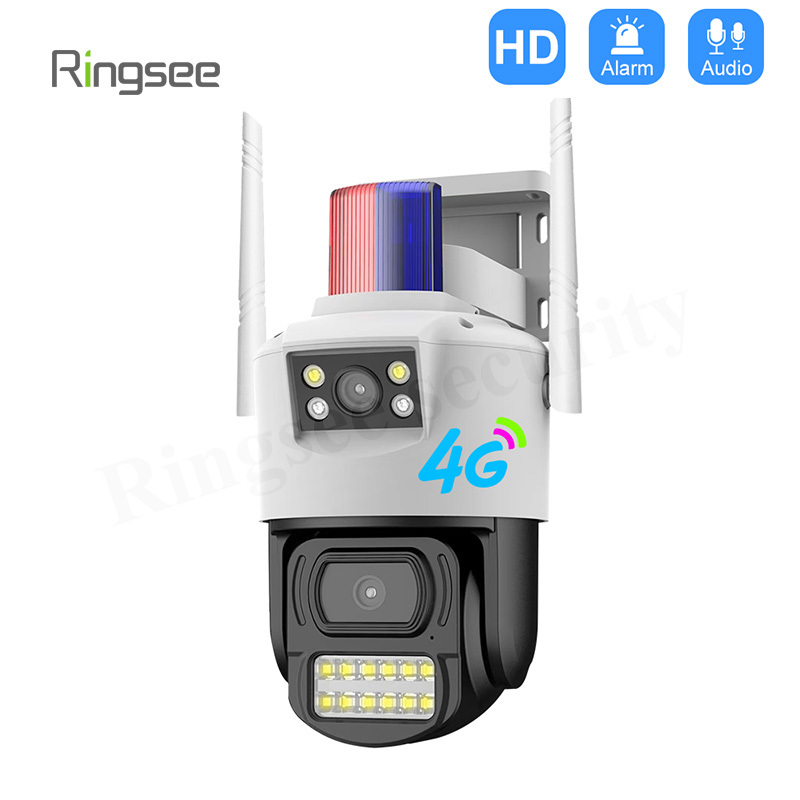
Cellular connectivity (4G / LTE): 4G models are replacing SD-card-only units in markets that need near-real-time uploads. This is the principal driver of unit-value growth for exported models.
Edge AI and analytics: Person/vehicle/animal classification on-device to reduce false triggers and mobile data usage is increasingly adopted. Reports and product listings highlight “AI detection” as a standard marketing feature.
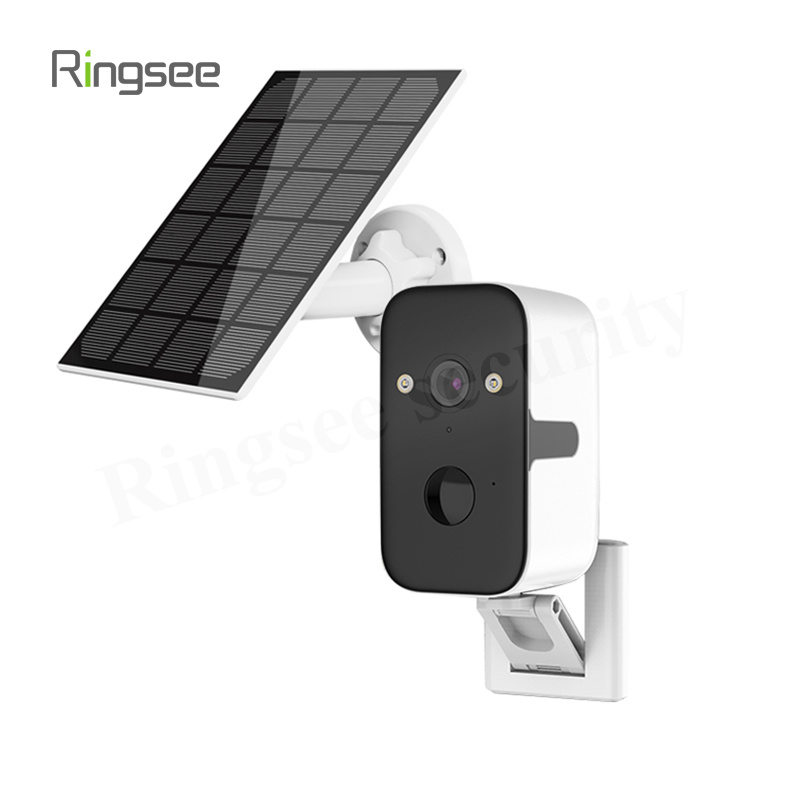
Low-power + solar: Solar-assist designs extend deployments for remote monitoring and reduce maintenance — an important differentiator for premium outdoor models.
Higher resolution & faster trigger speeds: Image quality improvements (higher MP sensors) and faster PIR-to-snapshot times improve usefulness for wildlife and security use-cases.
Market outlook & forecast
Multiple forecasting houses project mid-single-digit CAGRs for China and for the global trail-camera market through the late 2020s — the exact CAGR depends on market scope (camera-trap only vs. broader trail-camera + surveillance categories). Examples: some reports estimate China CAGR ~5–7% over the next 5–10 years, while global forecasts range from ~3.5% to higher (different treatment of adjacent camera categories).
Key implication: Growth will be steady but not explosive; the real value for Chinese manufacturers lies in export volumes and feature upgrades (4G, AI, solar) rather than purely domestic sales.
Competitive & regulatory risks
Component cost volatility: Sensors, cellular modules and batteries are subject to price swings.
Certification / network rules: Cellular devices exported to EU/US require local radio certifications and sometimes carrier acceptance. Mis-labelled or non-certified 4G modules can be blocked or limited in some end markets.
Trade/regulatory shifts: Tariff or trade-policy changes can affect margins on exported electronics.
Market fragmentation: A large number of low-price suppliers creates downward pressure on ASPs (average selling prices).
Strategic recommendations (for manufacturers / exporters)
Product tiering: Offer a clear product ladder — low-cost SD-only units for commodity channels; mid/high tiers with 4G + solar + AI for export and niche buyers.
Certifications and compliance: Invest in FCC/CE/Carrier/Network certifications and documentation to reduce friction entering North American and EU markets.
Value-add cloud & app services: Differentiate with reliable mobile apps and server-side analytics (subscription opportunities).
Export channel diversification: Target both established western distributors and growth markets in Latin America, Eastern Europe and Southeast Asia where demand for hunting/monitoring devices is increasing.
Supply-chain hedging: Secure component contracts (modules, batteries, solar panels) to protect margins from volatility.
Limitations of this report & recommended next steps
Data variability: Public market reports show a wide range of estimates. The camera HS trade categories are broad; trail-camera-specific HS filtering is necessary for precise unit and value numbers. Trade publications and industry posts provide indicative unit estimates but are not official customs tallies.
Recommended next steps to refine numbers:
Query China Customs or a paid trade-data provider (PIERS, ImportGenius, Panjiva) for HS codes filtered to camera-trap SKUs and download unit/value by destination for the last 3–5 years.
Purchase or review the full text of targeted market reports (Fact.MR, Grand View Research, ResearchAndMarkets) for methodological clarity.
Conduct interviews with 3–5 major Guangdong OEMs to validate per-SKU ASPs and production capacity.
China’s role in the global hunting / trail-camera supply chain is large: the domestic market is modest but production and exports are substantial. Future growth will be driven by 4G connectivity, AI at the edge, and low-power/solar enhancements. Producers that combine certification readiness, reliable cloud/apps, and targeted export channels will gain the best margins and sustainable growth.
Prev:
Related News
China Hunting Camera Market Report: 4G Trail Camera Trends
Professional market analysis of China’s 4G trail camera industry, covering annual sales, export volumes, key markets, and future development trends.
Dec 15,2025
The 5 Best Outdoor Solar-Powered Security Camera Manufacturers in Australia
Discover Australia’s top manufacturers of outdoor solar-powered security cameras. This 2025 guide covers Spectur, Vision Intelligence, Site Sentry, Solar Camera Systems, and Ringsee — with professional analysis, strengths, weaknesses, and ideal use cases.
Nov 26,2025
Why the Smart Pet Camera Market Is Exploding Right Now
Discover why the smart pet camera market is booming. Learn the key trends behind AI pet monitoring, smart home integration, behavior insights, and consumer demand.
Nov 24,2025
Behavioral Insight: Understanding Your Pet’s Movements - And How a Smart Pet Camera Helps
Learn how your pet’s movements reveal emotional and physical health. Discover how a smart pet camera, activity tracking, and monitoring tools help you understand behavior, reduce anxiety, and improve pet care.
Nov 22,2025
Links:One Belt Power Technology
Add: 14th Floor, Baoshan Building, Longhua District, Shenzhen China.
Privacy Policy | SEO | CitySite | Support: 300.cn Dongguan