














































































Cloud Storage vs. SD Card: Best Storage Options for 4G Solar Cameras Introduction
Publish:
2025-10-05 21:09
Source:
https://www.ring-see.com
Compare cloud storage and SD card storage for 4G solar cameras. Learn which option offers better security, convenience, and cost-effectiveness. Discover how Ringsee, a leading Chinese manufacturer, provides flexible storage solutions for smart solar cameras.
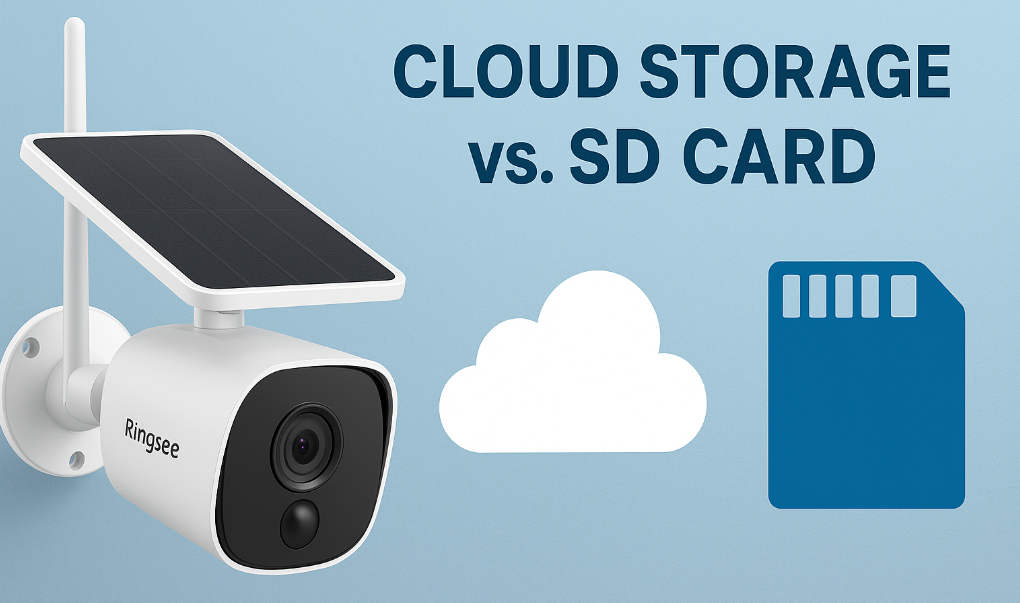
In the era of smart surveillance, 4G solar cameras have become a popular solution for remote monitoring — from construction sites to farms and vacation homes. These cameras combine solar power and 4G connectivity to work without Wi-Fi or electricity. However, one key consideration often overlooked by users is data storage. Should you choose cloud storage or rely on a local SD card?
This article compares both storage methods, exploring their pros, cons, and the best fit for different users. As a professional manufacturer of 4G solar cameras, Ringsee offers both storage options, allowing buyers to choose the ideal configuration based on their monitoring needs.
Overview of Storage Options
SD Card Storage
An SD card is a local storage option that saves recorded video footage directly inside the camera. It’s easy to use and doesn’t require an internet connection.
Common capacity: 16GB–256GB
Storage type: Local (physical)
Access: Directly via app or by removing the card
Cloud Storage
Cloud storage uploads footage to secure online servers via 4G networks. This means your videos are accessible anytime, anywhere — even if the camera is damaged or stolen.
Storage type: Remote (online)
Access: Through mobile or PC app with internet
Comparison: Cloud Storage vs. SD Card
| Feature | Cloud Storage | SD Card Storage |
|---|---|---|
| Accessibility | Remote access from anywhere | Local access only |
| Data Security | Protected from theft or damage | Vulnerable if camera is lost or destroyed |
| Storage Capacity | Virtually unlimited (subscription-based) | Limited by card size |
| Cost | Monthly or annual fee | One-time cost |
| Internet Requirement | Requires 4G connection | Works even offline |
| Playback Speed | Fast and convenient | Slight delay when reading card |
| Maintenance | Auto-managed | Requires manual formatting or replacement |
| Backup Options | Automatic cloud backup | No remote backup |
Advantages of Each Option
Advantages of Cloud Storage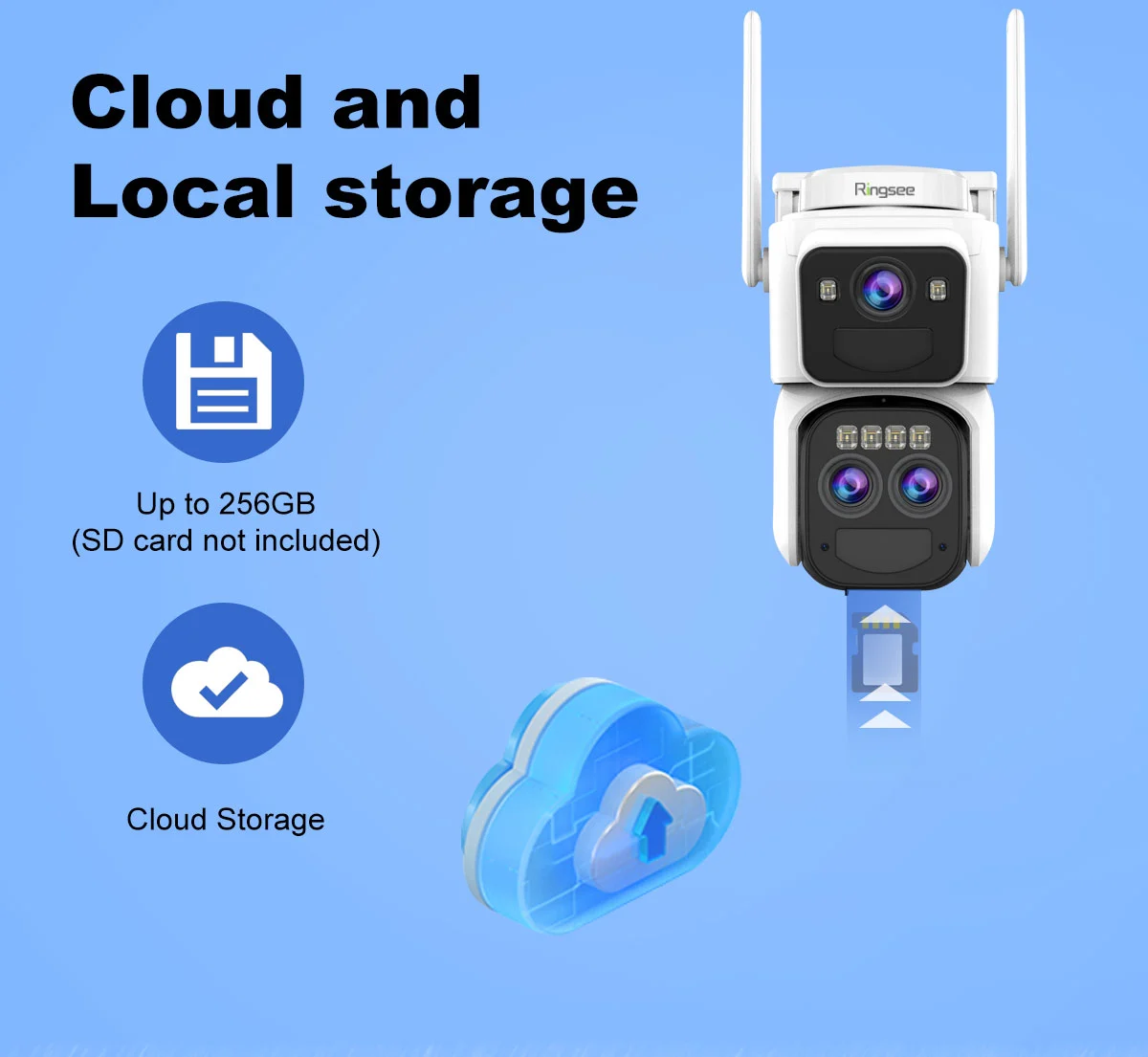
Remote Accessibility: View live or recorded videos from your phone or computer anytime.
Secure Backup: Even if the camera is stolen, your footage remains safe in the cloud.
No Maintenance Needed: No worries about SD card corruption or storage limits.
Advantages of SD Card Storage
No Subscription Fees: Ideal for users who want a one-time payment.
Offline Operation: Perfect for remote areas with poor 4G signal.
Instant Access: Quick playback directly from the camera via app.
Which Is Better for 4G Solar Cameras?
The best choice depends on where and how you use your camera:
For Remote Sites (Farms, Construction Areas):
Cloud storage ensures your recordings are always safe and viewable, even if the camera is tampered with.
For Personal or Home Use:
SD card storage is cost-effective and simple, especially if you have stable access to the camera.
Many of Ringsee’s 4G solar cameras support hybrid storage, allowing users to record both locally (SD card) and in the cloud for double protection. This dual approach offers flexibility and peace of mind.
Expert Tips for Choosing the Right Storage
Check Your Network Stability:
If your area has reliable 4G coverage, cloud storage provides the most convenience.
Consider Your Budget:
SD cards are affordable but have limited space. Cloud plans require ongoing fees but offer continuous storage.
Evaluate Security Needs:
If protecting critical footage is important (e.g., in construction or business sites), cloud backup is worth the cost.
Use Reliable Brands:
Choose manufacturers like Ringsee, known for high-quality 4G solar cameras with customizable storage options, ensuring long-term stability and security.
When it comes to 4G solar cameras, both cloud storage and SD card storage have unique strengths. SD cards offer simplicity and affordability, while cloud storage ensures reliability and remote access.
For most users, a combination of both — using an SD card for local backup and the cloud for secure remote access — delivers the best of both worlds.
If you’re looking for a dependable solution, Ringsee, a trusted Chinese manufacturer of 4G solar cameras, provides flexible OEM/ODM options that support both cloud and SD card storage — empowering businesses and homeowners with intelligent, sustainable surveillance.
Related News
Target readers: security owners, system integrators, and EHS engineers for petrochemical, oil and gas, pharmaceutical, powder processing, and coal mining sites where explosive gas or combustible dust exists. Core takeaway: a normal camera is itself an ignition source in flammable environments. You must use explosion proof cameras certified to ATEX, IECEx, or China Ex, selected by hazard zone, installed with proper grounding, and documented for compliance. This guide gives a reusable selection, install, and acceptance workflow.
Nov 08,2026
4G 5G Cellular Surveillance Camera Guide: Remote Video without Broadband
Target readers: security owners and integrators for farms, orchards, fisheries, construction, oil and mining sites, vehicle fleets, and remote African villages where broadband is scarce. Core takeaway: when there is no fiber, no broadband, and frequent power loss, a SIM card cellular camera is the easiest and most scalable remote video option. This guide gives a reusable architecture covering power, data, backhaul, AI, and compliant deployment.
Nov 08,2026
Analog CCTV Upgrade Guide: Coax HD Reuse vs Full IP Rebuild, Cost and Timeline Compared
Factory, campus and retail chains running analog surveillance for five or six years face the same wall: blurry images, unretrievable footage, and no path to AI analytics on legacy hardware. This guide breaks down pre-upgrade system inventory, compares the coax-HD reuse route against a full IP rebuild, gives bandwidth and storage recalculation formulas, and lays out a zoned, non-disruptive cutover plan with a selection checklist.
Oct 31,2026
CCTV Maintenance Outsourcing: SLA Tiers, Market Rates, KPI and Contract Playbook
Conclusion first: the real cost of a surveillance system is in its operation. Three years of maintenance typically equals 30% to 50% of the build cost, yet most buyers spend the budget at install and leave operation to whoever happens to notice. Lock the maintenance boundary while signing the build contract. This guide breaks down the in-house versus outsourced decision model, a three-tier SLA (P1 / P2 / P3), per-point market rates and how to read a quote, the two KPIs that decide payment (camera online rate and footage integrity), the five clauses every contract must hold, the 90-day handover that most often loses control, plus a selection checklist and acceptance tests.
Oct 25,2026
Links:One Belt Power Technology
Add: 14th Floor, Baoshan Building, Longhua District, Shenzhen China.
Privacy Policy | SEO | CitySite | Support: 300.cn Dongguan