





AOV Camera Privacy Compliance: What OEMs Must Know for Europe and North America
Publish:
2025-07-14 11:44
Source:
https://www.ring-see.com
Discover how OEMs can ensure AOV security cameras comply with GDPR and CCPA. A must-read privacy compliance guide for OEM camera manufacturers.
Introduction: Why Privacy Compliance Is Critical for AOV Cameras
With surveillance systems becoming more intelligent and always-on, AOV cameras are at the center of privacy concerns globally. For OEMs exporting to Europe and North America, privacy compliance isn’t just a checkbox—it’s a sales enabler.
Whether you're an OEM security camera supplier or a brand seeking white-label AOV solutions, understanding the legal framework is key to building trust and avoiding fines.
Privacy Compliance Risks and Responsibilities for OEMs
As a security camera OEM manufacturer, your responsibilities don’t stop at hardware design. You must ensure your AOV cameras meet legal requirements related to:
Data collection
Storage and retention
User consent
Cloud integration
System customization
Non-compliance can lead to enforcement actions, blocked shipments, and loss of market access in regions like the EU and California.
Understanding GDPR for AOV Camera OEMs (Europe)
What is GDPR and Why It Matters
The General Data Protection Regulation (GDPR) governs personal data processing within the European Union. It applies to any organization—including OEMs—selling or distributing AOV surveillance cameras that process the data of EU residents.
Key GDPR Compliance Requirements
Data Minimization in Surveillance Cameras
Only collect video/audio data necessary for specific monitoring purposes.
User Consent and Transparency
Provide built-in UI functions for consent opt-ins and real-time data notifications.
Privacy by Design and Default
Incorporate masking areas, local storage, encryption, and the ability to anonymize footage.
Data Access and Deletion Rights
Enable camera owners and users to access, export, or delete stored footage.
OEM Best Practices for GDPR-Compliant AOV Cameras
Implement firmware settings for video masking and local backup
Use AES encryption and secure data transmission protocols
Partner only with GDPR-compliant cloud service providers
Provide clear privacy documentation with your OEM shipments
Long-tail keyword usage: GDPR compliant AOV cameras, OEM security camera supplier for Europe, privacy-focused surveillance camera firmware
CCPA & CPRA Compliance for Surveillance Cameras (North America)
Understanding CCPA and CPRA
The California Consumer Privacy Act (CCPA), expanded by the California Privacy Rights Act (CPRA), focuses on consumer data rights. It’s paving the way for other U.S. state-level laws that OEMs must proactively prepare for.
CCPA/CPRA Requirements for Camera OEMs
Disclosure of Recording Practices
Notify users about when and why footage is being captured.
Opt-Out Mechanisms
Support features allowing users to block data sales or disable cloud uploads.
Secure Processing
Use tamper-proof local storage, encrypted access, and multi-level authentication.
Long-tail keywords: CCPA security camera guidelines, North America surveillance camera OEM, privacy features for smart cameras
OEM Strategies for U.S. Market Success
Embed cloud control switches in app interfaces
Offer audit logs and user permission settings
Ensure firmware patches address any newly passed state laws
Position your brand as a privacy-first OEM security camera manufacturer
OEM Privacy Compliance Checklist for AOV Surveillance Cameras
For manufacturers exporting to or supporting clients in Europe and North America, this checklist ensures your OEM camera product meets legal and competitive standards.
Hardware & Firmware
Privacy zone masking
Motion-activated recording settings
Secure SD card & NVR compatibility
Data & Cloud Security
End-to-end encryption (AES 128/256)
GDPR/CCPA cloud storage agreements
Region-specific data localization options
User Rights & Transparency
User access and export controls
Multi-language privacy policy access
Real-time notification and recording indicators
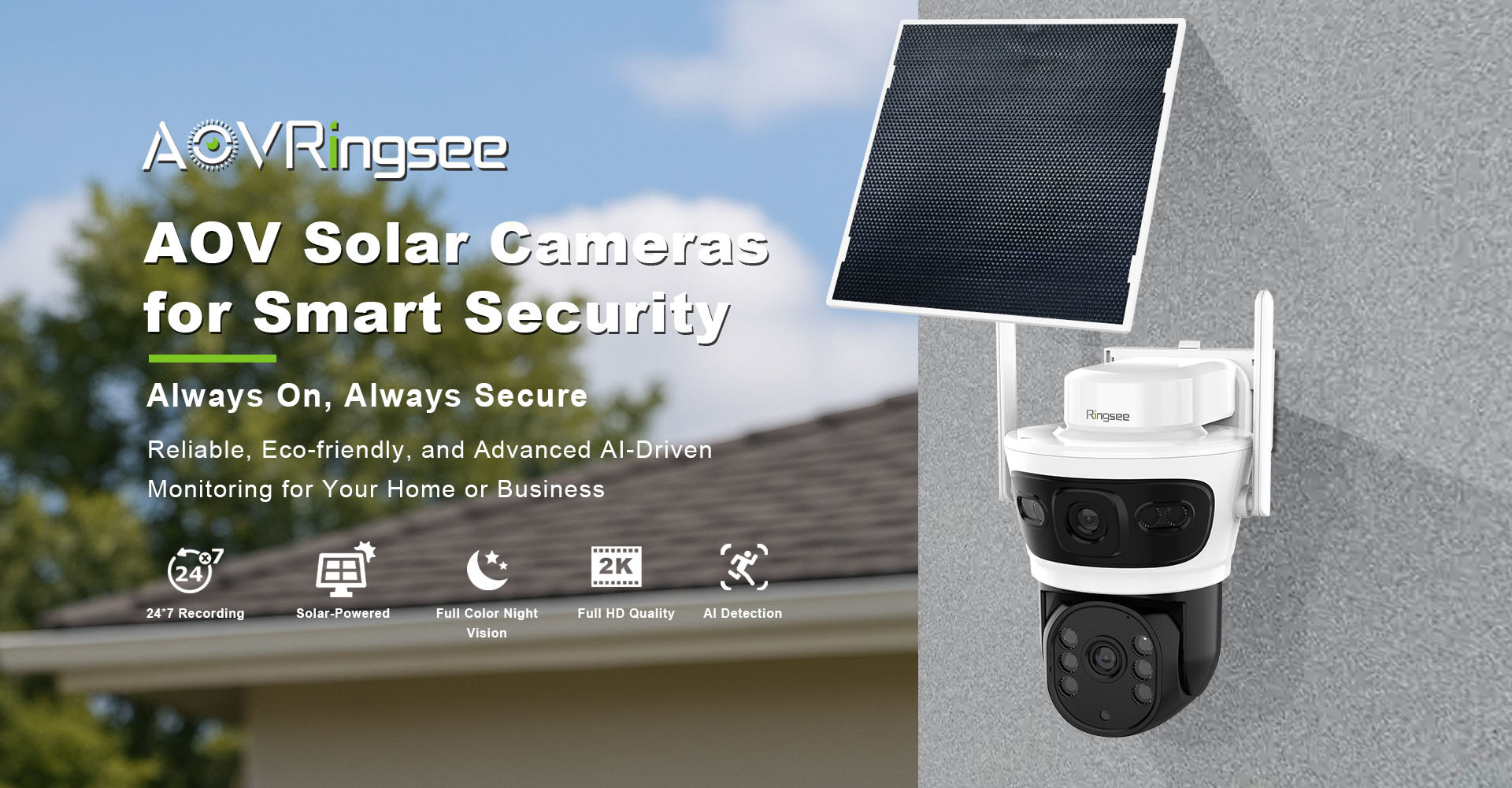
Ringsee: Your Trusted OEM Camera Manufacturer for Privacy-Compliant AOV Solutions
At Ringsee, we specialize in manufacturing OEM AOV security cameras designed for compliance in international markets. Our products come equipped with:
Advanced privacy features built into firmware
Cloud and local storage options with regional compliance
Support for GDPR, CCPA, and CPRA from design to documentation
24/7 technical support and global delivery network
Whether you need a white-label privacy camera, app-integrated control, or customized branding, Ringsee helps clients enter the EU and U.S. markets with full confidence.
Final Thoughts: Privacy is the New Standard in Camera OEM Design
As regulations tighten and consumers demand more transparency, privacy features are no longer optional—they’re a selling point. OEMs that fail to adapt risk becoming obsolete in the global surveillance camera market.
By integrating GDPR and CCPA compliance from day one, you not only protect your clients—you position your brand as a forward-thinking OEM camera partner in the AOV ecosystem.
Related News
PoE was power. This is control: CCTV Network Security Hardening Guide
Short answer: video systems get breached the boring way, not through clever exploits - (1) factory default credentials never changed, (2) camera or NVR management ports forwarded to the public internet, (3) no separation between the CCTV network and the office LAN. Do three things: replace every default account and disableTelnet/FTP/UPnP/raw RTSP; put cameras in their own VLAN and only allow the NVR to initiate sessions; and reach video over VPN or a zero-trust gateway instead of a port mapping.
Oct 03,2026
PoE Power Design Guide for Security Cameras: Power Budget, Cable Voltage Drop and Distance Limits
Most "cameras keep restarting at night" incidents are not camera defects — they are power design errors. Three root causes cover the overwhelming majority of PoE failures: the power budget was sized on daytime draw instead of night peak, the cable is too thin so voltage drop exceeds the device undervoltage threshold, and the run simply exceeds the 100-metre channel limit. Memorise three numbers and you avoid most of the traps: 802.3af delivers 15.4 W, 802.3at delivers 30 W, and cable reach stops at 100 m.
Oct 03,2026
Bitrate (Mbps) is the single parameter that determines hard drive size, switch selection, and remote-viewing smoothness. Two formulas answer everything: storage per camera per day (GB) ≈ bitrate × 10.8, and total bandwidth = sum of simultaneous bitrates × 1.3 headroom. This guide covers encoding, calculation, and procurement sizing.
Sep 26,2026
CCTV Night Vision Technology Explained: Infrared vs Starlight Full-Color vs Hybrid Light
Three night vision routes and their real limits: 850nm vs 940nm infrared (red glow and range trade-offs), the lux threshold of true starlight cameras (0.001-0.005 lux), light-pollution risks of warm-light supplement, and AI-triggered hybrid switching — plus a six-point datasheet verification method and a 20-minute night PoC test.
Sep 26,2026
CCTV Lens Selection Technical Guide: Focal Length, Pixel Density & the DORI Standard in Practice
Why can't a 4K camera read faces? Because identification depends on pixel density, not total pixels. Using the EN 62676-4 DORI standard, this guide gives the full focal-length / distance / field-of-view formulas, a lens selection lookup table, and the real impact of sensor size and aperture on night vision.
Sep 19,2026
Links:One Belt Power Technology
Add: 14th Floor, Baoshan Building, Longhua District, Shenzhen China.
Privacy Policy | SEO | CitySite | Support: 300.cn Dongguan