














































































Off-the-Grid, Always-On: Your Complete Guide to 4G Solar Security Cameras & Sourcing Smart from China
Publish:
2025-07-28 10:00
Source:
https://www.ring-see.com
This guide dives deep into everything you need to know—from understanding how these cameras work, to global trends, and how to find trustworthy Chinese manufacturers that won’t let you down.
Why 4G Solar Security Cameras Are Taking Over Remote Surveillance
Imagine this: you're a farmer, hundreds of miles from the nearest town, and you want to keep an eye on your livestock at night. Or maybe you're managing a construction site in a no-Wi-Fi zone, and theft is becoming an issue. Traditional CCTV systems? Not an option. Power lines? None. Internet? Forget it.
Enter the 4G solar security camera—a surveillance solution that’s completely wireless, power-independent, and smart enough to send alerts right to your phone, even from the middle of nowhere.
These cameras are solar-powered, SIM-card operated, and AI-enhanced—built for places where conventional security setups just can’t go. And if you're in the market for these systems, especially for resale or installation projects, you'll quickly discover that China is the global hub for cost-effective, high-quality solutions.
This guide dives deep into everything you need to know—from understanding how these cameras work, to global trends, and how to find trustworthy Chinese manufacturers that won’t let you down.
What Exactly Is a 4G Solar Security Camera? (And Why It’s a Game-Changer)
At its core, a 4G solar security camera is a self-sufficient surveillance unit that needs no wires, no Wi-Fi, and no external electricity. It draws power from the sun, stores it in a built-in battery, and uses a 4G SIM card to send real-time video and alerts to your mobile device.
It’s the kind of tech that blends independence and intelligence—ideal for:
- Farmers watching over crops, gates, or machinery
- Vacation home owners protecting property in off-season
- Wildlife researchers monitoring animals in their natural habitat
- Construction site managers guarding equipment at night
- Rural homeowners who need security but lack infrastructure
What’s more, these cameras come equipped with:
- AI-based motion and human detection
- Full HD or 4MP video quality
- Night vision (sometimes in full color)
- Two-way audio communication
- Remote app access—so you’re always connected
In short: Set it. Forget it. Monitor it from anywhere.
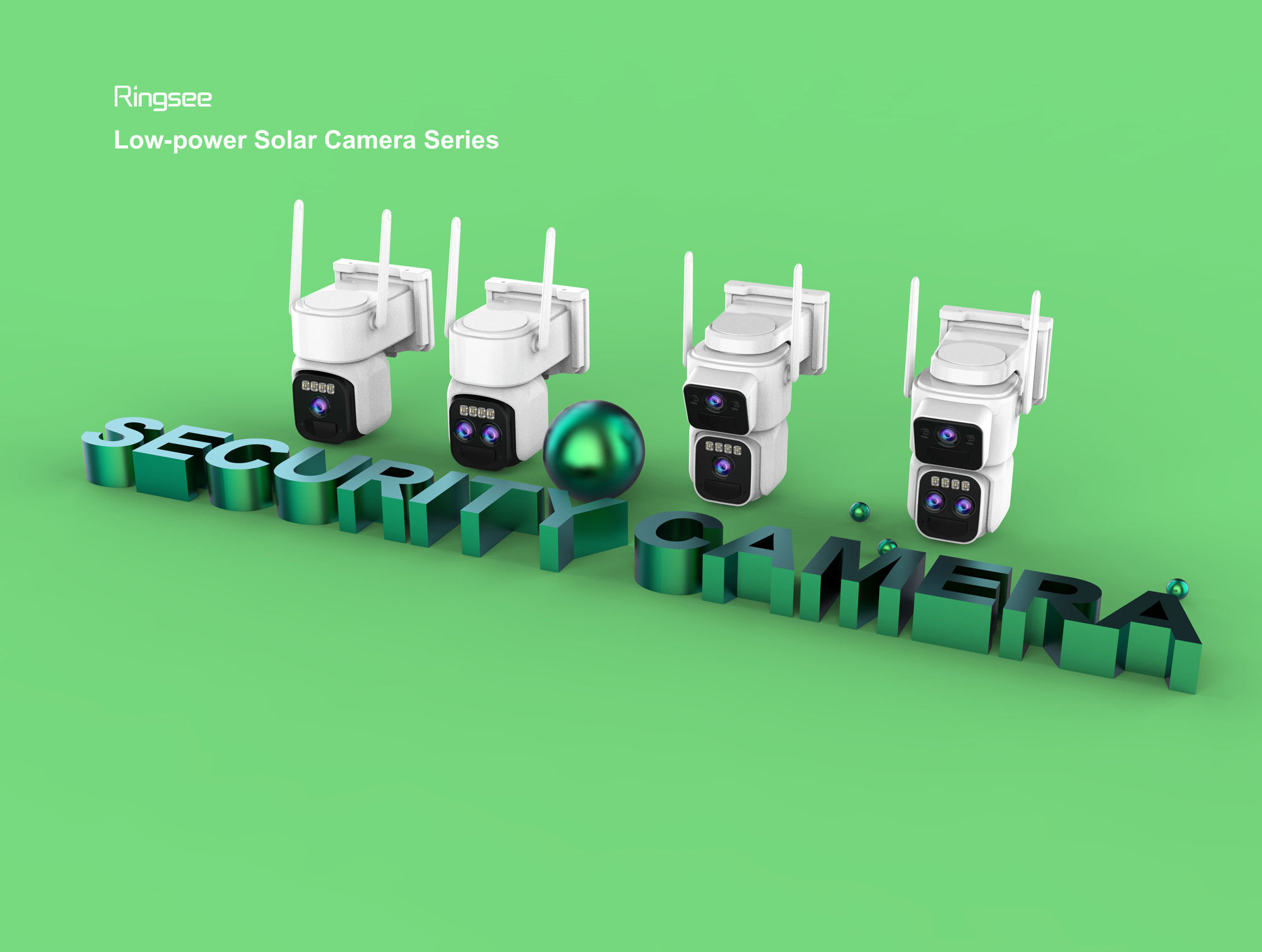
The Market Is Heating Up—Fast: 2025 Outlook for 4G Solar Surveillance
Big Numbers, Big Opportunity
In 2024, the global market for solar-powered surveillance systems reached nearly $2.3 billion, and it’s showing no signs of slowing. Analysts predict a steady 11–13% compound annual growth rate (CAGR) over the next five years.
But here’s the interesting part: the 4G-connected camera segment is exploding even faster. Why? Because the gap between urban and rural security needs is growing—and governments, property owners, and businesses are scrambling to fill it.
Who’s Buying These Cameras?
- North America: Ranchers, forest rangers, and rural homeowners are early adopters.
- Europe: Eco-conscious users are turning to solar to reduce energy dependence.
- Australia & New Zealand: Farmers and off-grid users are driving consistent demand.
- Southeast Asia, South America & Africa: Infrastructure gaps + 4G rollout = huge opportunity.
What Customers Are Really Looking For
Through search data and customer feedback, we’re seeing demand rise for:
“Solar powered CCTV without Wi-Fi”
“4G SIM card camera for farm use”“
“Wildlife security camera with solar panel”
“Chinese supplier for 4G solar camera system”“
“Battery-operated camera for cabin in woods”
What Makes a Good 4G Solar Camera? Must-Have Features to Watch For
Let’s be honest: not all 4G solar cameras are created equal. If you want something reliable—and not a headache—here are the features you should insist on:
1. Smart Hardware That Works When It Counts
- Resolution: Go for 2MP at minimum; 4MP or 5MP gives crystal-clear images.
- Battery Life: Look for at least 6000–10000mAh for stable night operation.
- Solar Panel Output: 3–6W panels offer decent charging, but high-sun areas may allow even less.
2. Strong Connectivity
- Quad-band 4G LTE with fallback to 3G
- Compatible with local SIM cards (some even support multi-carrier switching)
3. Intelligent Detection and Smart Notifications
- AI motion detection that tells the difference between a car and a raccoon
- Push alerts or SMS for real-time response
- Cloud & SD card storage for backup
4. Night Vision You Can Count On
- IR LEDs for standard night vision
- Full-color options that light up the scene when motion is detected
5. User-Friendly App Control
- View live feed
- Talk via two-way audio
- Adjust sensitivity, zones, and recording settings
- Share camera access with family or team members
Real-World Use Cases That Prove the Value
Case 1: A Rancher in Montana
Sarah runs a 200-acre cattle ranch. She mounted a 4G solar camera at the gate and another at the barn. When motion is detected after hours, her phone buzzes. She’s stopped 2 break-ins in the past year.
Case 2: A Construction Site Manager
Alex installs 3 solar 4G cameras across his site in Thailand. With no power lines or Wi-Fi, these cameras act as both a security system and time-lapse project recorder.
Case 3: Wildlife Watcher in Alberta
Emma uses a camera with full-color night vision to monitor bears. The solar panel keeps it running for weeks, and she doesn’t need to hike back to collect SD cards—it uploads to the cloud.
How to Find a Reliable Chinese Manufacturer (Without Getting Burned)
Let’s talk sourcing. If you're planning to buy 4G solar cameras in bulk, or launch your own private label brand, China is the go-to market. But you’ll want to choose wisely—the right supplier can make or break your business.
Step-by-Step to Finding a Good Chinese Partner
Step 1: Know Your Needs
Do you want an entry-level consumer model or a professional-grade camera for extreme environments? Write down:
- Resolution needs
- SIM compatibility (local bands)
- Night vision expectations
- Battery and solar specs
- Logo/packaging customization
Step 2: Search Smart
Use:
- Alibaba.com
- Made-in-China.com
- Global Sources
- Trade shows like Canton Fair (or online expos)
Search with phrases like:
4G Solar Surveillance Manufacturer
OEM Battery Camera Supplier
Low Power Security Camera Factory
Step 3: Vet Suppliers Like a Pro
Ask these questions:
How long have you been producing 4G cameras?
What certifications do you have? (CE, FCC, RoHS, ISO9001)
Can you customize software or add features?
Do you have real customer case studies?您
What’s your warranty & after-sales policy?
Step 4: Order Samples & Test in Real Conditions
Simulate your customer’s environment. Weak signal? Cloudy days? Extreme heat? See how it performs.
Step 5: Negotiate Smart
- MOQ and sample cost
- Lead time and payment terms
- White labeling/branding options
- Long-term pricing and support
Step 6: Factory Visit or Inspection
If you can’t go in person, hire an inspector via QIMA, TÜV, or SGS to verify the factory and check production quality.
Recommended Chinese Manufacturer: Ringsee
One of the names gaining traction in the OEM/ODM space is Ringsee, based in Shenzhen. With over 15 years of manufacturing experience, they specialize in:
4G LTE solar-powered security cameras
Low-power AI detection systems
Customized software/app integration
Full support for brand customization and overseas projects
They offer responsive customer support, real factory tours (both online and offline), and scalable solutions from small MOQ to mass production.
Who Needs a 4G Solar Camera? You Might Be Surprised
Whether you’re a homeowner looking for peace of mind, a farm manager safeguarding assets, or a business planning to import solar security systems, 4G solar cameras offer a flexible, reliable, and eco-conscious solution.
They’re not just a trend—they’re the future of mobile surveillance.
Related News
Target readers: security owners, system integrators, and EHS engineers for petrochemical, oil and gas, pharmaceutical, powder processing, and coal mining sites where explosive gas or combustible dust exists. Core takeaway: a normal camera is itself an ignition source in flammable environments. You must use explosion proof cameras certified to ATEX, IECEx, or China Ex, selected by hazard zone, installed with proper grounding, and documented for compliance. This guide gives a reusable selection, install, and acceptance workflow.
Nov 08,2026
4G 5G Cellular Surveillance Camera Guide: Remote Video without Broadband
Target readers: security owners and integrators for farms, orchards, fisheries, construction, oil and mining sites, vehicle fleets, and remote African villages where broadband is scarce. Core takeaway: when there is no fiber, no broadband, and frequent power loss, a SIM card cellular camera is the easiest and most scalable remote video option. This guide gives a reusable architecture covering power, data, backhaul, AI, and compliant deployment.
Nov 08,2026
Analog CCTV Upgrade Guide: Coax HD Reuse vs Full IP Rebuild, Cost and Timeline Compared
Factory, campus and retail chains running analog surveillance for five or six years face the same wall: blurry images, unretrievable footage, and no path to AI analytics on legacy hardware. This guide breaks down pre-upgrade system inventory, compares the coax-HD reuse route against a full IP rebuild, gives bandwidth and storage recalculation formulas, and lays out a zoned, non-disruptive cutover plan with a selection checklist.
Oct 31,2026
CCTV Maintenance Outsourcing: SLA Tiers, Market Rates, KPI and Contract Playbook
Conclusion first: the real cost of a surveillance system is in its operation. Three years of maintenance typically equals 30% to 50% of the build cost, yet most buyers spend the budget at install and leave operation to whoever happens to notice. Lock the maintenance boundary while signing the build contract. This guide breaks down the in-house versus outsourced decision model, a three-tier SLA (P1 / P2 / P3), per-point market rates and how to read a quote, the two KPIs that decide payment (camera online rate and footage integrity), the five clauses every contract must hold, the 90-day handover that most often loses control, plus a selection checklist and acceptance tests.
Oct 25,2026
Links:One Belt Power Technology
Add: 14th Floor, Baoshan Building, Longhua District, Shenzhen China.
Privacy Policy | SEO | CitySite | Support: 300.cn Dongguan